How to Deodorize Outdoor Bins That Smell
That sour, baked-in smell near the garage is rarely just “trash smell.” In Florida heat, residue at the bottom of a cart can quickly feed odor-causing bacteria, mold, flies, and maggots. Knowing how to deodorize outdoor bins means treating the source, not simply covering it with a stronger fragrance.
A clean-smelling bin is also easier to live with. It keeps pests away from your curb, helps maintain a tidy property appearance, and makes handling the cart less unpleasant for homeowners, guests, and rental staff. The good news: a few consistent habits make a noticeable difference.
Why Outdoor Bins Start to Smell So Fast
Trash carts are built to hold waste, not to stay sanitary on their own. A leaking bag, loose food scraps, pet waste, or a forgotten container of takeout can leave a thin layer of organic residue inside the bin. Once that residue sits in heat and humidity, bacteria multiply and release the gases we recognize as garbage odor.
Florida’s warm weather speeds up the problem. A cart that might be tolerable for several days in a cooler climate can become unpleasant after one hot afternoon in Sarasota or Bradenton. Rainwater can make matters worse by mixing with food residue and pooling in the bottom of the cart.
Odor is often a warning sign that the bin needs more than a quick rinse. If there is visible grime, sticky buildup, black residue, mold, larvae, or flies, the goal should be cleaning and sanitizing first, then deodorizing.
How to Deodorize Outdoor Bins the Right Way
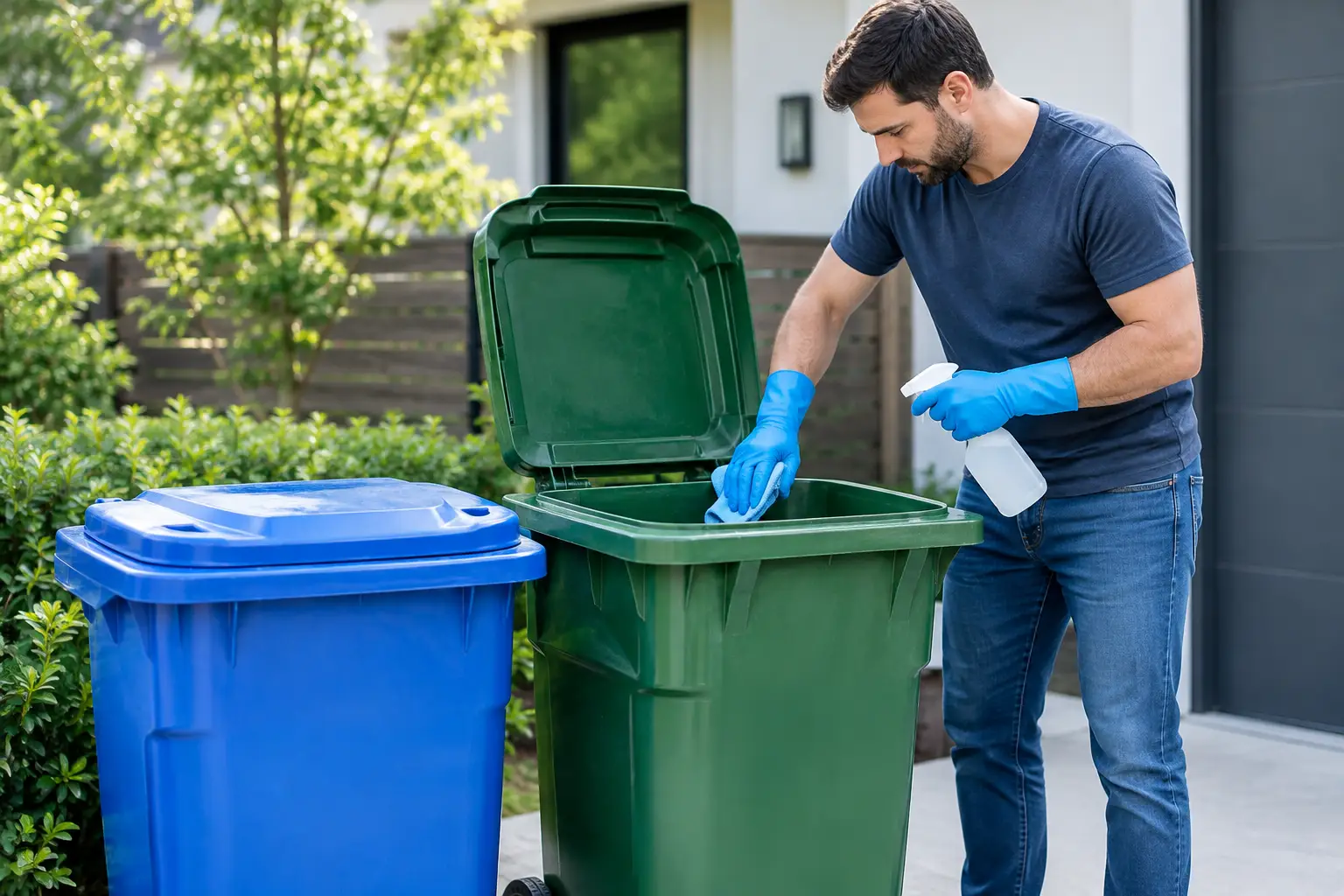
The best time to clean a cart is immediately after collection, while it is empty. Start by removing anything caught along the rim, lid hinges, or bottom corners. Wear gloves, especially if you are dealing with leaked food, pet waste, or an unknown spill.
Rinse the inside of the bin with water, directing the flow toward the bottom and out through the opening. If you use a garden hose, do not wash concentrated dirty water into a storm drain. In many neighborhoods, storm drains flow directly to local waterways rather than a treatment system. Keep the runoff contained on your property where possible, or use a professional service that captures wastewater.
Next, apply a cleaner designed to break down grease and organic buildup. Let it sit according to the label directions, then scrub the interior walls, lid, rim, and bottom with a long-handled brush. The rim and lid underside deserve extra attention because small splatters dry there and keep smelling long after the bin looks clean.
After rinsing, use a sanitizer suitable for trash carts. Cleaning removes the grime that bacteria live on; sanitizing helps reduce the microorganisms that create lingering odor. Allow the cart to dry fully with the lid open before adding any deodorizing product. Trapping moisture inside a freshly washed cart can bring the smell right back.
For ongoing odor control, sprinkle a light layer of baking soda across the dry bottom of the bin or use a trash-cart deodorizer made for outdoor containers. Baking soda can absorb mild odors, but it is not a substitute for washing out a greasy or contaminated cart. If the smell returns right away, there is likely residue you have not reached.
What Not to Put in Your Bin
A deodorizer works better when it is not fighting the same odor problem every week. Small changes in how you bag and dispose of waste can make a big difference.
Keep food scraps, meat trays, seafood shells, and strongly scented leftovers in sealed bags. If collection day is still several days away, freezing especially smelly food waste until the night before pickup is a practical option. This is particularly useful after a cookout, a holiday gathering, or a vacation-rental turnover with a full kitchen trash load.
Double-bag pet waste and diapers, and make sure bags are tied securely before they go into the cart. Cardboard and loose paper can absorb leaks, so keep them dry and separate when possible. Never place loose liquids in the bin. Even a small amount of soup, cooking oil, or melted ice from a cooler can create a hard-to-clean film at the bottom.
If your local pickup rules allow it, place bagged trash in the cart as close to collection day as practical. That reduces the time food waste spends heating up inside the container.
A Simple Routine for Cleaner-Smelling Carts
You do not need to deep-clean your bin every week, but a regular routine keeps odors from becoming a curbside problem. After each collection, take 30 seconds to look inside the empty cart. If there is a new leak or loose debris, rinse and wipe it before it dries.
Once a month, inspect the bottom, lid, wheels, and handles. Those high-touch areas collect grime too, especially when carts are rolled across driveways, grass, gravel, or damp pavement. A monthly wash is usually enough for households with normal waste volume. Homes with pets, large families, frequent entertaining, or vacation-rental guest turnover may need cleaning more often.
Keep the bin in a shaded, ventilated spot when your property layout allows it. Shade will not eliminate odor, but it can slow the heat buildup that intensifies it. Do not block the cart in a place where rainwater can collect around it or where pests can easily nest nearby.
When a Home Rinse Is Not Enough
There is a point where a hose, brush, and baking soda stop being the practical answer. If you notice maggots, mold, thick black sludge, or an odor that sticks to your hands after moving the cart, professional cleaning can save a messy afternoon and produce a better result.
Professional bin cleaning is most effective immediately after collection, when the cart is empty. High-pressure hot water helps remove stuck-on grime, while sanitizer and deodorizer address the bacteria and odor left behind. Proper wastewater capture matters, too. It keeps dirty runoff from heading down the street and into stormwater systems.
For homeowners who already want help getting heavy carts to and from the curb, pairing cleaning with valet service is especially convenient. Curb Critter cleans bins after pickup, then helps keep the weekly routine hands-free with scheduled rollout, return, and photo confirmation. That timing matters: clean carts stay cleaner longer when they are washed before the next bag of trash goes in.
Special Situations: Snowbirds and Rental Properties
Bins can become a problem when nobody is home to notice them. For seasonal residents, a cart left after a missed collection can signal an empty home and create an odor issue by the time you return. For vacation rentals, overflowing or dirty bins can affect guest experience, attract pests, and lead to HOA complaints.
Before leaving for an extended trip, empty all trash, wipe out any visible residue, and leave the cart dry. If you manage a rental, build bin checks into each turnover routine. Confirm that bags are sealed, lids close fully, and carts are placed out and returned on the correct collection schedule.
Reliable routines are better than last-minute fixes. A cart that is out on time, brought back promptly, and cleaned regularly is less likely to become an eyesore or a source of smells near the home.
A fresh-smelling bin will never be the most glamorous part of property care, but it is one of those small details people notice when it goes wrong. Keep moisture out, clean residue before it hardens, and give the cart a proper wash when the odor starts telling you it is time.