When to Clean Outdoor Bins for a Fresher Home
The first hot afternoon after trash day can answer the question of when to clean outdoor bins for you. If you catch an odor before you reach the garage, see residue at the bottom of the cart, or notice flies gathering around the lid, the bin is already overdue. In Florida, heat and humidity turn ordinary household waste into a sanitation issue quickly.
A clean cart is not just nicer to roll back beside the house. It helps limit odor-causing bacteria, mold, maggots, and pests around the place where you park, walk, and welcome guests. For homeowners, seasonal residents, and vacation-rental managers, a regular cleaning routine also keeps an overlooked chore from becoming an unpleasant surprise.
When to Clean Outdoor Bins: A Practical Schedule
For most homes, monthly cleaning is the right baseline. It is frequent enough to remove buildup before smells settle into the plastic, yet simple enough to become part of a regular property-care routine. The best time is immediately after collection, while the container is empty and before fresh trash goes in.
That timing matters. Trying to rinse a partly full bin is messy, ineffective, and likely to leave behind the same food residue and liquid that created the odor. A post-collection clean gives the inside, lid, wheels, and rim a proper reset before the next bag lands inside.
Monthly service is particularly useful in Sarasota and Manatee County, where warm weather does not take much of a break. During the hottest, rainiest months, organic waste can break down fast. A cart that seemed fine last week may smell far stronger after a few days of sun and afternoon storms.
Some properties need more attention than others. Weekly trash service does not automatically mean weekly bin cleaning, but the following situations can justify a more frequent clean or an extra one-time service:
- A bag leaks, breaks, or spills liquid into the bottom of the cart.
- Seafood, meat scraps, diapers, pet waste, or spoiled food sit in the bin.
- You see maggots, fruit flies, ants, roaches, or other pest activity.
- A vacation-rental turnover leaves the bin overfilled or unusually messy.
- A storm blows debris, standing water, or yard waste into the container.
- You are returning to a seasonal home after the bins have sat unused or exposed to heat.
The rule is straightforward: clean on a schedule, then clean sooner when the bin gives you a reason. Waiting until the odor is noticeable from the driveway means bacteria and residue have had plenty of time to build up.
Why Florida Bins Get Dirty So Fast
A garbage cart is a small, enclosed plastic chamber exposed to heat, moisture, food waste, and repeated handling. Florida weather supplies the last two ingredients pests and odor need: warmth and humidity. Even well-bagged trash can leave behind drips, residue, and condensation.
Rain adds another complication. Water can collect in an open or poorly closed lid, mix with debris, and create a grimy layer at the bottom. When the sun comes back out, that mixture heats up. That is not the trash you smell - it is the can.
For households with regular cooking, pets, young children, or frequent guests, the buildup is often faster. The same is true for vacation rentals, where a full guest turnover may put several days of food packaging and bagged trash into the cart at once. Keeping the bin clean helps the property look cared for between arrivals and reduces the chance of a complaint about odors near the entry, garage, or pool area.
Signs Your Bin Needs Cleaning Before Its Next Service
A monthly schedule handles routine sanitation, but your senses are useful between cleanings. Strong odor is the clearest signal, especially if it lingers after collection day. A sour, rotten, or musty smell usually means residue is stuck to the plastic or pooled at the bottom.
Visual clues matter too. Watch for black grime around the lid, sticky streaks along the walls, loose trash at the bottom, mold spots, and visible larvae. Do not overlook the handle and rim. Those are high-touch areas that collect drips and grime every time the cart is moved.
Pest activity is another prompt to act. Flies hovering near the lid, ants trailing around the wheels, or raccoons repeatedly investigating the bin can point to food residue and odor. Cleaning will not replace proper bagging or secure lid closure, but it removes much of what keeps the cart attractive to pests.
Why Cleaning Right After Pickup Works Best
There is a practical reason professional bin cleaning is done after collection: empty bins can actually be cleaned. The service can reach the bottom, walls, lid, and crevices without working around bags or creating a second trash-handling job for the homeowner.
For a hands-free routine, Curb Critter cleans carts immediately after collection using high-pressure hot water, sanitizer, and deodorizer. Wastewater is captured on site rather than sent into storm drains, which matters when cleaning around driveways and residential streets. The cart is returned clean and ready for the next load of household trash.
This approach also removes the scheduling headache. You do not need to remember to leave an empty bin out for a separate appointment or drag it around after pickup. When cleaning is coordinated with a recurring valet route, the same visit can keep the cart Out, In & Spotless.
Can You Clean a Bin Yourself?
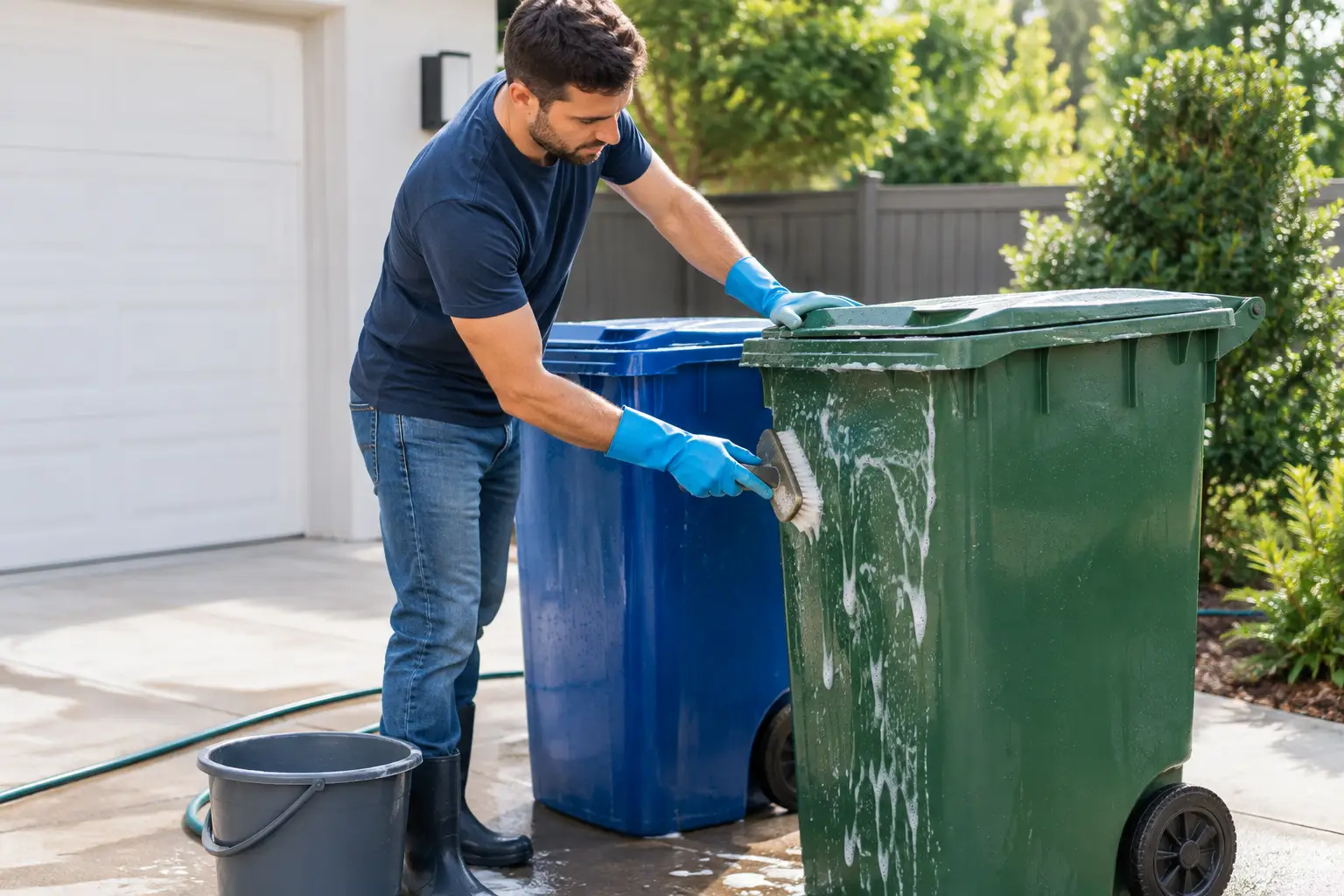
You can, especially after a small spill. Wear gloves, remove loose debris, use a long-handled brush and a suitable cleaner, then rinse carefully. Let the cart dry with the lid open before using it again. For light maintenance, this can be enough.
The trade-off is water, effort, and runoff. A 95-gallon cart is awkward to tip, difficult to scrub deeply, and unpleasant to clean in Florida heat. Hosing debris down a driveway can also send contaminated water toward a storm drain, which is not where food residue, bacteria, or cleaning products belong.
DIY cleaning makes sense for a quick spot clean. Regular deep cleaning is different. Hot water, pressure, sanitation products, and wastewater capture do a more complete job while sparing homeowners the lifting, bending, and smell.
Pair Bin Cleaning With Better Trash Habits
Cleaning works best alongside a few simple habits. Bag food waste securely, close lids fully, and avoid leaving loose trash in the cart. If a bag leaks, rinse or wipe up the spill promptly instead of letting it bake into the bottom until the next scheduled cleaning.
For vacation rentals, establish a clear guest-trash process and check the carts after departure. This helps prevent overflow, keeps collection-day access clear, and gives you time to address a spill before the next guests arrive. For snowbirds, recurring service provides a routine while you are away, so carts are handled on collection day and returned afterward rather than sitting at the curb.
A clean bin will never be the most glamorous part of home care, but it has an outsized effect on how your property feels. Set a monthly post-collection cleaning rhythm, respond quickly to spills and pest activity, and let trash day end with the cart clean, back in place, and out of your hands.