Gravel Driveway Assistance for Easier Trash Days
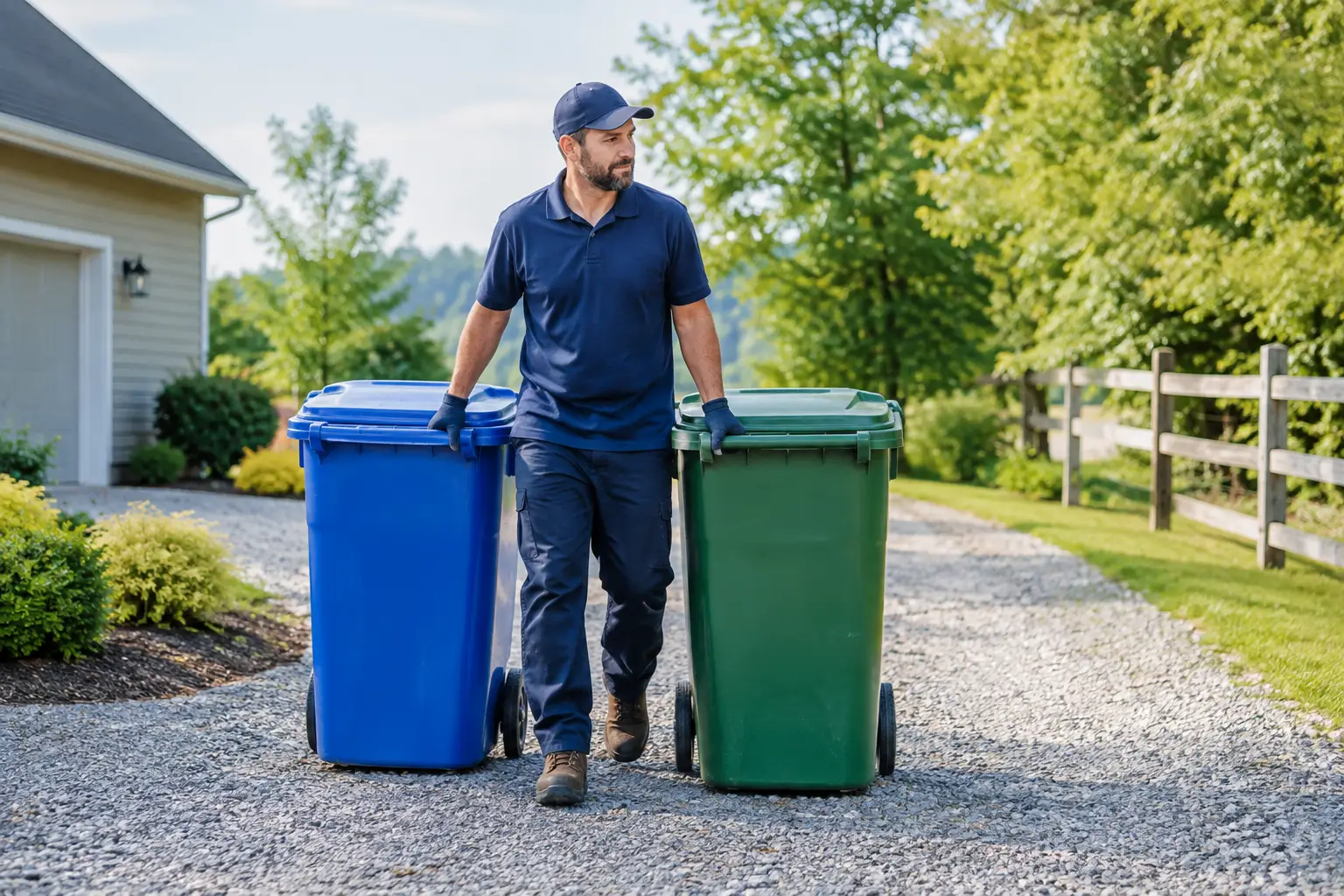
A 95-gallon trash cart can feel manageable on smooth concrete. On a loose gravel driveway, it is a different job entirely. Gravel driveway assistance gives homeowners a practical way to keep collection day handled without wrestling a heavy, uneven cart through soft stone, Florida heat, or a long driveway before the truck arrives.
For many households, this is not a small inconvenience. A cart that catches in gravel can tip, drag, or require more pulling force than expected. That creates a real concern for older adults aging in place, people recovering from an injury, seasonal residents who are away part of the year, and rental owners trying to keep a property orderly between guests.
Why Gravel Makes Trash Day Harder
Gravel moves under the wheels. That is the root of the problem. Instead of rolling in a straight, predictable line, a full cart may sink slightly, skid sideways, or stop when its wheels hit a deeper patch of stone.
The larger the cart and the heavier the load, the more noticeable that resistance becomes. Wet yard waste, bagged household trash, and rain-soaked cardboard can add enough weight to turn a routine task into a physical strain. In Sarasota and Bradenton, summer heat and afternoon storms do not make the job any easier.
There is also the driveway itself to consider. Repeatedly dragging or forcing a loaded cart across gravel can leave tracks, push stones into grass or landscaping, and create low spots where water collects. A rushed pull to meet an early collection window can be especially frustrating when the wheels sink or the cart tips over halfway down the drive.
What Reliable Gravel Driveway Assistance Looks Like
The most useful assistance is not simply someone moving a bin once in a while. It is a consistent routine built around your actual collection schedule. The cart goes out when it needs to be out, returns after pickup, and does not spend all day or night sitting at the curb.
For homeowners, that means no last-minute trip down the driveway after dark and no need to remember whether tomorrow is collection day. For second-home owners and vacation-rental managers, it means the property looks attended to even when nobody is there to handle the bins.
A dependable service should be clear about timing and confirmation. At Curb Critter, bins are moved to the curb after 5 p.m. before scheduled collection and returned after 3 p.m. on collection day. Photo confirmation at both stages provides a simple record that the work was completed. You should not have to wonder whether a heavy cart made it out or whether it has been left by the road.
The benefit is more than convenience
Hands-free trash handling reduces the chance of overexertion, slips, and awkward twisting on unstable ground. That matters when a driveway is steep, long, loosely packed, or bordered by landscaping that makes turning the cart harder.
It also helps prevent a missed pickup. When trash stays at the house because the cart was too difficult to move, bags can pile up quickly. For a rental property, that can become an unpleasant arrival-day problem. For a full-time home, it can lead to odors, pests, and an overflowing bin at the worst possible time.
A Gravel Driveway Needs a Simple Plan
Not every gravel driveway has the same challenges. A short, compacted shell drive may be easy to cross most of the year. A long drive with loose stone, deep ruts, a gate, or a slope may call for more attention. The right approach depends on the distance to the curb, the condition of the surface, the size of the cart, and how often it needs to move.
Start by looking at the travel path. If bins must pass through a narrow gate, around parked vehicles, or over a lip where gravel meets pavement, those details can affect how easily the cart rolls. Keep the route reasonably clear of hoses, branches, loose landscape edging, and other obstacles that can catch a wheel.
If the gravel is very loose, occasional grading or adding compactable material can improve the surface. That can help, but it does not remove the ongoing need to move a full cart on collection day. A smoother path is useful. Reliable help is what makes the task disappear from your to-do list.
Timing matters on collection days
Many residents put bins out early because they are worried about missing the truck. That can mean leaving carts curbside overnight or for long stretches, which may not fit neighborhood or HOA expectations. It can also put bins in the way of walkers, vehicles, or landscaping crews.
A scheduled valet routine solves the timing problem without asking you to set an alarm or make a difficult trip down the driveway. The bin is out for pickup, then back where it belongs afterward. For snowbirds, that same routine helps a home look cared for while they are away.
Do Not Ignore the Bin Itself
A cart can be hard to move across gravel, but a dirty cart creates a separate problem. Florida heat speeds up odor, grime, mold, and bacteria growth inside a bin. When trash bags leak or loose waste sticks to the bottom, pests and maggots can follow.
Rinsing a bin with a garden hose may remove a little surface debris, but it often leaves odor-causing buildup behind. It can also send dirty runoff toward storm drains if the water is not properly contained. That is not a good trade-off for a task that should make the property cleaner.
Professional bin cleaning works best immediately after collection, when the container is empty. High-pressure hot water, sanitizer, and deodorizer can address the residue that ordinary rinsing misses. On-site wastewater capture keeps the dirty water from becoming improper stormwater runoff.
When cleaning is paired with recurring curb-day handling, there is no separate appointment to coordinate and no need to drag an empty but dirty cart out for another service visit. The bin is already being returned from collection. It is a practical order of operations: pickup, clean, return, relax.
Who Benefits Most From This Service
Gravel driveway assistance is especially helpful for homeowners who have reached the point where a heavy cart is no longer worth the effort. Staying independent at home does not mean every physical chore has to remain your responsibility.
It is equally useful for seasonal residents. A second home should not have missed collection days, bins left on the curb, or accumulated waste announcing that the house is empty. Recurring service creates a visible routine without relying on a neighbor or last-minute favor.
Vacation-rental owners and property managers have another reason to plan ahead. Guest turnover schedules leave little room for overflowing trash or a cart that was never brought back from the road. Consistent bin handling supports a cleaner arrival experience and helps protect the property's presentation.
Questions to Ask Before Choosing Help
Before you hand over this routine, make sure the service fits the realities of your property. Ask how it handles collection schedules, where the bins will be placed after pickup, and whether you receive confirmation that the work is done. If cleaning is included, ask when it occurs and how wastewater is managed.
Also look for flexibility. Some households need recurring weekly help. Others may only need a one-time trip while traveling or recovering from a procedure. A service that clearly explains what is included, how many bins are covered, and how cancellation works is easier to trust.
Trash day should not be the chore that dictates your evening, strains your back, or leaves you watching the curb from afar. With the right help in place, your bins are out, back in, and ready for the next week - while your gravel driveway stays one less thing to manage.