Hot Water Garbage Bin Cleaning That Works
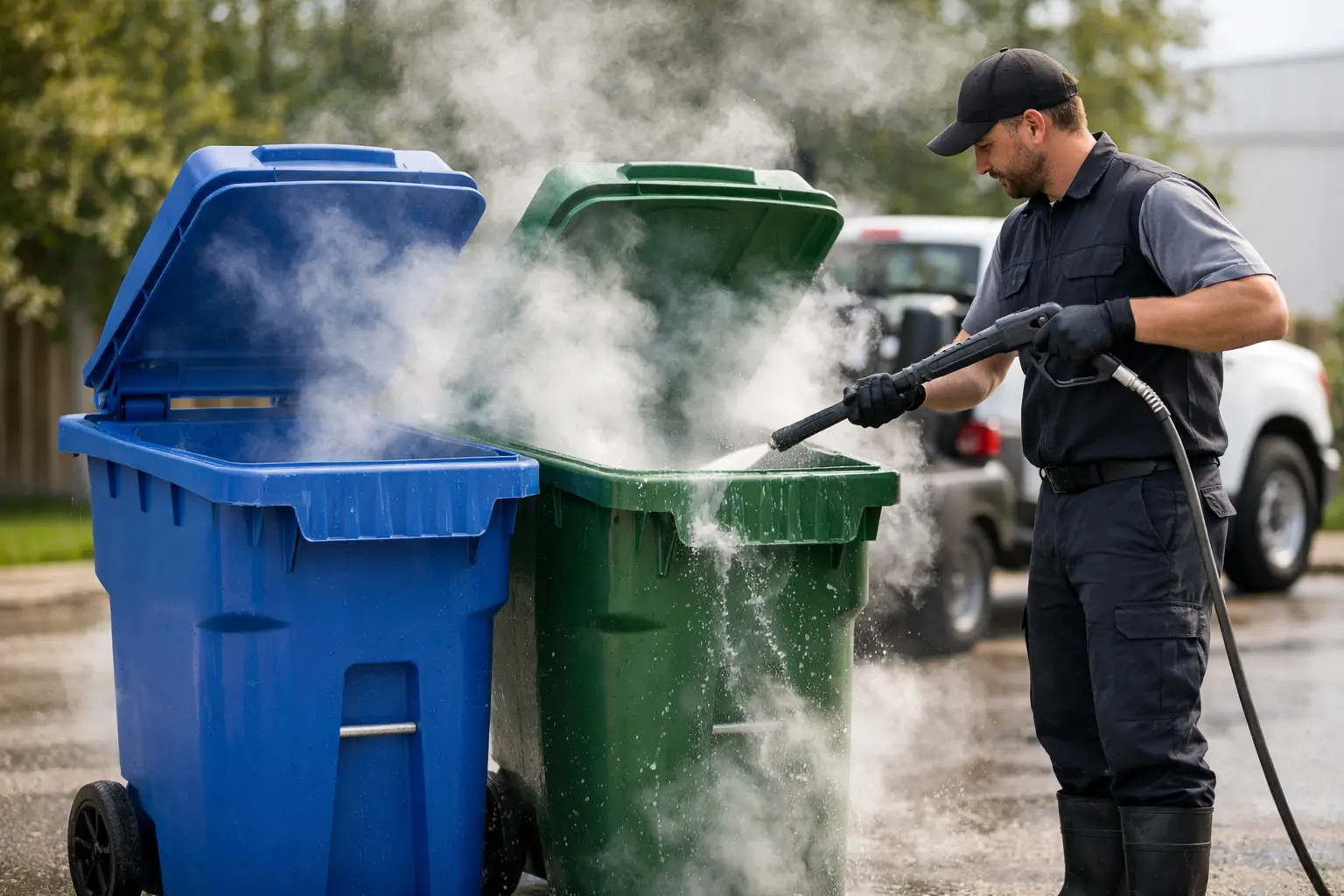
A trash cart can look harmless from the street and still smell like trouble the moment you lift the lid. In Florida heat, spilled food, leaking bags, moisture, and residue turn an ordinary container into a breeding ground for odor-causing bacteria, mold, and pests. Hot water garbage bin cleaning addresses the mess that a quick hose-down leaves behind.
Why Dirty Garbage Bins Get Worse So Fast
A garbage bin is built to hold trash, not stay clean on its own. Liquids settle in the bottom, food residue sticks to the walls, and bags can tear or leak during a busy week. Once that buildup sits in a closed cart under the sun, the smell becomes much harder to ignore.
That smell is not always coming from the trash currently inside. Often, it is coming from old grime baked onto the bin, bacteria feeding on residue, or moisture trapped beneath the lid. That is why simply putting in a new bag does not solve the problem. The trash is gone on collection day, but the source of the odor can remain.
For homeowners, the problem can mean an unpleasant trip to the curb, flies gathering around the cart, or an entryway that smells off when bins are stored near the garage. For vacation-rental owners and property managers, a dirty bin can also affect guest impressions, curb appeal, and HOA expectations. A cart overflowing with grime is a small detail until it becomes the first thing someone notices.
Why Hot Water Garbage Bin Cleaning Works Better
Cold-water rinsing can remove loose debris, but it may not break down greasy films or stuck-on residue. Hot water helps loosen the material that clings to plastic bin walls, corners, lids, and wheels. When it is paired with high pressure, the cleaning reaches the areas a garden hose and household brush often miss.
The process matters just as much as the temperature. Professional cleaning should remove visible grime, treat the bin with sanitizer, and finish with a deodorizer that targets lingering smells. The goal is not to make the cart smell like perfume. It is to remove the conditions that create the odor in the first place.
A properly cleaned cart also needs responsible wastewater handling. Rinsing dirty bin water down a driveway and into a storm drain sends food residue, cleaning chemicals, and bacteria where they do not belong. On-site wastewater capture keeps that runoff from becoming somebody else's problem downstream.
There is a trade-off to keep in mind. A homeowner can do a basic rinse between cleanings, especially after a spill, and that may help for a day or two. But a rinse takes time, requires handling a heavy cart, and does little when grease and old residue are already baked on. High-pressure hot-water service is designed for a deeper reset.
The Best Time to Clean a Trash Cart
The cleanest time to wash a garbage bin is immediately after collection, while it is empty. That simple timing eliminates the need to schedule a separate visit around a full, smelly cart. It also means the bin is ready to come back to your home fresh instead of carrying last week's residue into the next pickup cycle.
This is especially useful in neighborhoods with weekly collection schedules, rental turnovers, or seasonal residents who are not always at the property. The task happens when it makes sense operationally, rather than becoming another appointment to coordinate.
With Curb Critter, monthly cleaning is performed after collection as part of a recurring valet route. Bins are moved out after 5 p.m. before scheduled pickup, returned after 3 p.m. on collection day, and documented with photo confirmation at both stages. The cart comes back Out, In & Spotless, without requiring you to drag it across the driveway or wait around for a cleaning crew.
What a Thorough Cleaning Should Include
Not every bin needs the same level of attention every week. A lightly used household cart may only need professional service monthly, while a busy vacation rental, a home with frequent cooking waste, or a property in the summer heat may benefit from closer monitoring. The right schedule depends on use, storage conditions, and how quickly odors return.
Still, a quality hot-water cleaning visit should cover more than the bottom of the cart. The interior walls, lid, hinges, rim, handles, and wheel area all collect residue. These are the spots that tend to hold moisture and keep odors alive even after the visible trash is gone.
A complete service generally follows a straightforward sequence:
- Empty-cart cleaning immediately after collection
- High-pressure hot water to break up stuck-on grime
- Sanitizer to treat bacteria, mold, and other organic buildup
- Deodorizer to leave the cart fresh rather than merely wet
- Wastewater capture to avoid improper stormwater runoff
That order is practical for a reason. Deodorizer alone can temporarily cover a smell, but it cannot clean a bin. Sanitizer is most effective after grime has been removed. And water capture is part of doing the job responsibly, not an optional extra.
When Clean Bins Make the Biggest Difference
For older adults aging in place, the biggest benefit may be avoiding the strain of pulling a large 95-gallon cart over grass, gravel, sloped driveways, or hot pavement. A bin can be awkward even when it is empty. When it is full, wet, and unpleasant to handle, the chore becomes one many people would rather not tackle alone.
For snowbirds and second-home owners, recurring service adds consistency while they are away. A bin that is brought out and returned on schedule can help a property look attended to, while post-collection cleaning prevents months of residue from waiting inside a closed cart. It is one less thing to arrange from another state.
For vacation-rental operators, sanitation and timing are tied together. Guests produce trash on their own schedules, and a missed pickup can lead to overfilled bins, odors, pests, and complaints. Reliable curb-day handling reduces that risk, while routine cleaning helps keep containers presentable between turnovers.
For any household, the value is often simplest after a messy week. Raw meat packaging leaks, a broken trash bag, seafood scraps, pet waste, spoiled refrigerator food, or a party cleanup can turn a normal cart into a job no one wants. In those cases, hot water and high pressure are not a luxury. They are a practical way to get the bin usable again.
Keep the Fresh Start Going Between Visits
Professional cleaning handles the deep work, but a few habits can slow down new buildup. Bag wet waste securely, keep the lid closed during rain, and rinse obvious spills before they dry in the Florida sun. If a bag tears, placing a new bag inside the cart before adding more trash can keep the mess from spreading.
Avoid pouring loose liquids into the bin whenever possible. Grease, soup, melted ice, and pet-waste liquids are common sources of the sludge that settles at the bottom. Letting those materials cool or absorb before disposal can make a noticeable difference.
A clean cart is one of those home details that quietly improves daily life. You should be able to take out the trash without holding your breath, wrestling a heavy bin to the curb, or wondering whether the smell is coming from the garage. Set a dependable routine, and let collection day leave your bins cleaner than it found them.