How to Clean Garbage Carts Safely at Home
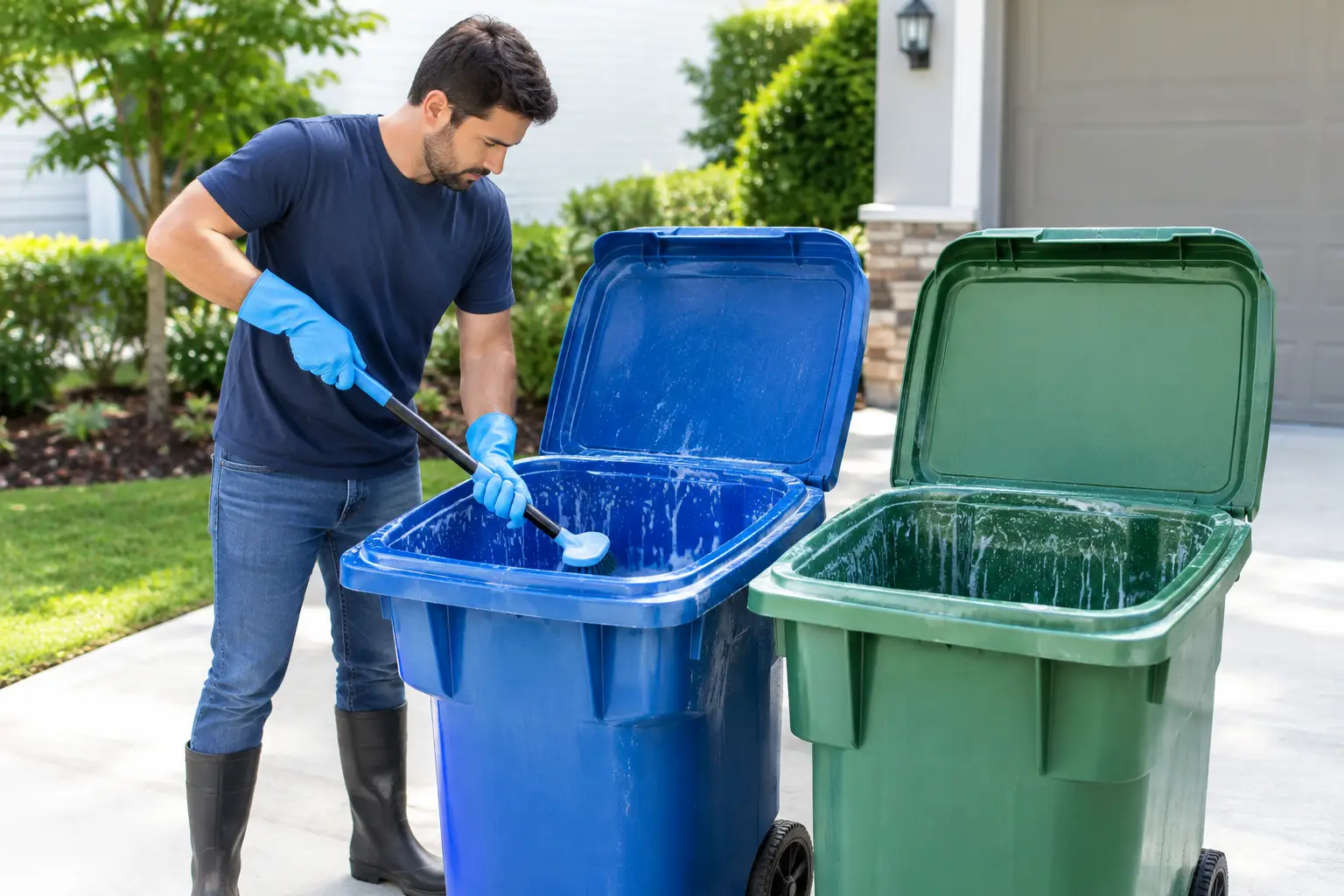
A garbage cart can look fine from the driveway and still hold the source of that stubborn smell by the garage. To clean garbage carts safely, you need more than a quick rinse. The job involves slick surfaces, heavy lids, bacteria, sharp debris, strong cleaning products, and wastewater that should not run into the street.
For homeowners, seasonal residents, and vacation-rental managers, a clean cart is not just a nicer detail. It helps keep odors, pests, maggots, and messy curb-day surprises from becoming a recurring problem. The safest approach is one that protects your body, your property, and the drainage system around your home.
Why Garbage Cart Cleaning Needs a Safer Approach
A 95-gallon cart is awkward even when it is empty. Add a wet interior, a hinged lid, and a sloped driveway, and a routine chore can turn into a slip, strain, or spill. Florida heat makes the work tougher, while food residue and moisture create ideal conditions for odor-causing bacteria, mold, and insects.
There is also the runoff issue. Soap, degreaser, food waste, and dirty water do not belong in storm drains. In many neighborhoods, curbside drains lead directly to local waterways rather than a treatment facility. Washing a cart in the street may seem harmless, but the wastewater can carry contaminants farther than your driveway.
The goal is not to make a garbage cart look brand-new. It is to remove the grime that causes odor and pest activity without exposing yourself to avoidable hazards or sending dirty water down the curb.
Start Only After Collection Day
The safest time to clean a cart is immediately after trash collection, when it is empty. Trying to wash a partially full bin means lifting bags, handling loose waste, and working around sharp or leaking items. That adds risk and makes a thorough cleaning nearly impossible.
If collection has already happened, move the empty cart to a stable, level spot before you begin. Keep it away from the street, storm drains, vehicles, landscaping, and entryways. A shaded area can make the task more comfortable, but avoid working where the surface stays slick or where rinse water will pool.
This timing is one reason recurring post-collection service works well. The cart is empty, the cleaning can be completed properly, and it is ready to return to its normal spot without interrupting the household routine.
Wear Basic Protection Before You Touch the Cart
Treat the inside of a garbage cart like a dirty utility surface, not a regular household container. Wear waterproof gloves that cover your wrists and closed-toe shoes with good traction. Eye protection is smart when using a hose or pressure washer because splashing water can carry grime back toward your face.
Long sleeves and pants are worthwhile if you are using a high-pressure sprayer or handling visible mold. If the cart has a strong odor, dried waste, or maggots, avoid leaning directly into it. Keep your face back and let water and cleaning solution do the work.
Do not clean an open wound with bare hands, even if you are only planning a quick rinse. And never combine cleaning chemicals. Mixing bleach with ammonia, acidic cleaners, or unknown products can create dangerous fumes.
Remove Loose Debris Without Reaching Inside
Open the lid carefully and check for loose items before adding water. Broken glass, can lids, skewers, small batteries, and pet-waste bags often collect near the bottom. Tip the cart slowly if needed, using the handle and wheels rather than reaching into the interior.
For stubborn debris, use a long-handled brush or grabber tool. If you find a sharp object, place it in a rigid container before disposal. Batteries, electronics, paint, chemicals, and other hazardous materials should follow local disposal rules rather than going back into the cart.
This step may feel slow, but it prevents one of the most common garbage-cart injuries: a cut from something hidden under soggy paper or residue.
Use Hot Water, the Right Cleaner, and a Controlled Rinse
Warm or hot water helps loosen greasy residue that cold water leaves behind. Apply a cleaner or sanitizer designed for hard outdoor surfaces, following the label directions for dilution and contact time. More product is not always better. Excess soap creates extra runoff and can leave a slippery film on the cart and driveway.
Scrub the areas that collect the most buildup: the bottom corners, inner walls, lid underside, rim, handles, and wheel wells. A long-handled brush lets you reach deeper without climbing over or putting your upper body inside the cart.
High-pressure equipment can be effective, but it comes with trade-offs. Too much pressure can blast contaminated water onto siding, vehicles, patio furniture, or your clothes. It can also force dirty water across the driveway before you have a way to contain it. Keep the nozzle pointed down into the cart, use a controlled setting, and never spray toward your feet or another person.
If your cart has heavy grease, baked-on residue, or a persistent odor after cleaning, a household hose may not be enough. Professional equipment uses high-pressure hot water and commercial sanitation products, but the real difference is what happens to the wastewater afterward.
Keep Dirty Water Out of the Street
A clean cart should not leave behind a dirty curb. Before rinsing, consider where the water will go. Do not position the cart at the edge of the driveway or near a storm drain. Avoid washing when rain is expected, since rain can carry residue into drainage areas before you can manage it.
For a light cleaning, use as little water as practical and collect solids first. For a deep clean, wastewater capture is the responsible option. This is especially relevant for homes near bays, canals, or coastal areas, where stormwater has a direct path to sensitive waterways.
Professional cart-cleaning systems can wash, sanitize, deodorize, and capture wastewater on site. That approach is useful when carts have recurring odor, pest activity, or buildup that is difficult to address with a brush and hose alone.
Dry the Cart Before Adding a New Bag
After rinsing, leave the lid open long enough for the interior to air-dry. Moisture trapped under a closed lid encourages odor and gives mold and flies a better environment. If you need the cart ready quickly, wipe the rim, lid, and handles with a clean towel, then let the interior drain fully.
Once dry, add a fresh bag only when you have waste to place inside. A loose bag sitting in the bottom of a cart can trap moisture and become another source of odor. If leaks are a regular problem, double-bag wet food waste and keep liquids out of the cart whenever possible.
A small amount of deodorizer can help, but it should support cleaning, not replace it. If a cart smells bad again within days, there is likely residue under the lid, in the bottom corners, or around the wheels.
Know When the Job Is Better Handled for You
DIY cleaning makes sense for a lightly used cart, a small amount of buildup, and a homeowner who can safely manage the physical work. It may not be the best fit for someone who has mobility limitations, a steep driveway, a heavy cart, or no practical way to contain wastewater.
It also depends on how the property is used. Vacation rentals and second homes can generate unpredictable trash volume, especially after guest turnovers or before an owner returns. A dirty, overflowing cart can affect curb appeal quickly and invite HOA complaints or pest problems.
Curb Critter handles cart cleaning immediately after collection, when bins are empty, then sanitizes and deodorizes them with hot water while capturing the wastewater on site. For customers already using recurring valet service, it turns a separate chore into part of a dependable curb-day routine: bins out, bins in, and spotless.
The best cleaning plan is the one you can maintain safely. Whether you handle a light rinse yourself or use a recurring service, keep the work off the street, keep your footing secure, and do not wait until the odor tells the whole neighborhood it is time.