Curbside Cart Safety for Florida Homeowners
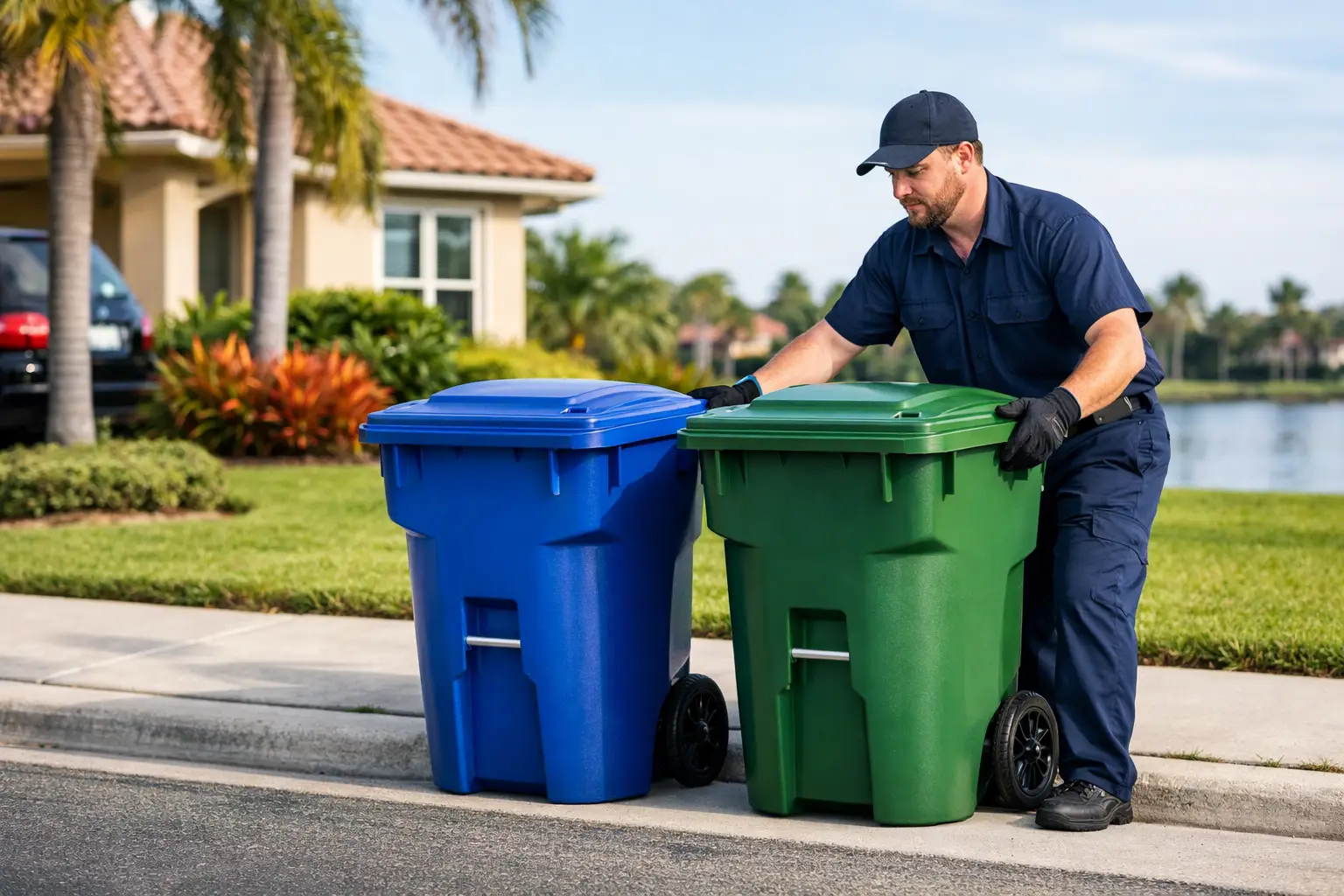
A full 95-gallon cart can be awkward on a perfectly flat driveway. Add Florida heat, a wet walkway, loose gravel, or a curbside slope, and a routine chore can turn into a fall, a strained shoulder, or a cart left in the wrong place. Good curbside cart safety is less about muscling a bin to the street and more about creating a dependable collection-day routine that protects people, property, and the neighborhood.
For homeowners aging in place, seasonal residents, and vacation-rental operators, the risk is not hypothetical. A missed pickup can leave a cart overflowing for days. A bin rolled out too early can block a sidewalk, invite pests, or draw HOA attention. The simplest fix is to plan the task before the cart is heavy and the weather is working against you.
Curbside Cart Safety Starts Before Pickup
The safest route to the curb is one that stays clear every week. Walk the route from your storage spot to the collection point and look for common trouble areas: uneven pavers, hose reels, landscaping borders, parked vehicles, sprinkler heads, and slick patches where rainwater collects. What feels like a minor obstruction when carrying nothing can become a genuine hazard when you are steering a large, loaded cart.
Keep the path at least as wide as the cart, with room for your hands and feet on either side. If the cart must cross grass, understand that rain can make turf soft enough for wheels to sink or skid. If you have a gravel drive, move slowly and avoid sharp turns, which can catch one wheel and twist the cart unexpectedly.
Timing matters, too. Rolling a cart during the coolest, brightest part of the evening is usually safer than rushing at dawn or trying to beat a storm. In Sarasota and Manatee counties, summer downpours can arrive quickly. If the route is wet, wear shoes with traction and give yourself extra time. Flip-flops, loose sandals, and wet concrete are a poor combination for any heavy household task.
Load for control, not just capacity
A cart can technically hold a great deal, but that does not mean it should be packed to the point that it is difficult to move. Heavy bags should sit low in the cart, and loose items should not spill over the rim. Overfilled carts are harder to tip back onto their wheels, more likely to drop debris, and may not be collected if the lid cannot close.
Avoid forcing bulky items down with your hands or body weight. That can damage the lid or create an unstable load that shifts as you roll. Break down boxes, distribute heavy materials over multiple collection days when possible, and follow local rules for items that need separate disposal. A cart should roll behind you without jerking, swaying, or requiring a hard pull.
Use a Safer Way to Move the Cart
Most cart injuries happen when someone bends, twists, or tries to control the weight with one arm. Stand close to the handle, keep both hands on the cart, and tip it back with your legs rather than pulling from your lower back. Once it is balanced on its wheels, walk at a controlled pace. Do not run it downhill or let it roll ahead of you.
When crossing a driveway slope or curb cut, keep the cart on the more level side when you can. A loaded cart can gain momentum faster than expected, especially after rain. If the route requires a steep incline, a long distance, or a difficult turn around parked cars, that is a good reason to ask for help or use a valet service rather than pushing through discomfort.
Be especially cautious around vehicles and street traffic. A cart should never be placed where it blocks a driveway, fire hydrant, mailbox, sidewalk, or line of sight at an intersection. Position it according to your local collection guidance, typically with the wheels and handle facing your home and the opening facing the street. Leave enough clearance from cars, poles, and other carts so the collection truck can lift it without striking anything nearby.
Keep children, pets, and guests out of the route
Collection morning can be busy, particularly at vacation rentals where guests may be arriving, departing, or loading vehicles. Let children know that carts are not toys and that the collection truck needs plenty of space. Keep pets inside or on a secure leash while moving the cart and when the truck is nearby. The noise and movement can startle even well-behaved animals.
For rental homes, make cart expectations simple and visible. Guests should know where bins are stored, what belongs in each container, and when trash needs to be bagged and contained. A few clear instructions can prevent loose garbage, overloaded lids, and last-minute cleanup before a turnover.
Do Not Leave Carts at the Curb Longer Than Needed
Putting carts out at the right time is only half the job. Bringing them back promptly matters just as much. Carts left at the curb can narrow sidewalks, look neglected, create obstacles for walkers, and advertise that a home may be vacant. For second homes and seasonal properties, that last point deserves attention.
A returned cart also protects the container itself. Florida sun can fade and weaken plastic over time, while heavy rain can leave standing water in an open lid. Windy conditions may knock a cart over, scattering debris into the street or a neighbor's yard. Returning the bin after collection keeps the property looking cared for and reduces the chance of an avoidable mess.
This is where a recurring routine has real value. Curb Critter moves bins out after 5 p.m. before scheduled collection and returns them after 3 p.m. on collection day, with photo confirmation at both stages. That level of proof can be particularly useful when you are traveling, managing several homes, or simply do not want to wonder whether the cart made it back from the curb.
Clean Carts Are Safer Carts, Too
Cart safety is not only about lifting and placement. A dirty container can create another set of problems: slippery residue on the lid or handle, strong odors, flies, mold, and maggots. In Florida's heat, small leaks from trash bags can become a sanitation issue quickly.
Rinsing a bin with a garden hose may make it look better for a day, but it often leaves odor-causing bacteria and grime behind. It can also send contaminated wastewater toward storm drains. A professional process that uses hot water, sanitizer, deodorizer, and wastewater capture is a better fit for recurring care, especially when the cleaning happens right after collection while the cart is empty.
Keep lids and handles clean enough to grip confidently. If you notice cracked wheels, a broken handle, or a lid that will not close, report or replace the cart according to your local provider's process. Trying to maneuver a damaged cart is a safety issue, not just an inconvenience.
Build a Collection-Day Routine You Can Trust
The best curbside cart safety plan is the one you can follow without a last-minute scramble. Choose one evening each week to check the route, bag trash securely, break down boxes, and confirm that the cart is not overloaded. On collection day, make sure the bin is clear of vehicles and returned before it becomes an obstacle or an eyesore.
If that routine is physically demanding, unreliable during travel, or hard to manage across rental turnovers, it is reasonable to hand it off. Convenience is not cutting corners when it removes a recurring lifting risk and keeps an essential property task on schedule.
A cart should be out when it needs to be, back where it belongs, and clean enough to handle without hesitation. That is a small detail that helps a home feel safer, more orderly, and better cared for every single week.