Curbside Help Versus Self Hauling: Which Works?
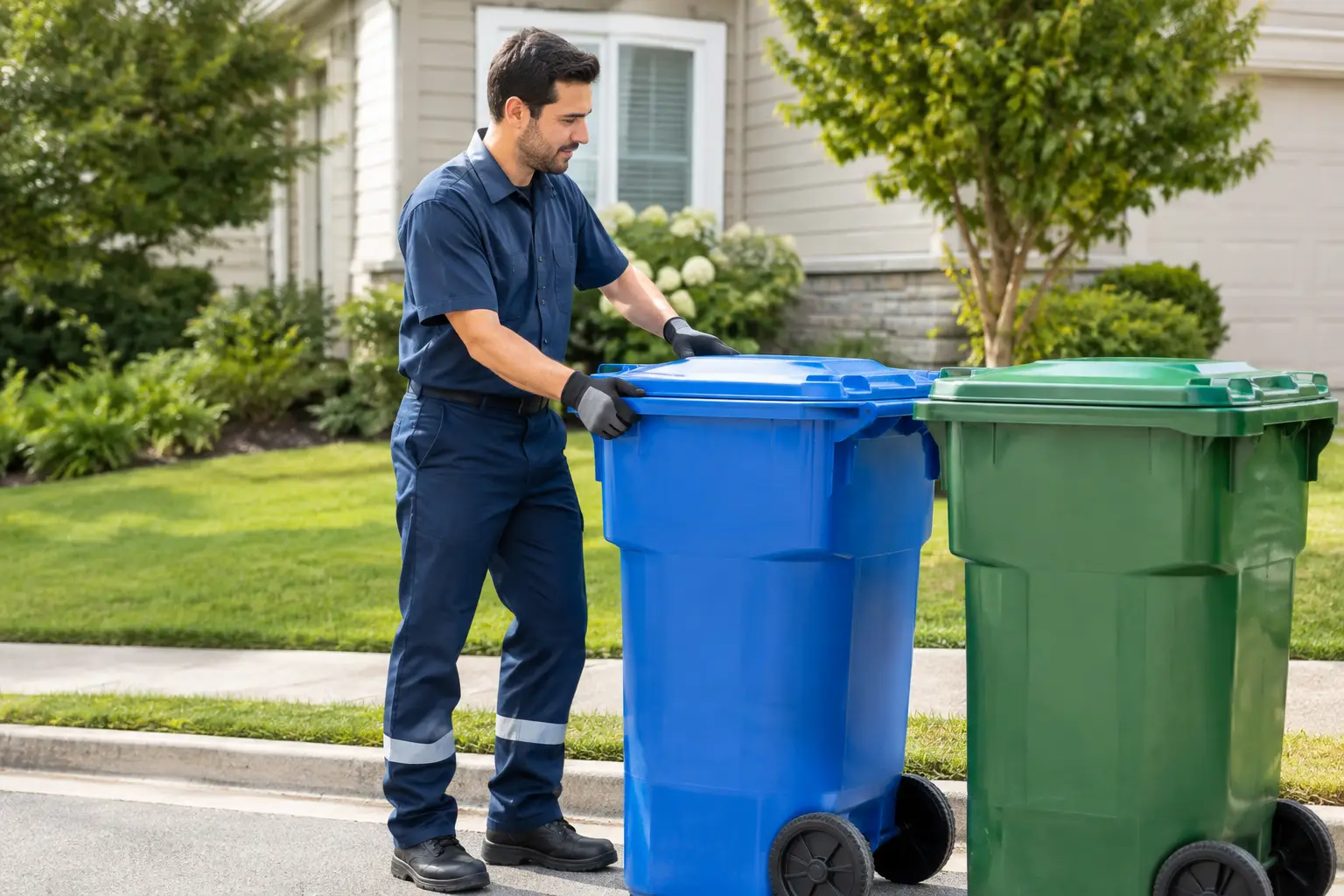
A 95-gallon trash cart can look harmless until it is full, the driveway is wet, and pickup day arrives in Florida heat. That is where curbside help versus self hauling becomes more than a convenience question. It is a decision about physical strain, missed collection windows, property appearance, and who is responsible for one more recurring household task.
For some households, rolling bins to the curb is quick and manageable. For others, it becomes the task that lingers on the to-do list, especially after surgery, during travel, between vacation-rental guests, or when rain turns grass and gravel into a difficult route. The right choice depends on your property, your schedule, and how much reliability matters when no one is home.
What “self hauling” means at home
In this context, self hauling means the resident, family member, neighbor, or property staff moves the garbage cart out before collection and brings it back after pickup. It does not mean hauling trash to a landfill. The work may take only a few minutes, but it has a fixed deadline: the bin has to be at the curb before the truck arrives.
That deadline is what makes the task harder than it sounds. Pickup schedules can shift around holidays, weather, route changes, or a busy week when you simply forget what day it is. A bin left at the side of the house means a missed collection. A bin left at the curb too long can create an eyesore, draw HOA attention, and signal that a seasonal home is unoccupied.
Self hauling works best when someone is consistently available, physically comfortable handling a loaded cart, and able to keep track of collection days. It can be a perfectly sensible routine for a compact property with a smooth, level driveway. The trade-offs grow when the cart is heavy, the route is uneven, or the person responsible is not always there.
Curbside help versus self hauling: the real differences
Curbside help shifts the recurring bin-moving task to a scheduled service team. Rather than hoping someone remembers, the service follows the collection calendar and handles the route as part of its normal operations. At Curb Critter, carts are rolled out after 5 p.m. before scheduled collection and returned after 3 p.m. on collection day, with photo confirmation at both stages.
That routine solves more than forgetfulness. It provides a clear record for homeowners who travel, adult children helping parents from another city, and property managers overseeing several homes. Instead of wondering whether the bins made it out or came back in, they can verify that the task was completed.
The practical differences usually come down to four areas: effort, timing, accountability, and consistency.
Effort and safety
A full cart can be awkward even on a level driveway. Add a slope, a long side yard, loose pavers, grass, gravel, standing water, or a narrow gate, and the work becomes more physical. Pulling a heavy cart also means twisting, balancing, and negotiating obstacles while managing a bulky load.
For older adults aging in place, the concern is not whether they can move a bin on a good day. It is whether they should have to manage it after a rough night, during a recovery period, or when the weather is miserable. A single slip or strained back is a high price to pay for taking out the trash.
Curbside help removes that recurring lift-and-pull burden. It is not a replacement for every property chore, but it takes a deadline-driven physical task off the list every week.
Timing and missed pickups
Self hauling gives you full control, provided you are home and remember. If your collection day is Wednesday morning, the cart needs to be ready Tuesday evening or early Wednesday before the truck arrives. That is easy until a dinner runs late, a flight is delayed, guests are checking out, or you are away for the season.
A dependable valet schedule is especially useful for snowbirds and second-home owners. Bins can be handled on the proper day while the home stays orderly, rather than sitting out for days or remaining hidden and full after the truck has passed. For vacation rentals, that same timing can prevent a bin from overflowing between guest turnovers.
Accountability when you are not there
A neighbor may be generous, a family member may be available, and a maintenance person may occasionally help. Those arrangements can work, but they often depend on informal communication. If a bin is missed, it may be difficult to know whether the pickup schedule changed, the cart was blocked, or someone simply forgot.
Photo verification adds useful accountability without making the process complicated. It gives the homeowner or manager confirmation that the cart was at the curb before collection and back at the home afterward. For remote owners, that proof can be the difference between guessing and knowing.
Consistency and curb appeal
A cart at the curb is part of the visual impression of a property. In communities with HOA rules or close neighbors, leaving bins visible longer than necessary can become a compliance issue as well as a presentation issue. For rental homes, an overfilled or misplaced cart can be the first thing arriving guests notice.
Self hauling can keep a property looking sharp when the routine is followed. Curbside help makes that routine more dependable. The benefit is not that a trash cart disappears forever. It is that it is moved out and back on a predictable schedule, without asking the homeowner to arrange it every week.
The sanitation question people often overlook
Getting the bin to the curb is only half the job. After collection, the cart is empty but rarely clean. Leaked bags, food residue, moisture, and Florida heat can create odors quickly. Those conditions can support odor-causing bacteria, mold, and maggots, even when trash is collected on schedule.
Self hauling leaves cleaning to the homeowner. A quick rinse with a garden hose may remove loose debris, but it can also send dirty wastewater toward storm drains. Cleaning a deep cart thoroughly is unpleasant work, and it is often postponed until the smell becomes impossible to ignore.
A recurring bin service can address sanitation at the most practical point: immediately after collection, when the container is empty. Professional cleaning with high-pressure hot water, sanitizer, deodorizer, and on-site wastewater capture removes the buildup without creating improper stormwater runoff. When cleaning is paired with regular valet service, there is no separate appointment to schedule or a full bin to work around.
That combination matters for homes with several occupants, pet waste, frequent cooking, rental turnovers, or long stretches of hot weather. It also matters for anyone who wants the bin area to smell like part of a cared-for home, not like the least pleasant corner of the property.
When self hauling is still the better choice
Curbside help is not necessary for every household. If you are home year-round, have an easy route to the curb, have no mobility concerns, and do not mind keeping up with the schedule, self hauling may be the simplest option. Some residents prefer to handle every aspect of property care themselves, and there is value in that control.
It can also make sense when collection is infrequent, carts are small, or a reliable household member already handles outdoor tasks. The key is to be realistic about whether the routine remains dependable during travel, illness, busy seasons, and bad weather. A plan that works only under ideal conditions is not always the plan that works when it counts.
Who benefits most from recurring curbside help
Curbside help tends to have the greatest value for people whose time, mobility, or location makes trash day harder than it needs to be. That includes older homeowners who want to remain independent without managing heavy carts, seasonal residents who need the home maintained while away, and rental operators who cannot risk missed pickups between guests.
It also fits households that simply want one less chore with a deadline attached. A recurring subscription makes the service predictable: two bins can be included in a plan, additional bins can be added as needed, and a one-time trip can help travelers who need coverage without a long commitment. Flexible month-to-month cancellation keeps the decision practical rather than permanent.
Choose the routine that holds up on a hard week
The best answer is not about whether you are capable of moving a trash cart. It is about whether you want that task to depend on your availability every single collection day. If self hauling is easy and reliable at your home, keep it simple. If it creates strain, uncertainty, odors, or a property-management headache, scheduled curbside help can make the whole routine feel lighter.
Trash day will still come every week. The useful question is whether you want to spend part of it pulling a heavy cart through the heat, or simply know that it is out, back in, and handled.