Florida Bin Sanitation for Cleaner Curb Days
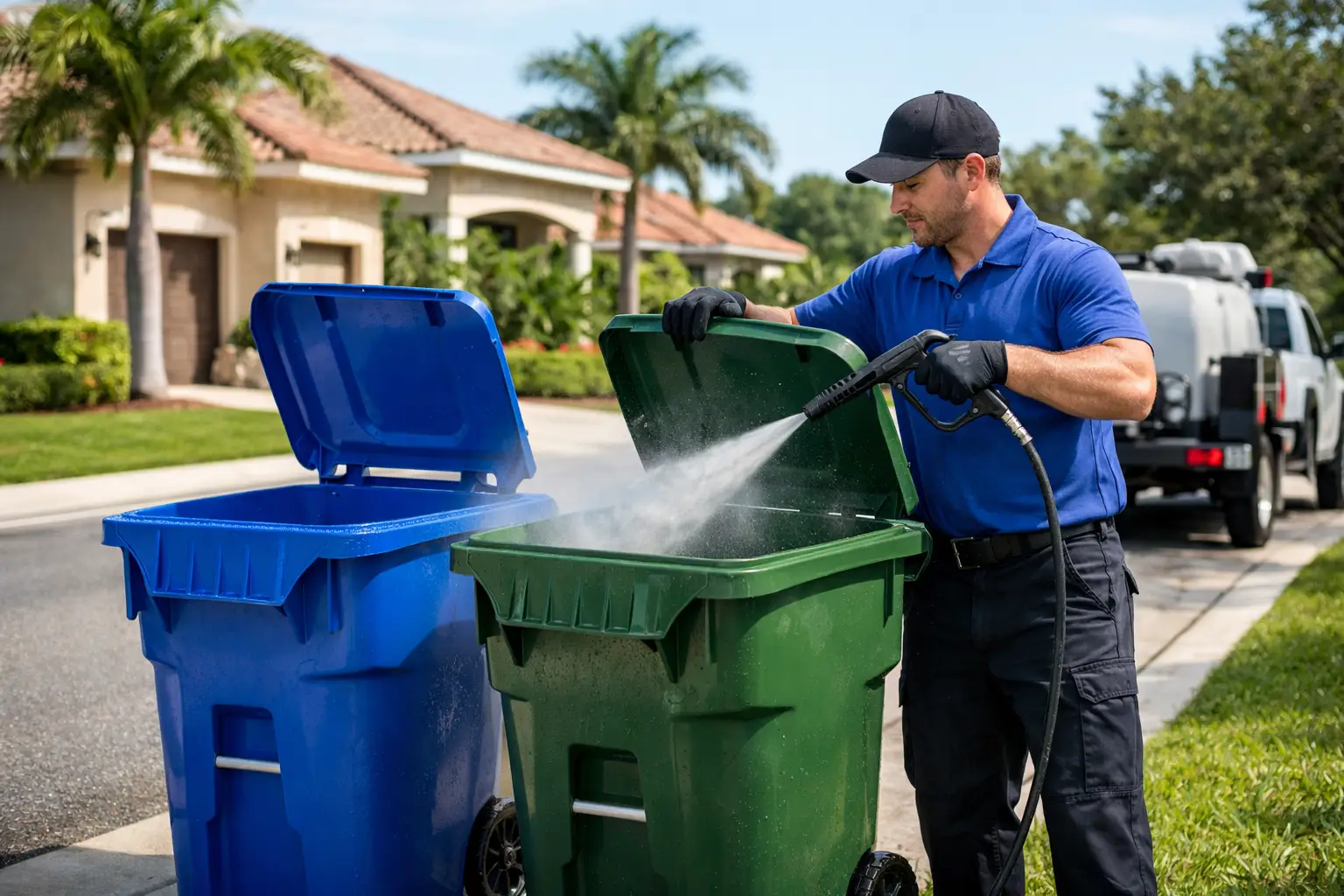
A garbage cart can look harmless from the street, but Florida bin sanitation is about much more than appearances. After a few hot, humid days, residue at the bottom of a bin can turn into lingering odor, sticky grime, mold growth, and a welcome sign for flies and maggots. The trash is gone on collection day. What it leaves behind is the problem.
For homeowners, that problem often shows up the moment the lid opens. For vacation-rental owners and property managers, it can show up as an unhappy guest, an HOA concern, or a cart that sits too close to an entryway smelling worse than it should. A clean bin is one small part of a property that stays easier to manage.
Why Florida Bin Sanitation Is Different
Heat changes the equation. In Sarasota and Manatee County, household waste does not need long to break down in a closed plastic cart. Food residue, pet waste, leaking bags, and damp yard debris create a warm, moist environment where odor-causing bacteria thrive.
Rain adds another layer. Water that gets into a bin mixes with waste residue and settles at the bottom, where it can become a sour-smelling sludge. Even when every trash bag is tied properly, a single leak from a takeout container or spoiled food package can leave a mess that regular pickup does not remove.
Then there are the pests. Flies are drawn to organic material, and maggots can develop quickly when conditions are right. Ants, roaches, and rodents may also investigate bins with persistent residue or overflowing bags. Cleaning does not replace good trash habits, but it removes the buildup that keeps inviting those problems back.
Empty Does Not Mean Clean
Collection day takes away the contents of the cart, not the bacteria, drips, or residue stuck inside it. That distinction matters. Spraying a little hose water into a bin may rinse loose debris, but cool water alone often does not cut through greasy buildup, and the dirty runoff has to go somewhere.
A professional cleaning works best immediately after collection, when the container is empty. High-pressure hot water helps release grime from the cart's walls, lid, and bottom. Sanitizer addresses odor-causing bacteria, while deodorizer leaves the bin smelling fresh rather than merely masking a problem.
Just as important is wastewater capture. Washing a dirty cart in a driveway can send contaminated water toward a storm drain, where it does not belong. Responsible bin cleaning contains that wastewater on site instead of washing food residue, cleaning products, and bacteria into the street.
That timing also prevents an extra chore for the homeowner. There is no need to remember a separate appointment, empty the bin early, or leave it out for another service window. The cart is already at the curb and already empty. It is the logical moment to clean it.
The Household Benefits Go Beyond Odor
The most obvious benefit of routine sanitation is opening the lid without bracing for a smell. But cleaner carts also make curb day more comfortable, especially for people who handle bins near a garage, side gate, or front entrance.
For older adults aging in place, sanitation pairs naturally with trash-can valet. A full 95-gallon cart can be awkward to move across a long driveway, grass, gravel, or uneven pavement. Add Florida heat, rain, and a slippery lid, and a simple weekly task becomes a physical burden. Having the cart rolled out after 5 p.m. before collection and returned after 3 p.m. on collection day keeps homeowners hands-free while reducing the chance of a missed pickup.
For seasonal residents, a regular route provides something equally valuable: consistency. A home should not look neglected because its bins were left at the curb for days or because nobody was available to bring them in after collection. Photo confirmation at rollout and return gives owners a clear record that the job was completed.
A Better Routine for Vacation Rentals
Vacation rentals create their own bin challenges. Guests may not know the local collection schedule, may put loose waste in a cart, or may fill the bin faster than expected during a busy turnover. When a cart is overfilled or missed at pickup, the result can be visible from the street and unpleasant for the next arrival.
A dependable valet routine keeps bins out for collection and returned promptly after service. That matters on properties where curb appeal, neighborhood rules, and guest experience are all tied together. Monthly cleaning also helps address the residue that builds up from frequent guest use, particularly in warm months when turnover volume is high.
There is a practical trade-off to consider. A bin that is used lightly by one resident may not need the same cleaning frequency as a cart serving a large family or a high-occupancy rental. But waiting until odor or maggots appear means the problem has already had time to develop. Recurring cleaning is easier to manage than emergency cleanup.
What a Professional Cleaning Visit Should Cover
Good bin sanitation is a process, not a quick spray-and-go rinse. A thorough service should clean the inside of the cart where residue collects, along with the lid and exterior touchpoints that people handle each week. It should use appropriate pressure and hot water, then apply sanitizer and deodorizer after the grime is removed.
The route design matters too. A service that cleans bins after collection avoids asking residents to coordinate another visit around a full cart. When cleaning is bundled with recurring valet service, the same visit can handle the entire curb-day cycle: bins go out, collection happens, empty carts are cleaned, and bins come back in.
Curb Critter follows that approach with recurring plans that include two bins, with additional bins available when needed. Flexible month-to-month cancellation and quarterly billing suit homeowners who want a set routine without being tied to a long contract. For travelers who only need help while away, a one-time trip can keep collection day from becoming a loose end.
Simple Habits That Help Keep Bins Fresher
Professional cleaning handles the deep grime, but a few home habits can reduce the mess between visits. Bag wet trash securely, drain food containers when possible, and avoid placing loose waste directly into the cart. If a bag tears, clean up the spill sooner rather than later instead of letting it bake into the bottom of the bin.
It also helps to close the lid fully. An open cart collects rainwater, gives pests easier access, and can create an HOA issue in neighborhoods with visible storage rules. If the bin consistently overflows, consider whether the household needs an additional cart, more frequent service, or better sorting of recyclables and trash.
Clean Carts Make Curb Day Easier
Garbage bins are not glamorous, but they are part of how a home functions. When they are handled on schedule and cleaned after collection, they stop being a source of odor, strain, and curbside worry. The goal is simple: your bins are out when they need to be, back where they belong afterward, and clean enough that opening the lid is no longer a chore you dread.