Garbage Bin Sanitizing Service That Fits Curb Day
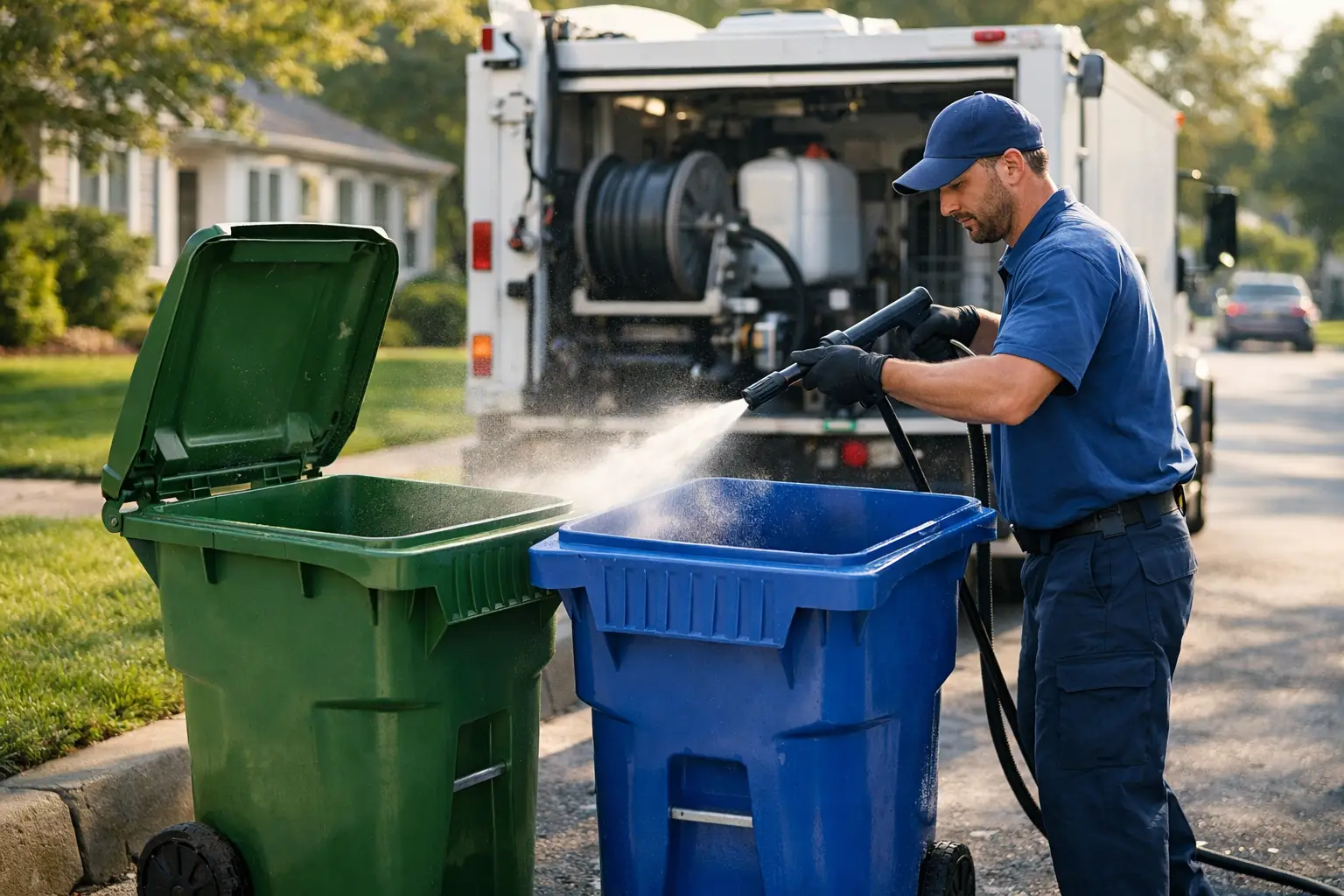
A garbage bin sanitizing service is easy to overlook until opening the lid becomes something you avoid. In Florida heat and humidity, a cart that held food waste, pet waste, leaking bags, or yard debris can turn sour fast. That smell is not just trash. It is residue, bacteria, and moisture settling into the bottom, corners, and lid of the can.
For homeowners, seasonal residents, and vacation-rental managers, a clean bin is one less unpleasant task competing for attention. The right service does more than spray the inside of a cart. It handles the work at the right time, cleans thoroughly, contains the dirty water, and leaves the bin ready to return to its place without adding another appointment to your calendar.
Why dirty garbage bins become a Florida problem
A 95-gallon cart has plenty of room for waste, but it also has plenty of hidden surfaces where grime can build up. A bag can leak unnoticed. A trash pickup can leave residue behind. Add rain, heat, and humidity, and the inside of a bin becomes a damp environment where odor-causing bacteria and mold can thrive.
Maggots are another common frustration. They are not a sign that a homeowner has failed at housekeeping. Flies are drawn to exposed food residue and waste, especially when a lid does not close tightly or a bag breaks on a hot day. Once residue is stuck in the bottom of the cart, simply waiting for the next pickup does not solve the source of the problem.
For homes with a long driveway, side-yard bin storage, or a garage near the carts, the impact is more noticeable. Odors can travel. Pests can gather. A visibly dirty bin can also undercut the appearance of an otherwise well-kept property, which matters in communities with HOA standards and in vacation rentals preparing for the next guests.
What a garbage bin sanitizing service should actually do
Cleaning a bin with a garden hose may rinse away loose debris, but it rarely addresses the residue that causes persistent odor. It can also send contaminated water toward a storm drain, where it does not belong. A professional garbage bin sanitizing service should be designed around both sanitation and responsible wastewater handling.
A thorough cleaning starts after collection, when the cart is empty. This timing matters. There is no need to ask a customer to empty a bin early, store loose trash elsewhere, or schedule a separate stop around household routines. The empty container can be washed from top to bottom using high-pressure hot water to loosen caked-on grime.
The wash is followed by sanitizer and deodorizer. Hot water and pressure remove the mess you can see, while sanitizing helps address the bacteria and mold contributing to the smell you cannot always see. Deodorizer finishes the job so the cart does not merely look cleaner - it smells cleaner when it comes back to the house.
Just as important, the wastewater should be captured on-site rather than rinsed into the street or stormwater system. That operational detail is easy to miss when comparing cleaning options, but it is part of doing the job responsibly. A clean cart should not create a runoff problem at the curb.
Timing is the difference between convenient and complicated
The biggest trade-off with stand-alone bin cleaning is scheduling. A homeowner may need to remember an appointment, put empty carts in a certain location, or coordinate service around a collection day. That can work for an occasional deep clean, but it creates another task for people who are trying to simplify property care.
Recurring service makes more sense when cleaning is built into the curb-day routine. Curb Critter cleans containers immediately after trash collection, when they are empty, then returns them clean rather than leaving the homeowner to manage a second visit. The result is straightforward: bins go out, come back in, and get cleaned as part of the same dependable rhythm.
For customers who also use trash-can valet, this routine removes even more friction. Bins are rolled to the curb after 5 p.m. before scheduled collection and brought back after 3 p.m. on collection day. Photo confirmation at both stages gives homeowners and property managers proof that the work was completed. You do not have to wonder whether the cart made it out before the truck arrived or whether it has been sitting at the curb all afternoon.
That reliability can be especially useful for older adults who would rather not pull heavy carts over grass, gravel, uneven driveways, or wet pavement. It also helps snowbirds keep a second home maintained while they are away. For vacation rentals, it supports cleaner turnovers and avoids the familiar problem of a full, smelly bin greeting arriving guests.
How often should bins be sanitized?
There is no single schedule that fits every household. A one-time cleaning can make sense after a bag rupture, a pest issue, a long stretch of vacancy, or a particularly messy move-out. It is a practical reset when a bin needs attention now.
For most occupied homes, monthly service is a strong baseline. It prevents residue from becoming a long-term layer in the bottom of the cart and keeps odors from getting ahead of you during the hottest months. Homes with large families, frequent entertaining, pets, diapers, seafood waste, or vacation-rental turnover may benefit most from staying on a regular schedule.
Recurring cleaning also helps eliminate the decision fatigue that comes with an unpleasant chore. Instead of waiting until the odor is strong enough to force action, the bin is handled before it becomes a bigger nuisance. That is the value of a routine: less emergency cleanup, fewer pests, and no need to touch a cart you would rather avoid.
What to look for before choosing service
Not every cleaning method delivers the same result. Ask when the bin is cleaned, how wastewater is handled, and whether sanitation is included after washing. If a company cannot explain its process clearly, the service may be more of a cosmetic rinse than a true clean.
It is also worth considering how the service fits your actual property routine. A separate appointment may be fine if you only want occasional cleaning. But if you already need help getting carts out and back on time, bundled valet and cleaning can be the more efficient choice. One route, one recurring schedule, and fewer things to remember.
For property managers, confirmation matters as much as convenience. Photos provide a simple record for an owner who is out of state, a manager coordinating several homes, or a rental operator handling a guest question. Clear timing standards are equally valuable. “We will get to it” is not the same as knowing when carts are rolled out and returned.
Pricing structure deserves a look, too. Plans that include two bins can suit the typical home with trash and recycling carts, while additional bins should be easy to add when needed. Flexible recurring service with quarterly billing and month-to-month cancellation gives customers consistency without feeling locked into a long contract. A one-time trip can be useful for travelers returning to a property that needs a refresh.
A cleaner cart supports a better-kept home
Garbage bins are not glamorous, but they sit at the edge of the property where neighbors, guests, and delivery drivers can see them. Keeping them clean protects the small details that make a home feel cared for. It also makes daily life more comfortable, especially when the bins are stored near a garage, walkway, or outdoor living area.
The practical benefit is simple: less odor, less grime, fewer pest concerns, and no wrestling with a heavy, dirty cart. When cleaning happens right after pickup and the dirty water is handled properly, the service does its job without creating work for you.
A bin should not be the household chore that waits until it becomes unbearable. Put it on a dependable curb-day routine, keep the lid opening without the smell, and save your hands for better things.