Heavy Cart Solutions for Safer Curb Days
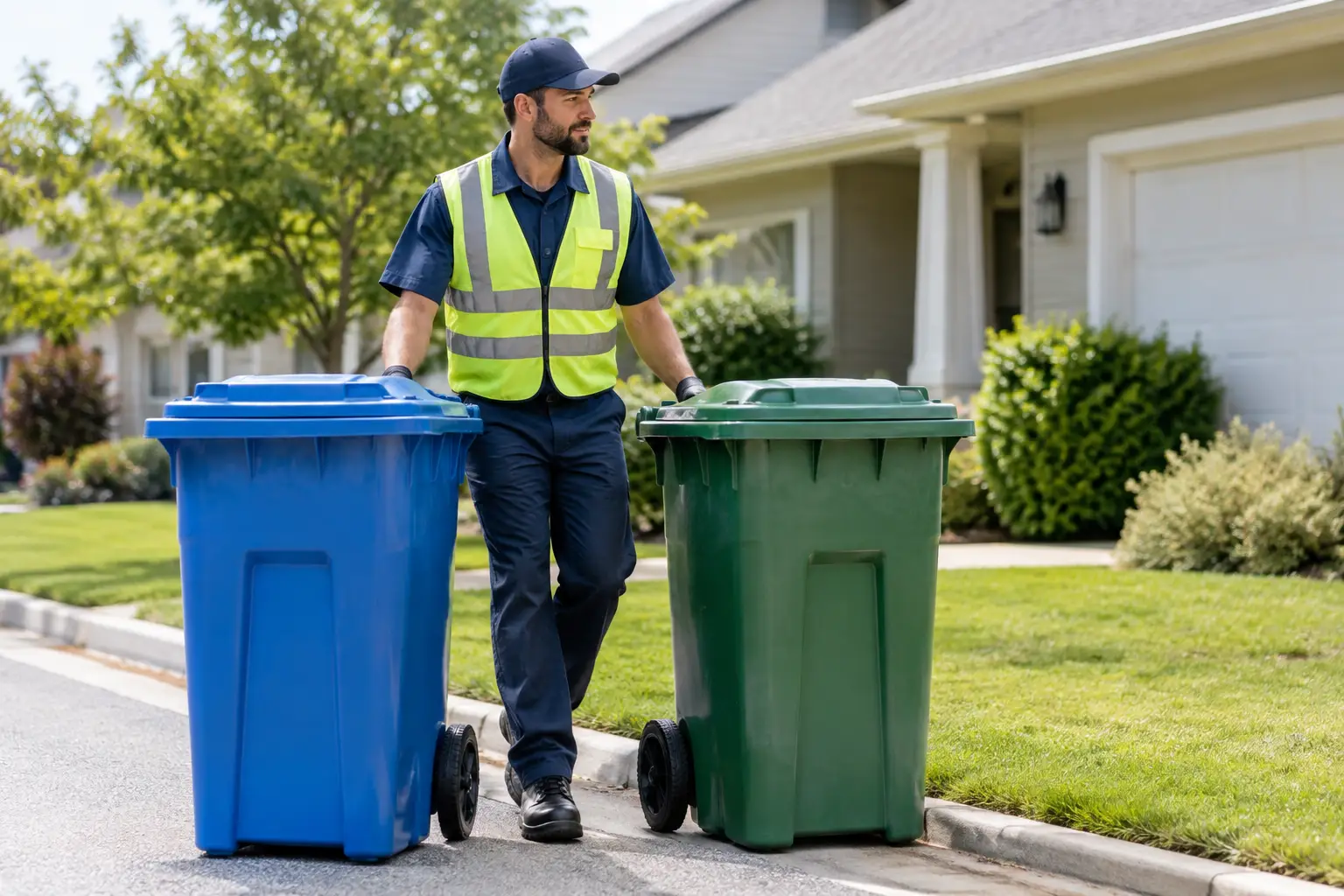
A full 95-gallon trash cart can turn a routine curb day into the hardest chore of the week. Heavy cart solutions are not just about making a bin easier to roll. They are about preventing falls, avoiding missed pickups, keeping a property neat, and making sure a necessary task does not depend on someone wrestling a loaded cart across a driveway in Florida heat.
For many homeowners, the challenge is not the distance to the curb. It is the combination of weight, awkward wheels, sloped pavement, soft grass, gravel, rain, and collection schedules that do not wait for anyone. For seasonal residents and rental owners, there is another problem: the bins still need to move, even when nobody is home.
What Makes a Trash Cart Hard to Handle?
A large residential cart is designed to hold a lot, which means it can become difficult to control well before it is completely full. Wet yard waste, bagged household trash, bottles, and cardboard all add weight quickly. Once the cart is tilted back, the person moving it has to manage that weight while keeping the wheels on a steady surface.
The problem gets more noticeable on properties with long driveways, uneven pavers, loose shell or gravel, and curb transitions. A cart that rolls fine on flat concrete may catch, tip, or pull sideways on a slope. In Sarasota and nearby coastal communities, afternoon storms can make surfaces slick just as residents are trying to prepare for the next morning's pickup.
Physical ability matters too. Older adults aging in place may be fully independent in most parts of life but reasonably want to avoid an activity with a high chance of strain or a fall. A sore back, a shoulder issue, arthritis, balance concerns, or recovery from surgery can make a weekly bin-moving task an unnecessary risk.
Heavy Cart Solutions That Actually Fit the Home
The right answer depends on the property, the resident, and how often the bins need attention. Some households benefit from small changes to their setup. Others need a dependable person to handle the entire curb-day routine.
Improve the Route Before Moving the Cart
Start by looking at the path from the bin storage area to the curb. Remove loose objects, low hoses, pots, and landscape edging that can catch a wheel. If the cart must cross grass or gravel, consider whether it can be stored closer to a firm, level route without becoming an eyesore or violating community rules.
A smooth route reduces effort, but it does not erase the issue of a loaded cart. It is a sensible improvement when the cart is only moderately heavy and the resident can safely manage it. It is not a complete solution for a steep driveway, a long distance, or someone who should not be pulling and tilting weight every week.
Keep Weight and Timing Under Control
Do not wait until the cart is packed to the lid before moving it. Breaking down boxes, keeping rainwater out, and distributing waste between available bins can help prevent an overloaded container. On collection day, the cart should be placed according to the local hauler's spacing and orientation requirements so the truck can reach it without obstruction.
This approach helps, but it relies on someone being present, physically able, and aware of the pickup schedule every week. That can be unreliable during travel, illness, guest turnovers, or busy seasons when the household has more waste than usual.
Use a Recurring Cart Valet Service
For households that want the task off their plate, a recurring cart valet service is usually the most practical heavy cart solution. Instead of remembering the schedule and doing the physical work, the customer has a team move the bins out before collection and return them afterward.
The details are what make this useful. A service that rolls bins out after 5 p.m. before the scheduled collection day keeps carts from sitting at the curb longer than necessary. Returning them after 3 p.m. on collection day restores the property's appearance promptly. Photo confirmation at both stages adds a level of accountability that a neighborly favor or a one-time reminder cannot provide.
For snowbirds, that proof is especially valuable. You do not have to wonder whether the bin was placed out, whether it was left at the street for days, or whether a full cart will be waiting for you when you return. For vacation-rental operators, dependable handling helps prevent overflowing containers between guest stays and supports a cleaner arrival experience.
Why Clean Bins Belong in the Same Plan
Moving a cart is only part of the job. The inside of the bin can become the bigger nuisance once Florida heat gets involved. Food residue, leaking bags, moisture, and bacteria create odors that do not disappear when the garbage truck empties the container. Mold, maggots, and grime can follow soon after.
Rinsing a bin with a garden hose may spread dirty runoff down a driveway and toward a storm drain. It also rarely provides enough pressure, heat, or sanitation to deal with stuck-on waste. That is not the trash - it is the can.
A better approach is cleaning immediately after collection, while the container is empty. Professional bin cleaning uses high-pressure hot water, sanitizer, and deodorizer to treat the inside of the cart at the right moment. Capturing wastewater on site matters as well. Dirty bin water should not be pushed into stormwater drainage just to make a container look cleaner.
Bundling cleaning with recurring valet service also removes an extra appointment from the homeowner's calendar. The cart goes out, comes back, and receives attention when conditions are right. Hands-free is more than a convenience claim when the result is a cleaner bin without hauling it somewhere, waiting around, or handling foul water yourself.
Choosing a Service for Heavy Cart Solutions
Not every cart-moving arrangement offers the same level of reliability. Before signing up, homeowners and property managers should ask how the schedule works, what happens after a holiday shift, and whether the service provides completion verification. A vague promise to "keep an eye on it" is not enough when missing pickup can leave a week of trash on the property.
Look for clear timing standards, straightforward recurring terms, and a plan that accounts for multiple bins. Two bins are common at many homes, while additional carts may be needed for larger households, rentals, or properties with separate recycling and waste collection. Flexible cancellation is worth considering too, particularly for part-time residents whose needs change by season.
It also helps to distinguish between a service that simply drags a cart and one that manages the entire curb-day routine. The second option should protect the home's presentation, reduce the physical burden, and give the customer confirmation that the work happened. Curb Critter follows that model with recurring valet routes, post-collection cleaning, and photo updates for customers who want to stop planning their week around the garbage truck.
A Better Routine for Homeowners and Property Managers
Heavy carts create small problems that can become expensive or frustrating if they are ignored. A pulled muscle can disrupt daily life. A missed collection can lead to overflowing bags. A bin parked curbside for days can draw HOA complaints or make an otherwise well-kept property look unattended.
The most effective solution is the one that fits the real routine, not the one that assumes every week will go perfectly. A cleared path and lighter load may be enough for some households. For others, especially those managing a second home, supporting an older family member, or coordinating guest turnover, recurring cart valet is the sensible way to make curb day someone else's task.
A good curb-day plan should feel almost invisible: bins out when they need to be, back when they should be, and clean enough that opening the lid is no longer something you avoid.