How to Keep Rentals Guest Ready Between Stays
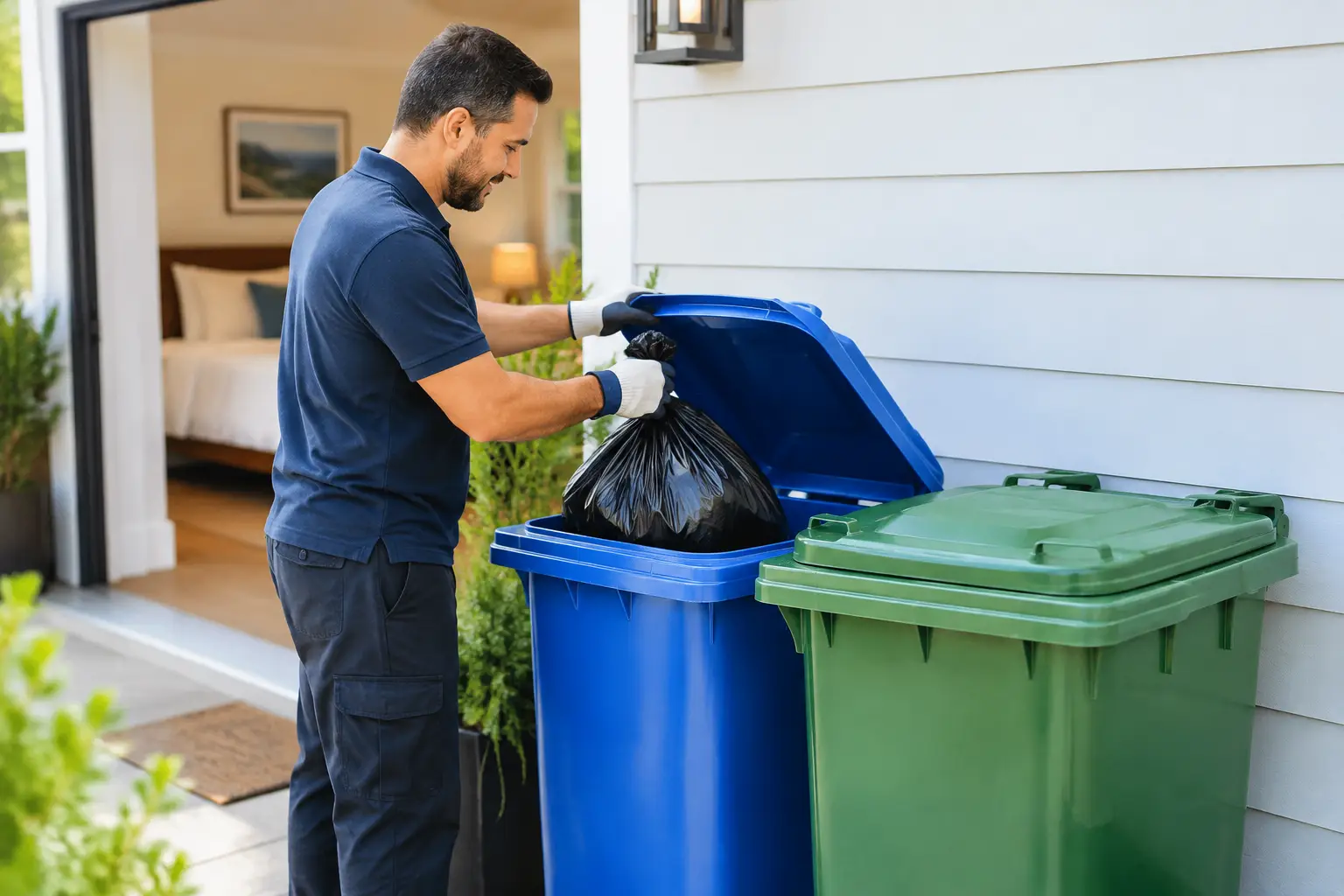
A guest may never mention the garbage carts in a five-star review, but they will notice an overflowing bin by the driveway, a sour smell near the entry, or bags left outside after checkout. To keep rentals guest ready, property managers need a routine that handles the unglamorous details before they become a guest complaint, an HOA issue, or a rushed call on turnover day.
For vacation rentals, the exterior is part of the arrival experience. The driveway, walkways, porch, landscaping, and trash area all tell guests whether the home is cared for. A reliable trash plan protects that first impression while giving your cleaning and maintenance teams one less moving target.
Keep Rentals Guest Ready From the Curb In
Trash is easy to overlook because it happens on a schedule, not during a guest stay. That is exactly why it causes problems. A late checkout can leave a full cart. An owner may be out of town when collection day changes. A bin left at the curb for days can make an occupied rental look unattended, especially in communities with clear HOA rules.
The goal is not simply to get the garbage collected. The goal is to make sure carts are out when they need to be, brought back promptly, and clean enough that they do not become the source of odor, flies, or guest discomfort.
In Sarasota, Bradenton, Siesta Key, and Anna Maria Island, heat and humidity make that timing matter even more. A bin that sits full after a busy weekend can develop odors quickly. Food waste, drink containers, wet bags, and pet waste create the kind of mess that does not wait politely for the next turnover.
Match trash service to your booking calendar
Start by looking at your actual turnover pattern, not just the county collection calendar. If most guests leave on a Sunday and pickup is Monday morning, the cart needs enough capacity for checkout trash and it needs to reach the curb on time. If a pickup falls between guests, make sure someone is responsible for bringing the cart back before the next arrival.
This is where a recurring service is often more dependable than a last-minute task assigned to a cleaner or handyman. Cleaning crews already have a full scope inside the home. Asking them to remember collection windows, move heavy carts, and return later in the day can create gaps, particularly during peak season.
A clear schedule should answer three questions: Who takes the bins out? Who brings them in? What happens when a guest leaves more trash than expected? Put the answers in your operating plan before the next busy weekend, not after a missed collection.
Build Trash Into Every Turnover Checklist
A strong turnover checklist makes trash visible. Do not leave it as a vague instruction to “check outside.” Your team needs a consistent standard for what acceptable looks like.
At checkout, the person walking the property should confirm that interior trash has been removed, outdoor cans are not overfilled, and loose bags are not sitting beside the cart. Bags beside a bin invite animals, leak onto pavement, and immediately make a rental look neglected.
Inside the property, provide clear guest-facing trash directions. Tell guests where bins are located, what day collection occurs, and whether recycling is separate. Keep the language simple. Guests should not have to search through a long house manual to figure out where a trash bag belongs on their final morning.
It also helps to provide enough trash bags for the typical reservation. Under-supplying bags may seem like a small cost saving, but it often results in loose waste, grocery bags stacked on patios, or overloaded carts. For larger homes and family-focused rentals, capacity matters as much as instructions.
Watch the trouble spots guests may not report
Guests rarely call to say a bin lid is sticky or the cart smells bad. They may simply decide the home felt less clean than expected. Between turnovers, check the areas that tend to create quiet dissatisfaction: the bin handles, lid, wheels, enclosure, and the pavement below the cart.
Florida rain can turn a small bag leak into a messy streak down the driveway. Wind can scatter lightweight debris. A cart stored near a side gate can collect leaves, standing water, and bugs. These details are easy to miss when teams are focused on bedrooms, bathrooms, and linens, but they affect the overall sense of care.
Give staff permission to flag an issue early. A cracked lid, a broken wheel, or a cart that is consistently too full is an operational problem, not a housekeeping failure. Fixing it quickly is less expensive than dealing with a guest complaint or an HOA notice.
Clean Bins After Collection, Not Before
A garbage bin can look empty and still hold the residue that causes odor. Liquids, food particles, mold, bacteria, and grime collect in the bottom and around the lid. In warm weather, that buildup can attract flies and lead to maggots, even when bags are tied properly.
The best time to clean a cart is immediately after collection, while it is empty. That avoids handling a full bin, prevents wastewater from mixing with household garbage, and lets the cart return to the property clean for the next use.
A proper bin-cleaning process uses high-pressure hot water, sanitizer, and deodorizer to remove the material a quick garden-hose rinse leaves behind. It should also capture wastewater on site rather than allowing dirty runoff to flow toward storm drains. That is better for the property, the neighborhood, and the waterways that make coastal Florida communities special.
Curb Critter combines post-collection bin cleaning with recurring curbside valet service, so the same routine can cover rollout, return, and sanitation without requiring a separate appointment. For a rental operator, that reduces the number of vendors and the chance that a needed task gets missed between bookings.
Use Proof, Not Assumptions
Remote owners and busy managers should not have to wonder whether the bins made it to the curb. A text saying “done” is helpful, but time-stamped photo confirmation gives you something more useful: proof that the cart was out before collection and back at the home afterward.
That documentation matters when a property is vacant between reservations or when an owner lives out of state. It also helps managers answer questions quickly. If a guest says the bins blocked the driveway at arrival, you can verify when they were returned. If an HOA sends a reminder, you have a record of the service routine.
Photo confirmation is not about creating paperwork for its own sake. It is about removing uncertainty from a task that directly affects curb appeal and collection compliance.
Plan for exceptions without scrambling
No recurring routine eliminates every exception. Holiday schedules shift. Guests sometimes leave extra bags. A storm may delay collection. A long-stay guest may fill a cart faster than expected.
Create a simple exception plan with a local contact, a defined approval process for extra service, and a place to document unusual waste. If a property regularly exceeds two carts, the answer may be an additional bin or more frequent handling, not repeated emergency pickups. The right solution depends on the home’s guest count, length of stays, and collection schedule.
For owners who travel or manage second homes, a one-time curbside trip can also be valuable before or after an extended absence. An empty-looking driveway and properly stored carts help the property look attended without asking a neighbor to manage a heavy 95-gallon container in the Florida heat.
A Better Arrival Starts Before Check-In
Guests judge care through small signals. A clean walkway, a tidy porch, and bins that are put away tell them the home is being actively managed. Those signals matter most when nobody is there to explain away a missed pickup or an unpleasant smell.
Treat trash handling as part of your guest-ready standard, right alongside clean sheets, working lights, and a stocked kitchen. When the curbside routine is dependable, your team can spend less time chasing bins and more time preparing the kind of stay guests remember for the right reasons.