How to Reduce Driveway Lifting Strain Safely
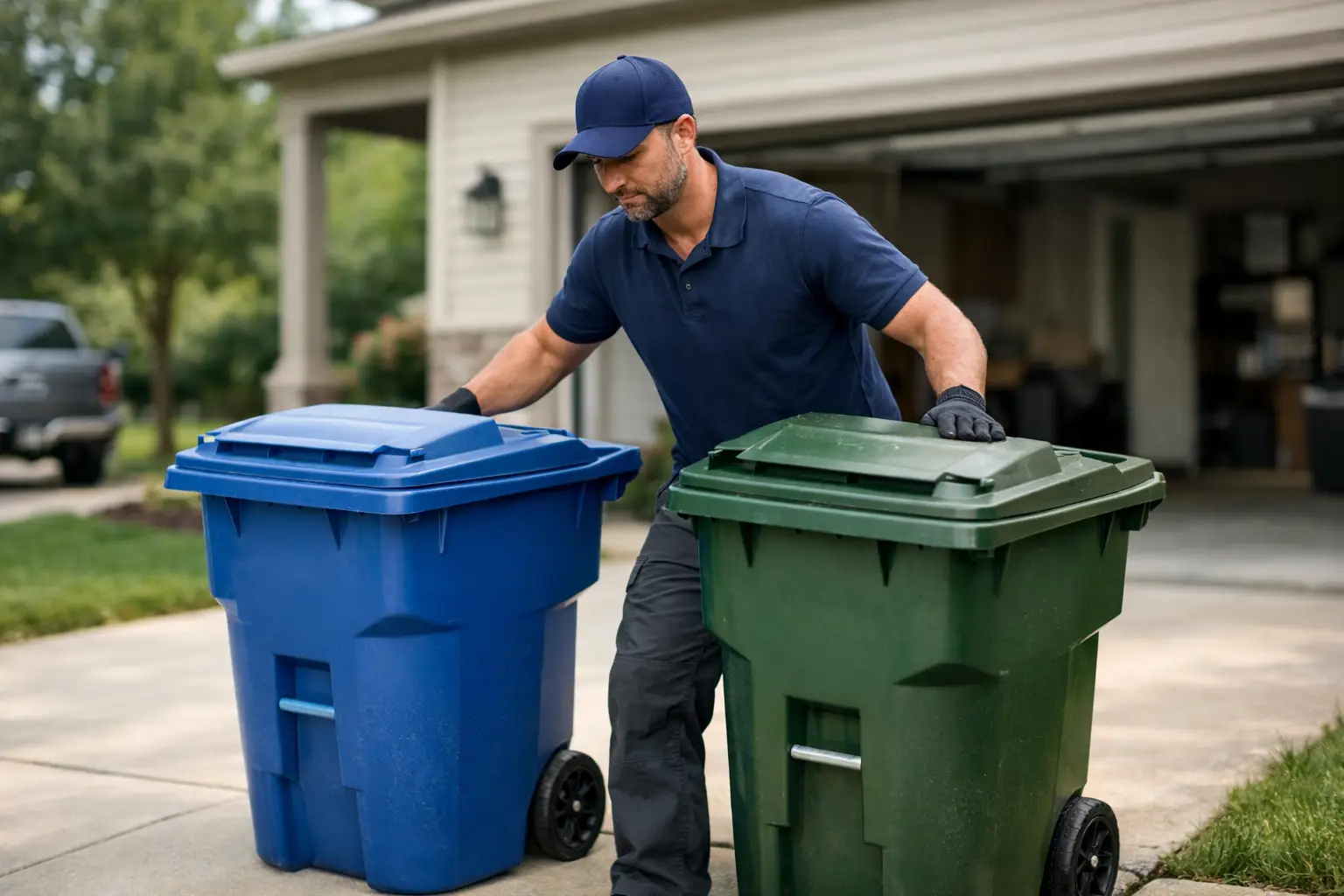
A full 95-gallon trash cart can turn an ordinary pickup day into the hardest chore of the week. If you want to reduce driveway lifting strain, the answer is not simply to “be careful.” It is to remove the awkward lifting, pulling, and timing pressure that makes bins difficult to manage in the first place.
For many Florida homeowners, especially adults aging in place, the risk is not limited to one heavy lift. It is the combination of a loaded cart, uneven pavement, wet grass, a sloped driveway, and afternoon heat. Add a rushed collection deadline, and a simple household task can become a fall risk or a source of back, shoulder, and knee pain.
Why Trash Carts Cause More Strain Than They Seem To
A rolling trash cart is designed to tilt back and move on two wheels. In practice, that only works smoothly when the cart is not overloaded, the wheels are in good condition, and the path to the curb is clear and level. Those conditions are not always present.
The trouble often starts before the cart moves. Bags get packed down, yard waste adds bulk, or guests fill a bin faster than expected. A 95-gallon cart may not feel heavy until it catches on a driveway seam, rolls through soft grass, or needs to be pulled up over a curb. That sudden resistance is when people twist their backs, overextend a shoulder, or lose their balance.
Heat changes the equation, too. Sarasota and Manatee County residents know that taking bins out in the evening can still mean humid conditions and slick hands. If rain has passed through, driveway surfaces and cart handles can be slippery. The goal is not to prove you can muscle through the job. The goal is to make curb day predictable and hands-free whenever possible.
Reduce Driveway Lifting Strain Before Pickup Day
The safest cart is one that does not require a last-minute wrestling match. A few practical habits can make weekly trash handling easier when you are still responsible for moving your own bins.
Keep Weight Balanced, Not Just Contained
Do not treat extra room in the cart as a reason to keep adding weight. Dense materials such as books, remodeling debris, wet yard clippings, and bagged soil can make a cart much harder to control, even if the lid still closes. Spread heavy material across collection weeks when allowed, or follow local guidelines for bulky or special waste.
Place heavier bags lower in the cart and avoid piling them all on one side. An uneven cart can pull away from you as you tilt it, forcing you to correct its movement with your arms and back.
Clear the Route While It Is Still Light Out
A clear route matters as much as the cart itself. Look for hoses, landscaping edges, loose pavers, decorative rocks, toys, and low branches. Even a small obstacle can stop a heavy bin abruptly.
If you cross grass or gravel to reach the curb, consider whether there is a more stable paved path. Grass becomes soft after rain, and gravel can make cart wheels drag or shift. Taking a slightly longer route on level concrete is often safer than taking the shortest route over uneven ground.
Check Wheels and Handles
Wheels that wobble, stick, or collect debris make every trip harder. Check that both wheels rotate freely and that the axle area is clear. Cracked handles and warped lids can also make it difficult to get a secure grip.
If the cart is damaged, contact your local waste provider about replacement options. A cart that cannot roll properly is not a small inconvenience. It changes the physical demands of the task every single week.
Use Better Body Mechanics When You Must Move a Cart
There will be times when you need to handle a bin yourself. Maybe you are preparing for a special pickup, rearranging the garage, or managing waste after a family gathering. Good technique can lower the chance of injury, though it cannot eliminate every risk.
Start close to the cart rather than reaching for the handle with your arms extended. Grip both handles firmly, brace your core, and tilt the cart toward you in one controlled motion. Your legs should support the movement more than your lower back.
Once the cart is rolling, walk it rather than pulling it sideways or twisting around it. Keep your shoulders and hips facing the direction of travel. If the wheels catch, stop. Do not jerk the handle or yank backward. Reposition the cart, clear the obstruction, and try again with a steadier angle.
Going downhill requires extra care because the cart can gain momentum. Keep it close, move slowly, and do not let the weight get ahead of you. On an uphill driveway, take breaks if needed. There is no prize for forcing a full cart up an incline in one push.
The Biggest Safety Improvement Is Removing the Deadline
Collection schedules create a hidden source of strain. People often move bins late at night, early in the morning, or in a hurry because they do not want to miss pickup. That pressure leads to poor choices: overfilling the cart, rushing across wet pavement, or trying to move both bins at once.
A dependable curb-day routine changes that. When bins are placed at the curb after 5 p.m. before scheduled collection and returned after 3 p.m. on collection day, homeowners do not need to watch the clock or haul carts in Florida heat. The physical task disappears from the weekly to-do list, while the property stays neat and collection-ready.
For snowbirds, the benefit goes beyond convenience. Bins left out for days can signal that a home is unattended, create an untidy appearance, and potentially draw HOA attention. For vacation-rental owners, reliable bin handling helps prevent overflow between guest turnovers and keeps collection day from becoming a message chain for cleaners, guests, and property managers.
Curb Critter provides photo confirmation when bins are taken out and brought back, so customers have proof that a basic but essential property task was completed. That kind of accountability matters when you are away, managing several homes, or simply done with making trash day a physical challenge.
Do Not Forget What Happens After Collection
Moving the cart is only half the problem. Florida heat and humidity can turn residue at the bottom of a bin into lingering odor, bacteria growth, mold, and maggots. Trying to rinse a cart yourself can add another strain point, especially when you tip, scrub, and maneuver it across a driveway.
It can also create a runoff concern if dirty water enters a storm drain. A professional bin-cleaning process should use high-pressure hot water, sanitizer, and deodorizer while capturing wastewater on site. Cleaning immediately after collection, when the container is empty, is especially practical because there is no need to coordinate a separate appointment around a full bin.
Not every household needs the same service level. A single resident with light waste may mainly need help with cart movement. A busy family, seasonal home, or rental property may benefit from recurring valet and regular cleaning. The right setup depends on how often bins fill, how far they travel to the curb, and whether someone is available to handle them safely every week.
Make Curb Day Easier on Your Future Self
If taking out the trash leaves you sore, unsteady, or anxious about a missed pickup, treat that as useful information. Household routines should support your independence, not chip away at it one loaded cart at a time.
Set up a safer route, avoid overloading bins, and give yourself permission to use help for a task that does not need your back, shoulders, or schedule. A calm curb day leaves more energy for the parts of home life that are actually worth your time.