Rental Overflow Example: Stop Trash Pileups
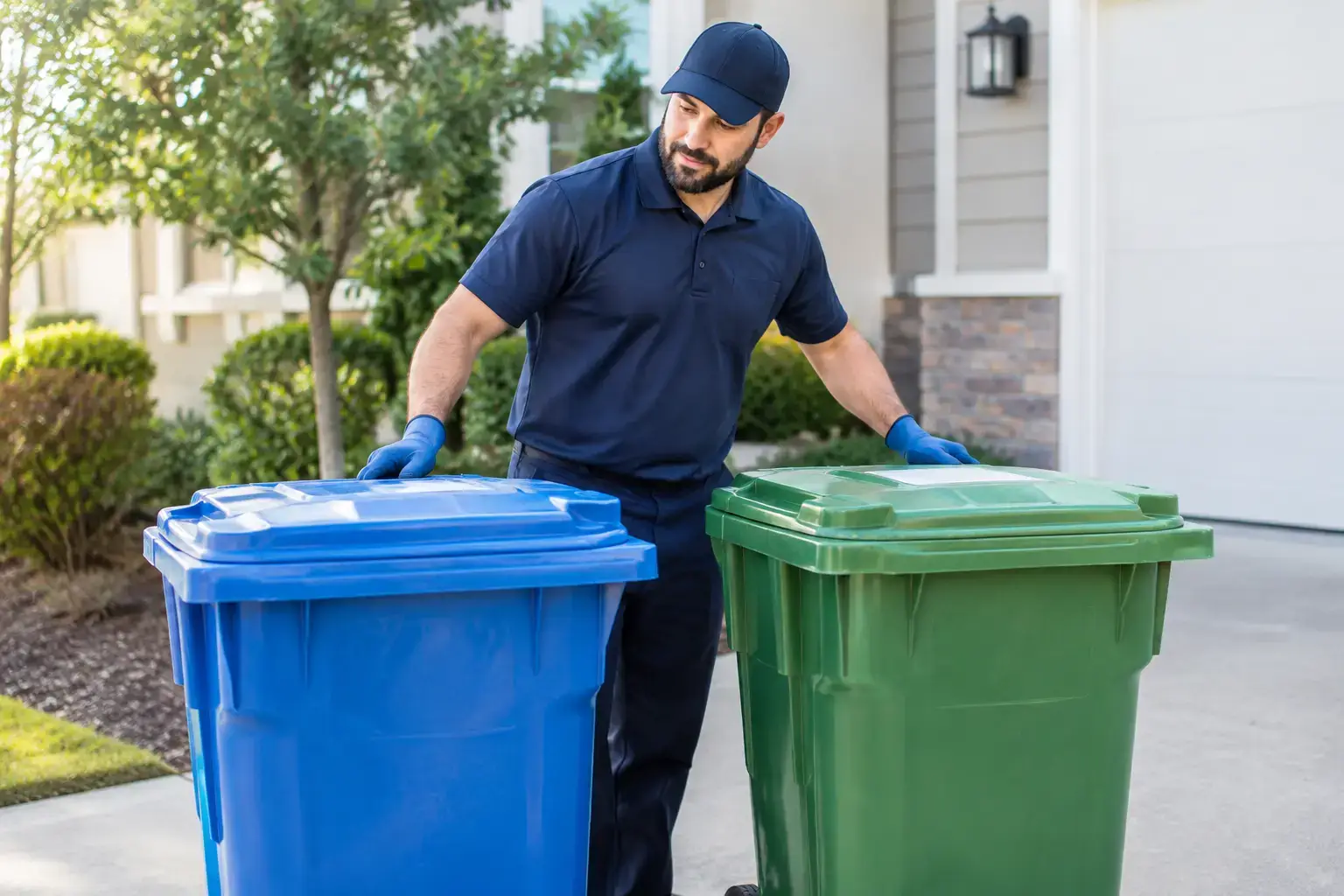
A rental overflow example usually starts with something small: a busy checkout morning, a full kitchen bag left beside the cart, and a pickup day that is still two days away. By the time the next guests arrive, the lid will not close, loose bags may be visible from the street, and Florida heat has started doing what Florida heat does. What looked like a minor housekeeping issue is suddenly an odor, pest, presentation, and HOA problem.
For vacation-rental owners and property managers, trash is not a background chore. It is part of the guest experience and part of keeping a property ready between turnovers. A dependable plan keeps carts out when collection happens, brings them back in promptly, and deals with the mess that builds up inside the container.
A rental overflow example from a busy turnover week
Picture a three-bedroom coastal rental with a Friday checkout and a Saturday arrival. The departing guests leave several bags of household trash, takeout containers, and boxes from grocery deliveries. The cleaner arrives with limited time to reset the home, strip beds, restock supplies, and prepare for the next guests.
The garbage cart is already close to full from the prior week. Collection is scheduled for Monday, but the owner is out of state and the local contact is handling several properties that weekend. The cleaner can fit only part of the trash into the cart. Two tied bags are left beside it, and a cardboard box leans against the fence.
That is the overflow. It is not always a dramatic mountain of trash. Often, it is one extra bag, a lid that cannot shut, or recycling mixed with garbage because someone was rushing. But it creates predictable trouble:
- Animals can tear into bags left outside the cart.
- Rain can soak cardboard and scatter loose debris.
- Heat accelerates odors and attracts flies, especially when food waste is involved.
- A full cart may not hold trash from the incoming guests.
- Neighborhood rules may prohibit carts or overflow bags from being visible between collection windows.
The immediate temptation is to ask the next available person to handle it. That may work once. It is not a reliable operating system for a rental that turns over every week or two.
Why rental trash overflow happens
Overflow rarely comes down to careless guests alone. Rental homes create irregular waste patterns. A family arriving for a long weekend can generate more trash in four days than a full-time resident does in a week. Holiday gatherings, beach days, meal deliveries, large grocery runs, and baby or pet supplies all add volume quickly.
Turnover timing matters just as much. Guests check out when they check out, while municipal collection follows a fixed schedule. If a checkout lands the day after pickup, a property may need to hold a fresh load of waste for nearly a week. Add a second cart only when volume truly calls for it, but recognize that more capacity does not solve a missed curb day.
Absentee ownership adds another layer. Snowbirds, second-home owners, and managers with a wide service area cannot always make a special trip because a cart was forgotten behind a gate or left full after guests departed. The task is simple, but its timing is unforgiving.
The cost is bigger than one extra bag
A rental overflow can affect reviews before a guest even unlocks the door. Guests notice a smelly cart near the parking area, a cluttered side yard, or a trash can that is too full to use. They may reasonably wonder whether other parts of the property are being maintained with the same level of attention.
There is also the physical work. A loaded 95-gallon cart is awkward to move across a driveway, grass, gravel, or pavers. For an older homeowner, a cleaner working alone, or a property manager moving from stop to stop in the afternoon heat, rolling it to the curb can be a genuine strain.
Then there is the bin itself. Overflowed garbage often leaves residue under the lid and along the walls of the cart. Leaking food containers, loose bags, and wet waste create the sticky buildup that continues to smell even after collection day. If the container is never cleaned, the next guest is using a cart that announces last week's mess.
Build a trash routine around collection day
The strongest fix is not a last-minute text chain. It is a routine with a clear owner, a collection-day schedule, and a backup plan for unusually high-volume stays.
Start by confirming how many carts the rental has and which days garbage, recycling, and yard waste are collected. Keep that information in the property operations file, not only in one person's memory. If guests are expected to take carts out, include simple directions in the welcome information. Still, do not make guest compliance the only safeguard. Guests are on vacation, and checkout morning is busy.
Next, give the cart a reliable curb-day owner. The cart should go out after 5 p.m. on the evening before scheduled pickup and return after 3 p.m. on collection day, once service is complete. Those windows help keep bins available to the collection crew without leaving them on display longer than necessary.
Photo confirmation makes the process accountable. A photo when the cart is moved out and another when it is returned gives an owner or manager clear proof without having to visit the property. For a rental with remote owners, that small operational detail removes a lot of uncertainty.
Plan for high-volume stays without creating clutter
A full cart is not always a service failure. Sometimes a property hosted a large group, a holiday meal, or a longer stay. The goal is to prevent predictable extra volume from becoming visible overflow.
For rentals that consistently fill two carts, additional bin capacity may make sense. For properties with occasional spikes, set a specific procedure for cleaners or local staff: report a nearly full cart before checkout, consolidate loose cardboard, and never stack unprotected bags outside if they can be avoided. The right choice depends on the rental's occupancy, collection schedule, storage space, and local rules.
It also helps to set reasonable expectations for guests. Ask them to bag food waste, break down boxes, and place trash inside the carts rather than beside them. Plain instructions work better than a long rulebook. A simple reminder near the kitchen trash can can prevent a surprising amount of cleanup later.
Clean the cart after the truck empties it
Collection day is the right moment to clean a garbage bin because it is empty. Cleaning before pickup means washing around trash. Cleaning days later means residue has more time to bake onto the container in the Florida sun.
A professional cleaning process should use high-pressure hot water, sanitizer, and deodorizer to remove grime, odor-causing bacteria, mold, and maggots. Just as important, wastewater should be captured on site rather than rinsed into a storm drain. The goal is a cleaner cart without moving the contamination somewhere else.
Bundling bin cleaning with a recurring valet route is especially practical for vacation rentals. There is no separate appointment for a manager to coordinate and no reason to leave a cart waiting around all day. After collection, the cart can be cleaned, returned, and ready for the next guests.
Curb Critter handles that sequence as one recurring service: bins out, bins in, then cleaned after collection when conditions are right. For a property manager, that means one less recurring task to chase across a calendar.
When one-time help makes sense
Not every rental needs the same schedule. A seasonal home may need a one-time curb-day trip when the owner is traveling. A newly listed rental may need an initial deep clean after months of neglected bins. A property with steady weekly turnovers benefits more from a recurring routine than from repeated emergency calls.
The practical question is not whether trash will ever create a problem. It will. The question is whether the property has a plan before a checkout, storm, holiday weekend, or missed pickup turns one full bag into an avoidable headache.
A well-kept rental should feel cared for before guests notice any of the work behind it. Keep the carts handled, the lids closed, and the containers clean, so the only thing waiting at the curb is collection day.