Are Carts Heavy? What Full Trash Bins Weigh
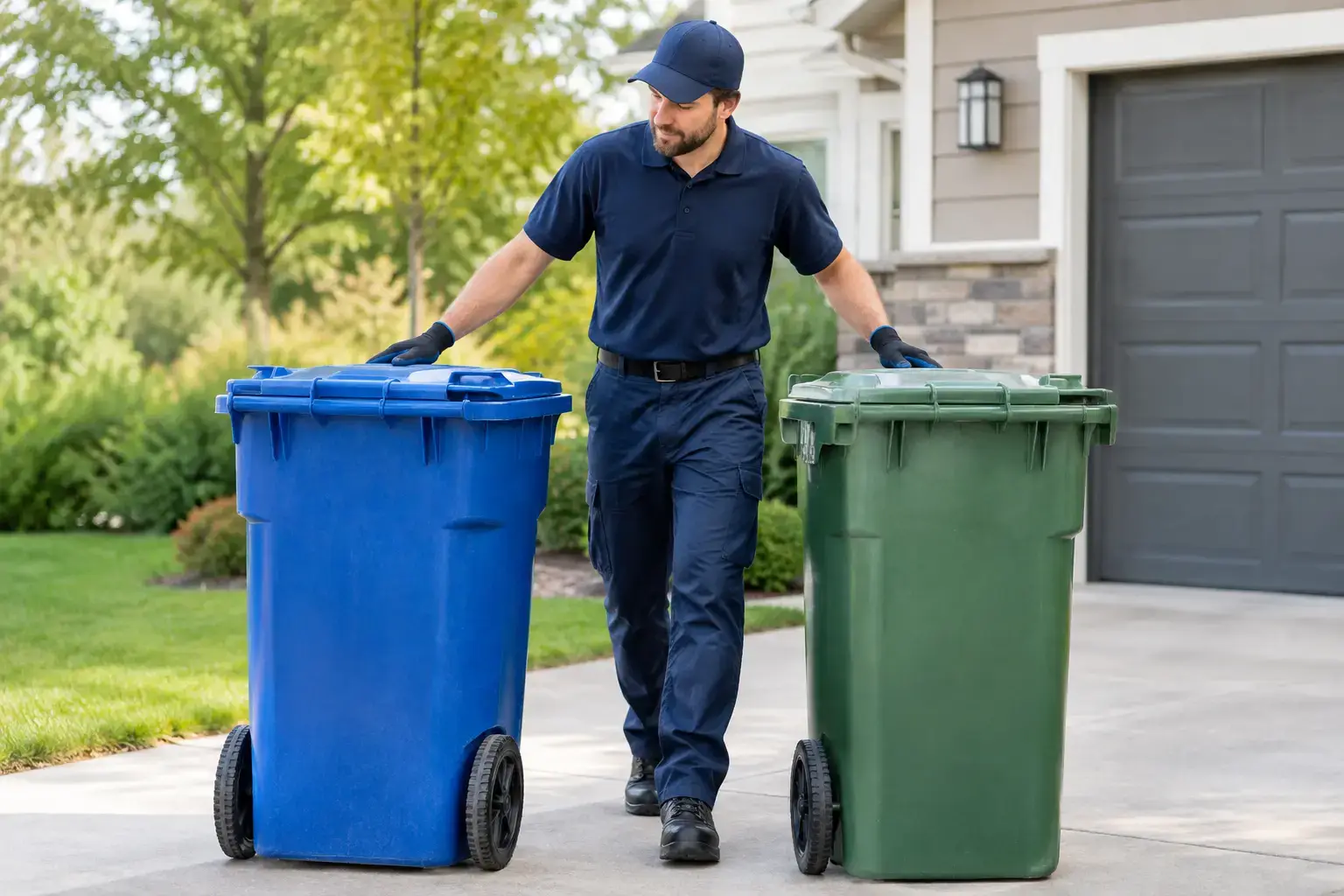
A 95-gallon cart looks harmless when it is parked beside the garage. Load it with a week of household waste, add a little rainwater, and the answer to “are carts heavy?” becomes very clear. They can be heavy enough to turn a routine curb-day chore into a real strain, especially on a long driveway, loose gravel, uneven grass, or a sloped street.
For many homeowners, the issue is not whether the bin can roll. It is whether it can be controlled safely from the side of the house to the curb, then brought back after collection in Florida heat. That distinction matters.
Are Carts Heavy? Start With the Container
An empty wheeled trash cart is already a sizable object. Exact weight varies by manufacturer, size, and local collection program, but larger 95- or 96-gallon carts commonly weigh around 30 to 45 pounds before trash goes inside. That is manageable for some people. It is not the whole story.
Once filled, a cart's total weight depends on what your household throws away. A bin packed with dry cardboard and kitchen packaging may be awkward but relatively easy to roll. One holding bagged food waste, pet litter, landscaping debris, soaked paper, or waterlogged trash can become dramatically heavier. A full cart does not need to look overflowing to be difficult.
The weight also shifts as the cart moves. Wheels hit a driveway joint, the cart tilts back, and the contents settle toward the handle. That moment of pulling the cart into position can demand more balance and grip strength than people expect.
Why a cart feels heavier than its actual weight
Weight is only one part of the job. A cart can feel much heavier when it has to cross an uneven surface, make a tight turn, or climb even a modest incline. Gravel can catch the wheels. Soft grass can make them sink. A curb cut, raised paver, or cracked section of driveway can stop a rolling bin abruptly.
The handle height matters, too. Taller carts often require the person moving them to tip the bin back and guide its full weight on two wheels. If the load is uneven, the cart may pull to one side. For an older adult, someone recovering from an injury, or anyone managing arthritis, back pain, or reduced balance, that is a sensible reason to avoid the task.
Florida weather adds another layer. Heat and humidity make physical chores more demanding, while summer downpours can soak loose trash, fill an open lid with water, and leave slick walking surfaces. A bin that was manageable on a dry winter morning may be a different job after a storm.
What Makes a Trash Cart Hard to Move?
A cart does not have to be packed to its stated capacity to become difficult. The most common troublemakers are dense materials and moisture. Bagged yard waste, damp cardboard, bottles, cans, cat litter, construction scraps, and multiple bags of food waste add up quickly. A little standing water under the lid can add surprising weight as well.
Placement makes a difference. When heavy bags are piled at the very bottom and lighter material sits on top, the cart can be stable but hard to tip back. When heavy items shift to one side, it can be harder to steer. Overfilling creates a separate problem: the lid may not close, loose debris can spill, and collection crews may be unable to empty the cart properly.
The route to the curb can be just as important as the load. A short, flat concrete drive is one thing. A long waterfront lot, a narrow gate, decorative landscaping, a detached garage, or a driveway with a grade is another. For vacation-rental owners, there is an added challenge: bins may be full after a guest turnover, exactly when collection timing and property appearance matter most.
The return trip still counts
It is easy to focus on getting the cart out before pickup. But the work is not done until the empty bin is back in its usual place. An empty cart is lighter, but it can still be awkward in wind, rain, or afternoon heat. Leaving it at the curb for days can affect curb appeal, create an HOA concern, and signal that a seasonal home is unattended.
A reliable trash routine includes both movements: out before collection and back in afterward. It should also account for holidays, changing pickup schedules, and the occasional week when the cart is heavier than usual.
When Moving a Cart Becomes a Safety Issue
No one needs to prove they can handle a heavy cart. If you find yourself bracing your back, twisting to get around a corner, struggling to keep the bin upright, or worrying about slipping, the task has crossed from inconvenient to risky.
Watch for patterns rather than one difficult week. Maybe the cart is manageable until landscape cleanup day. Maybe it is fine on flat pavement but not over the grass. Maybe an aging parent can move it most of the time, but you do not want them doing it in the rain. Those are practical reasons to change the routine before a fall, strain, or missed pickup occurs.
For second-home owners and snowbirds, the concern is different but just as real. You cannot move a cart from another state, and asking a neighbor every collection day is not always a long-term plan. A recurring service creates a predictable routine while the home is vacant.
Ways to Reduce the Burden at Home
A few small habits can make carts easier to manage. Keep the lid closed so rain does not collect inside. Break down cardboard and spread heavy bags through the week instead of dropping everything in at once. Avoid forcing extra bags on top when the bin is already full.
It also helps to keep the travel path clear. Move hoses, planters, toys, and vehicles away from the route before collection day. If the cart must cross grass or gravel, consider whether there is a firmer alternative path. These changes will not make a full 95-gallon cart light, but they can reduce the chance of a sudden stop or awkward turn.
Still, good cart habits have limits. They do not shorten a long driveway, remove a slope, or make it comfortable to maneuver a heavy bin during a heat advisory. Sometimes the best solution is simply to make the chore someone else's responsibility.
Hands-Free Curb Days for Homes That Need Them
For homeowners who want the bin handled without the physical work, a trash-can valet service can remove the recurring burden. At Curb Critter, carts are moved out after 5 p.m. before scheduled collection and returned after 3 p.m. on collection day. Photo confirmation at both stages means you do not have to wonder whether the job was completed.
That level of routine can be especially useful for Sarasota-area homeowners aging in place, busy families, and property managers coordinating multiple homes. It also helps vacation-rental operators avoid bins sitting out too long between guest stays.
There is a sanitation benefit to keeping the system organized, too. Once a cart is emptied, that is the right time to clean it. Professional bin cleaning after collection removes the grime and odor-causing buildup that accumulates inside, rather than asking someone to wrestle with a full or partly full container. High-pressure hot water, sanitizer, deodorizer, and wastewater capture keep the work contained instead of sending dirty runoff toward a storm drain.
A cart is just a plastic container until curb day arrives. Then its weight, route, timing, and condition all matter at once. The better question is not whether you can move it one more time. It is whether your weekly routine should require you to.