Stormwater Safe Bin Cleaning Protects Your Block
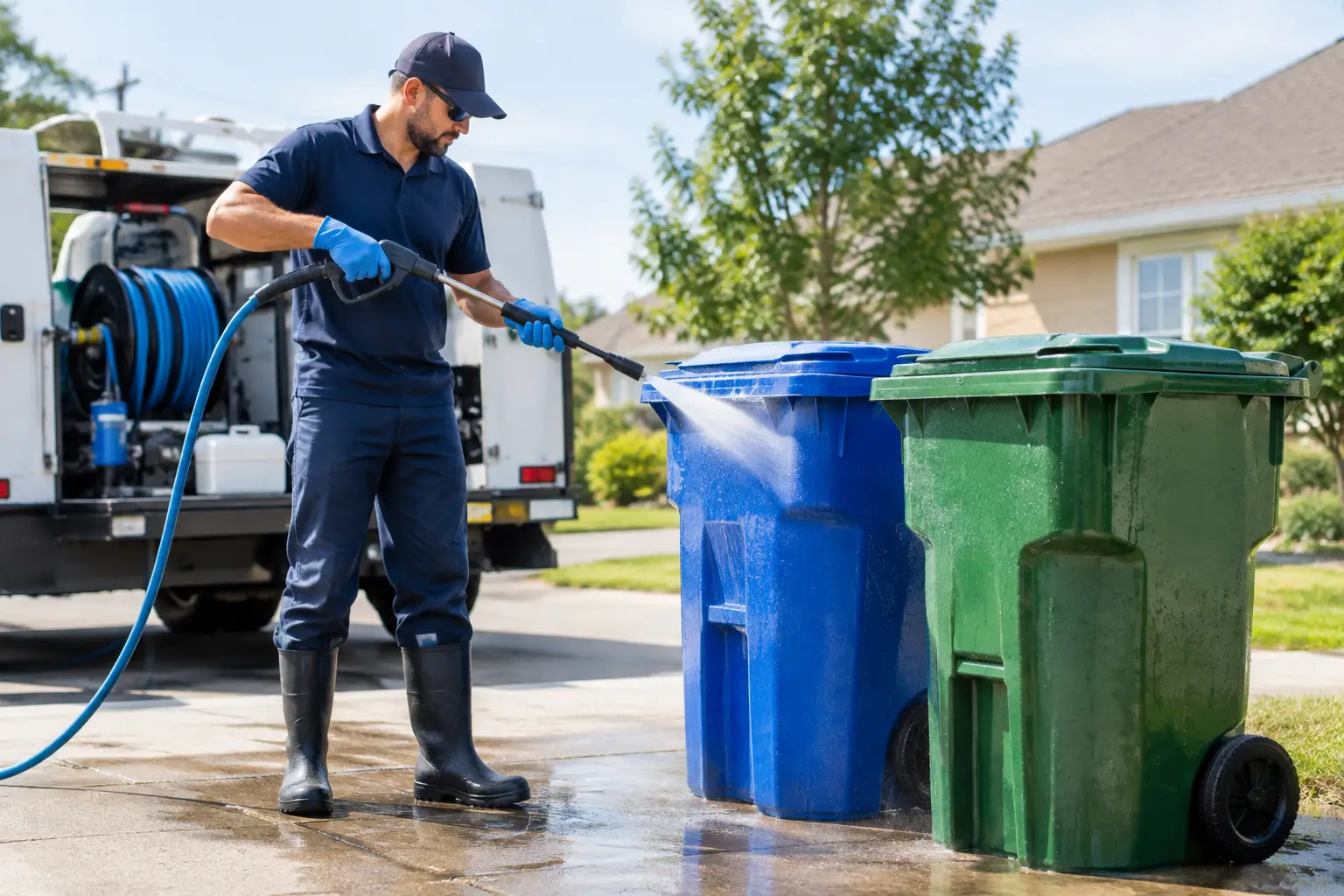
A Florida rainstorm can turn a driveway into a fast route to the nearest storm drain. That is why stormwater safe bin cleaning is more than a nice extra after trash day. When the grime, sanitizer, and dirty water from a washed garbage cart are allowed to run down the curb, they can travel through neighborhood drainage systems instead of being properly contained.
A clean bin should not come at the cost of dirty runoff. The right process removes the smell, residue, mold, and bacteria inside the cart while capturing the wastewater created during cleaning. For homeowners, seasonal residents, and vacation-rental managers, it is a practical way to keep bins presentable without adding another messy chore to the property.
What makes bin cleaning stormwater safe?
Stormwater is rainwater that flows across roofs, lawns, roads, driveways, and sidewalks. In many neighborhoods, that water enters storm drains and drainage channels directly. It is not the same as wastewater sent from a sink, shower, or washing machine through a sanitary sewer system for treatment.
That distinction matters when a garbage cart is cleaned. A bin can hold food residue, grease, leaking bags, pet waste, bacteria, mold, insect activity, and cleaning chemicals. Even when the bin looks mostly empty, the liquid left after washing it can carry contaminants that do not belong in a street drain.
Stormwater safe service means the cleaning team plans for that wastewater before the first spray begins. Rather than washing a cart on the driveway and letting the runoff find the gutter, the wash water is captured on-site for proper disposal. The bin gets cleaned, but the curb and nearby drainage system do not become part of the cleaning process.
Why driveway runoff is a bigger issue than it looks
It is easy to underestimate a small stream of dirty water on a large driveway. After all, it disappears quickly, especially during a summer shower. But repeated runoff from homes across a neighborhood adds up. It can carry bacteria, organic waste, detergents, and debris into local waterways and drainage areas.
For Sarasota and Manatee County homeowners, the concern is especially relevant during the rainy season. A quick afternoon downpour can move material from the curb before anyone realizes it is there. Properties near bays, canals, ponds, retention areas, or coastal water have even more reason to keep wash water contained.
There is also a simple property-care benefit. Dirty runoff can leave residue on pavers, concrete, garage thresholds, and curb lines. A properly managed cleaning service keeps the job focused inside the cart, where the problem started.
A clean bin requires more than a quick rinse
A garden hose may make a trash can look better for a day, but it rarely solves the cause of the odor. Rinsing without hot water, sanitizer, and adequate pressure can leave behind the film that feeds odor-causing bacteria. It can also send the mess straight into the street.
Professional cleaning works best immediately after collection, when the container is empty. This timing gives the technician access to the bottom and interior walls of the cart without working around a full load of household trash. Hot water and high pressure loosen stuck-on residue, while sanitizer targets the bacteria that create persistent smells. Deodorizer helps the bin return to the driveway smelling like a cleaned container, not last week's garbage.
Maggots, mold, and greasy buildup may need more than one treatment, particularly after a missed pickup, a rental turnover, or a stretch of hot weather. The goal is not to promise that a cart will stay spotless forever. Trash bins are working containers. The goal is to maintain them on a regular schedule so buildup never gets far ahead of the next cleaning.
The right sequence: out, emptied, cleaned, and back in place
Convenience and sanitation work best when they are coordinated around collection day. A separate bin-cleaning appointment can mean another schedule to remember, another vehicle at the property, and another chance for a full cart to be unavailable when it needs to be at the curb.
A recurring valet-and-cleaning route solves that timing problem. Bins are rolled out after 5 p.m. before the scheduled collection day, returned after 3 p.m. once collection is complete, and cleaned while empty. Photo confirmation at both stages gives homeowners and property managers proof that the essential task was handled.
That sequence is useful for anyone, but it can be particularly valuable in a few common situations:
- An older homeowner no longer wants to wrestle a 95-gallon cart over grass, gravel, or a sloped driveway in Florida heat.
- A snowbird needs the home to look attended to while living elsewhere for part of the year.
- A vacation-rental owner needs trash handled consistently between guest stays, without overflowing carts sitting outside too long.
- A busy household wants to avoid missed collection windows, lingering odors, and complaints about bins left at the curb.
The physical work may seem small until it becomes a weekly burden. A dependable route turns it into a routine the homeowner does not need to manage.
Questions to ask before hiring a bin-cleaning service
Not every cleaning method handles wastewater the same way. Before choosing a provider, ask what happens to the dirty water after the cart is washed. If the answer is that it runs down the driveway, onto the street, or into a storm drain, the process is not designed to protect local drainage systems.
It is also reasonable to ask when the cleaning occurs. Cleaning an empty cart after collection is usually more effective and more convenient than trying to schedule service around a bin that may still be full. Ask whether the service uses hot water, sanitizer, and deodorizer, and whether it provides a recurring schedule or requires you to remember each visit.
For property managers, verification matters too. A service commitment is more useful when it is documented. Time-stamped photo confirmation can help owners confirm that bins were taken out and returned, especially when they are managing a second home or multiple rental properties from a distance.
Finally, consider whether the company can handle the routine without creating more coordination. Flexible subscriptions, two-bin plans, additional-bin options, and one-time visits can all make sense depending on the property. A full-time household may benefit from recurring care, while a traveler may only need help during a long absence. There is no one schedule that fits every home.
Why recurring cleaning is usually the easier choice
Bins get dirty gradually, then suddenly. One leaking trash bag, a discarded seafood container, or several days of high heat can create an odor problem faster than expected. Waiting until the smell becomes noticeable often means the cart has already developed a layer of residue that takes more effort to remove.
Monthly cleaning creates a predictable reset. It helps control odors before they build, reduces the conditions that attract insects, and keeps the cart more pleasant to handle on collection day. It also prevents the familiar moment when someone opens the lid, catches the smell, and realizes the bin needs attention right before guests arrive.
Curb Critter combines post-collection cleaning with recurring bin valet service, so the cart is handled when it is empty and returned to its proper place without requiring a separate appointment. For homes with two standard carts, that kind of coordination can remove an overlooked weekly task and a dirty monthly one at the same time.
A better standard for an overlooked household job
Trash bins are supposed to carry mess away from the home, not bring odor, bacteria, and dirty runoff back into the driveway. Keeping them clean is part sanitation, part curb appeal, and part responsible property maintenance.
The best service does the unglamorous work properly: bins go out on time, come back on time, get cleaned when empty, and leave no wastewater headed toward the storm drain. You relax knowing the cart is out, in, and spotless - and the water used to clean it stays where it should.