Trash Bin Cleaning Service for Florida Homes
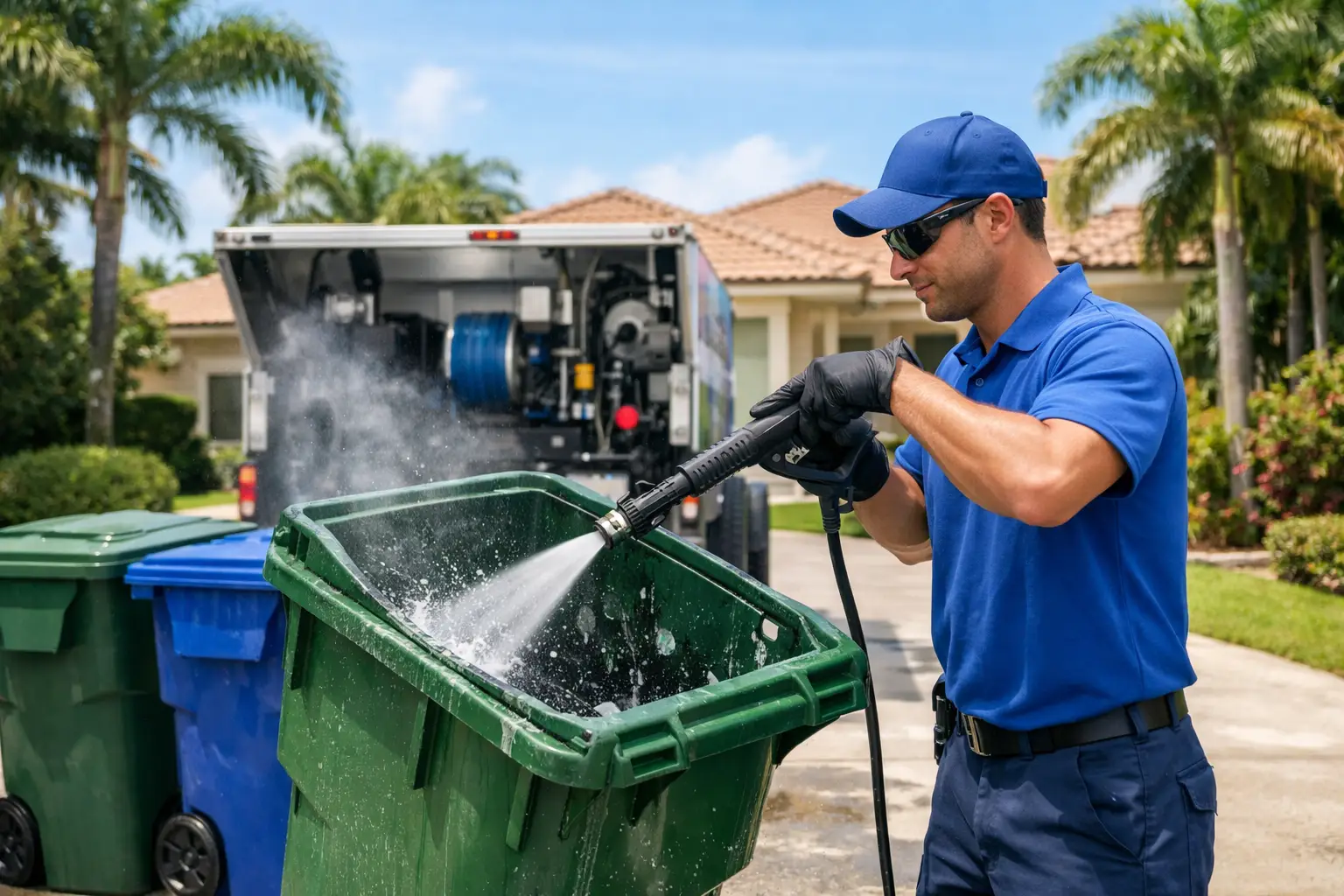
A full trash bin is easy to ignore until collection day passes and the smell remains. In Florida heat and humidity, a trash bin cleaning service is not a cosmetic extra. It is a practical way to remove the sticky residue, odor-causing bacteria, mold, and pests that build up inside the carts sitting beside your home.
For homeowners, seasonal residents, and vacation-rental managers across Sarasota and Manatee counties, the goal is simple: bins that are Out, In & Spotless without adding another chore to the week.
Why Florida Trash Bins Get Dirty So Fast
A 95-gallon garbage cart does more than hold bagged trash. Leaking food containers, pet waste, seafood scraps, lawn debris, and a torn trash bag can leave residue at the bottom and along the lid. Once that material sits in a closed plastic container under the Florida sun, odor can become a problem fast.
Humidity makes matters worse. Moisture supports mold growth, while flies are drawn to organic debris. Maggots can appear when flies reach food waste inside the bin, especially after a missed pickup, a holiday schedule change, or a busy vacation-rental turnover. That is not the trash - it is the can.
A quick rinse with a garden hose may make the bin look better from the driveway, but it rarely removes the buildup under the lid, around the wheels, or in the bottom corners. It can also send dirty wastewater toward a storm drain, which is not where food waste, grease, bacteria, or cleaning chemicals belong.
What a Professional Trash Bin Cleaning Service Does Differently
Professional cleaning is most effective right after collection, when the container is empty. Instead of trying to work around a full cart, the service can reach the inside surfaces that need attention and return the bin ready for the next week.
The process should use high-pressure hot water to break down grime, followed by sanitizer to address bacteria and a deodorizer to leave the cart smelling fresh rather than simply perfumed. Just as important, the wastewater should be captured on-site rather than allowed to run into the street or stormwater system.
This approach handles the part most homeowners would rather avoid: lifting lids, reaching into a deep cart, dealing with unpleasant residue, and finding a place to dispose of contaminated wash water. You stay hands-free, and the job gets done on a reliable schedule.
Cleaning After Pickup Makes the Difference
Timing is not a minor detail. Cleaning a bin before collection means working around garbage. Cleaning it after collection means the container is empty, accessible, and ready for a proper wash.
That timing also prevents a freshly cleaned cart from sitting curbside for days. With a recurring valet-and-cleaning route, the bin can be rolled out after 5 p.m. before the scheduled pickup, cleaned after collection, and returned after 3 p.m. on collection day. It is a practical sequence that keeps the routine off your calendar.
Who Benefits Most From Recurring Bin Cleaning?
Almost every household can benefit from cleaner carts, but recurring service matters most when taking bins out and bringing them back in is difficult, inconvenient, or easy to overlook.
Older adults aging in place often do not want to maneuver a large cart down a driveway, across grass, or over gravel in summer heat. A cart can be awkward even when it is not full, and rain-slick surfaces add another safety concern. A dependable weekly routine removes that physical burden without asking a neighbor or family member to step in.
Snowbirds and second-home owners have a different concern: a property that looks unattended. Bins left at the curb too long can draw HOA attention and make a home appear vacant. Photo confirmation when the bins are moved out and returned gives owners a simple record that an essential property task was completed.
Vacation-rental owners and managers need consistency between guest turnovers. Overflowing carts, missed collection windows, and smelly bin areas can affect guest impressions before anyone walks through the front door. Regular valet and post-collection cleaning help keep the exterior orderly, especially during busy rental seasons.
Valet and Cleaning Solve Two Different Problems
Bin cleaning addresses sanitation. Trash-can valet addresses timing and physical effort. Combining them creates a better routine because the same team is already handling the carts around collection day.
The valet portion makes sure bins reach the curb on schedule and do not remain there longer than necessary. The cleaning portion addresses the grime and odor left behind after the truck empties them. One keeps the collection routine moving; the other keeps the containers fit to use.
That combination can be more convenient than arranging a separate appointment just to wash bins. There is no need to remember a special service day, leave containers in a particular place, or coordinate access around a full household schedule. The work fits into the collection-day rhythm that already exists.
Curb Critter provides this model with recurring subscriptions that include two bins, optional additional bins, and month-to-month cancellation. Quarterly billing keeps the arrangement straightforward, while a one-time trip can help travelers who need bins handled while they are away.
How Often Should You Clean a Garbage Bin?
For most Florida households, monthly cleaning is a sensible baseline. It is frequent enough to keep residue and odors from becoming overwhelming, while still fitting naturally with ordinary trash collection. Homes with frequent cooking waste, diapers, pet waste, or multiple residents may appreciate the consistency even more.
The right schedule can depend on how the home is used. A primary residence with light household waste may be fine with monthly cleaning. A vacation rental with rapid guest turnover may need closer attention because different guests fill carts differently and may not bag trash carefully. A part-time home may benefit from recurring service mainly for the confidence that bins are being managed when the owner is elsewhere.
There is a trade-off with one-time cleanings. They can be useful after a spill, a missed collection, or an extended absence. But they do not prevent the next buildup, and they require you to notice the problem and schedule help. Recurring service works better when the goal is not just a clean bin once, but one less household task to track.
What to Look for Before You Sign Up
Not every bin-cleaning option works the same way. Ask when the cleaning happens, whether wastewater is captured, and whether the company sanitizes and deodorizes rather than only rinsing. These details affect both the result and how responsibly the work is performed.
Also ask how the service handles the collection-day routine. For many customers, photo confirmation is more valuable than it first appears. It offers peace of mind for a homeowner out of town, a family helping an older parent, or a property manager overseeing several addresses.
Finally, look for clear plan details. Know how many bins are included, what additional bins cost, whether service is recurring, and how cancellation works. Convenience should not require a confusing agreement.
A Cleaner Curb Starts With a Routine
Trash bins will always do an unpleasant job. They do not have to become an unpleasant part of your property. When collection-day handling and cleaning happen on a dependable schedule, your driveway stays tidier, your carts smell better, and you do not have to wrestle a heavy bin through the heat just to keep up.
The best household services are often the ones you stop thinking about. Your bins go out, come back, and stay clean. You relax.