Trash Can Valet for Disabled People Made Simple
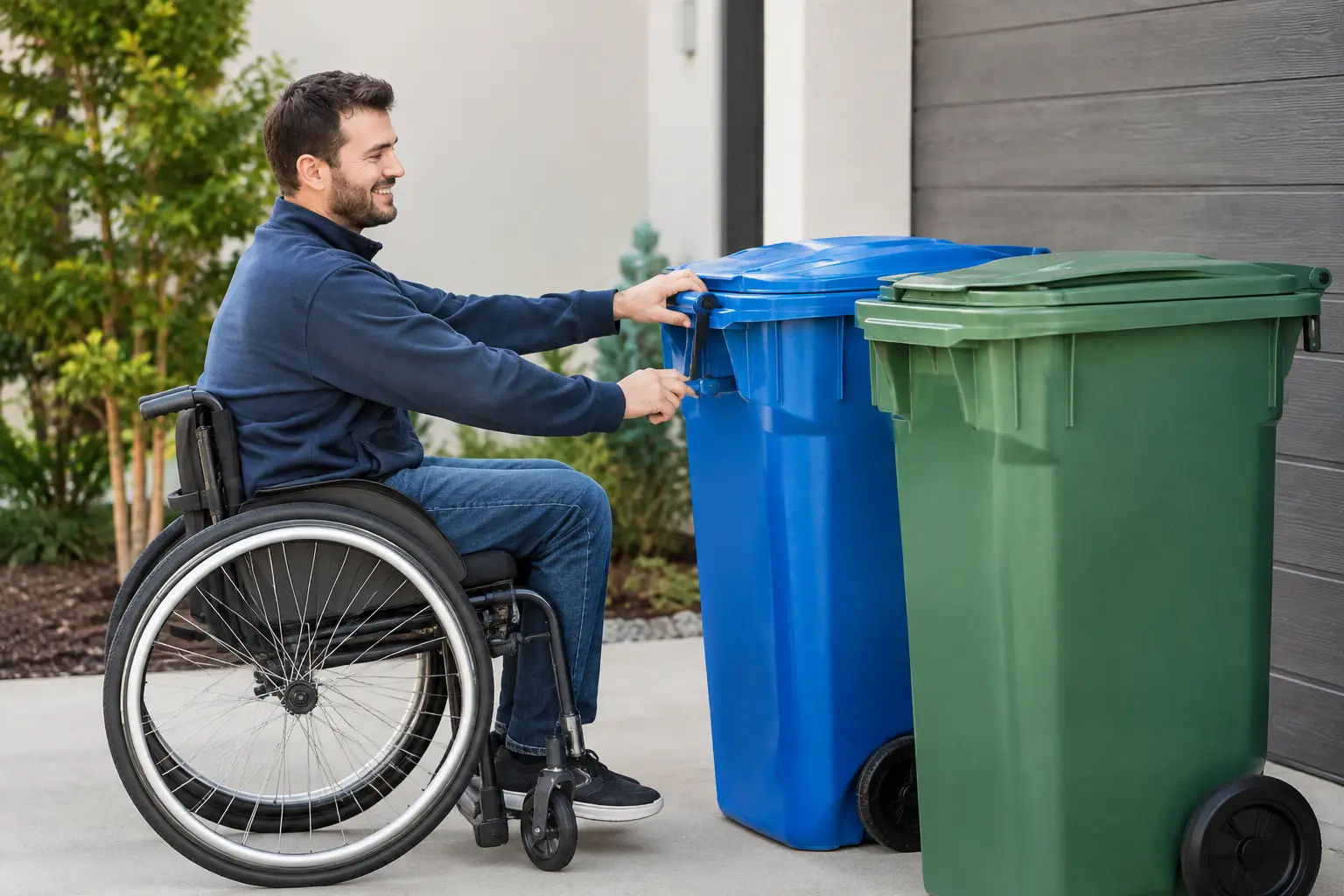
A 95-gallon trash cart can turn an ordinary pickup day into a risky chore. For someone managing limited mobility, chronic pain, balance concerns, or fatigue, pushing a heavy bin down a long driveway in Florida heat is not a minor inconvenience. A trash can valet for disabled people replaces that physical burden with a dependable routine: the bins go out on time, come back in after collection, and stay out of the way.
That kind of help supports independence. It is not about taking control away from a homeowner. It is about removing one repetitive task that can become unsafe, exhausting, or easy to miss when weather, health, travel, or a changing schedule gets in the way.
Why curb day can be harder than it looks
Trash carts are designed to hold a lot, which also means they can become difficult to control when full. A wheeled bin may roll easily on flat concrete, then catch on grass, gravel, uneven pavers, drainage swales, or a driveway slope. Add rain, slick surfaces, poor lighting, or a tight gate, and a simple trip to the curb can create a real fall or strain risk.
The challenge is not the same for everyone. One person may have no trouble rolling an empty cart but struggle after a week of household waste. Another may be comfortable walking outside but unable to maneuver a bin around a parked car or down a sloped driveway. For homeowners aging in place, the task may slowly become harder over time rather than suddenly impossible.
There is also the collection schedule to manage. Missing a pickup can mean another week of overflow, odors, pests, and an unsightly bin sitting in view. In neighborhoods with HOA rules, leaving carts at the curb too long can create an avoidable compliance issue. The work is small on paper, but it arrives every week whether you feel up to it or not.
How trash can valet for disabled people works
A recurring valet service handles the physical curb-day routine on a set schedule. At Curb Critter, bins are moved to the curb after 5 p.m. before the scheduled collection day, then returned after 3 p.m. on collection day. Customers receive photo confirmation at both stages, so there is no need to look outside, wonder whether the cart made it out, or ask a neighbor to check.
That consistency is the main benefit. Rather than arranging help each week, homeowners have a planned service built around their collection day. The cart is where it needs to be before the truck arrives, then it is brought back from the curb once pickup is complete.
For many households, two bins cover the regular routine. Additional carts can be added when needed, which matters for larger households, multigenerational homes, or properties with separate trash and recycling carts. A one-time trip can also make sense for a traveler who only needs help during a short absence. The right setup depends on the number of bins, the collection schedule, and how often the homeowner needs hands-free support.
The benefits go beyond avoiding heavy lifting
The most immediate benefit is safety. Removing a push, pull, bend, and turn task from the weekly routine can reduce exposure to preventable strain and falls. That is particularly valuable after surgery, during recovery, or when a mobility condition makes outdoor chores unpredictable from one day to the next.
There is a practical benefit, too: no more timing a trip outside around the pickup truck. Homeowners do not have to worry about whether they remembered the night before or whether they will be physically able to move the cart that morning. Family members who live elsewhere gain peace of mind without needing to coordinate a weekly visit.
A valet service also helps keep the front of the property looking cared for. Bins are returned from the curb instead of lingering at the street. That matters in Sarasota and Bradenton communities where neat presentation is part of everyday neighborhood expectations, especially for seasonal homes and rental properties.
Photo confirmation adds accountability that informal favors do not always provide. A neighbor may be generous, but they may travel, get busy, or simply forget. Clear visual proof turns a recurring household uncertainty into a completed task you can verify.
Clean bins matter when someone is hands-free
Getting the cart to the curb solves only part of the problem. Over time, bins collect residue from leaking bags, food waste, yard debris, and moisture. Florida heat speeds up odors and creates conditions that can attract flies, maggots, mold, and bacteria. That is not the trash. It is the can.
For a person with a disability, cleaning a large cart can be just as difficult as moving it. Tipping a bin, handling a hose, scrubbing the interior, and managing dirty runoff can require strength and balance that are not always available. It can also leave the homeowner dealing with a mess at the end of an already demanding task.
Professional bin cleaning is most effective immediately after collection, when the container is empty. The cart can be washed with high-pressure hot water, sanitizer, and deodorizer to remove built-up grime and odor-causing bacteria. Proper on-site wastewater capture matters as well, because dirty wash water should not run into storm drains.
Bundling cleaning with valet service makes the process simpler. There is no separate appointment to remember and no need to place an empty cart somewhere special for a cleaning crew. The work happens as part of an established curb-day route, returning the bin clean, fresh, and ready for the week ahead.
What to look for in a dependable valet service
The right service should be clear about its timing. Ask when bins are rolled out, when they are returned, and how the team handles holidays or changed collection schedules. A vague promise to handle it "around pickup day" leaves too much room for missed windows.
Communication should be equally clear. Photo confirmation is useful because it confirms the two moments that matter most: the cart is out before collection and back after collection. If a service cannot explain how it documents completion, it may not offer the level of reassurance a homeowner or family caregiver needs.
It also helps to understand what is included. Check how many bins are covered, whether additional bins cost extra, and whether the plan is recurring or requires a long contract. Flexible month-to-month cancellation and straightforward quarterly billing can be a better fit for homeowners whose needs change with seasons, recovery periods, or travel plans.
Finally, consider the property itself. A long driveway, side-yard storage area, locked gate, steep curb, or shared access point may affect service. A good provider will gather those details early so the route is practical and the bins are handled the same way each week.
A useful support for families and property managers
Trash valet is often arranged by an adult child, caregiver, or property manager rather than the homeowner alone. The service can reduce the number of small emergencies that prompt a call: a cart left at the curb, a missed pickup, an overflowing bin, or a request for someone to come over in bad weather.
For vacation-rental operators, the same routine can prevent bins from becoming a guest-turnover problem. Collection-day coverage helps avoid overfilled carts and curbside clutter, while regular cleaning helps keep unpleasant odors from greeting the next guest. Still, valet service is not a substitute for adequate waste capacity during high-occupancy stays. Properties with frequent turnovers may need additional bins or a more deliberate trash plan.
For disabled homeowners, the goal is simpler. One less heavy, time-sensitive chore means more energy for the parts of home life that matter. When the bins are out, back in, and spotless without asking anyone for a favor, curb day can finally become just another day.