Trash Service for Seniors Makes Pickup Easier
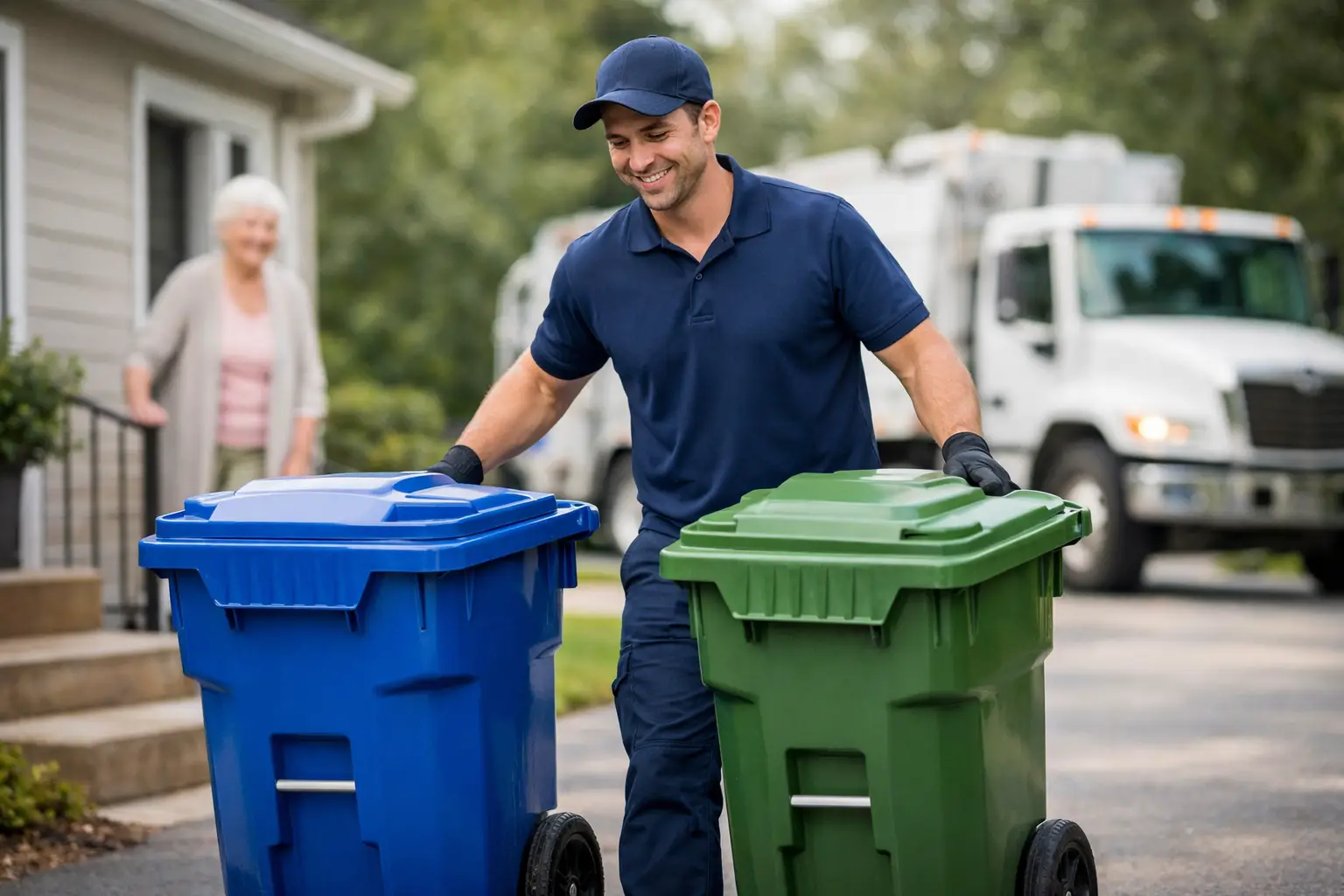
A 95-gallon trash cart can be easy to ignore until it is full, heavy, and waiting at the end of a long driveway. For older homeowners, trash service for seniors is not about avoiding a small chore. It is about taking a recurring physical risk off the calendar while keeping the home clean, presentable, and ready for collection every week.
Florida heat, afternoon storms, uneven pavers, loose gravel, and sloped driveways can turn moving a cart into a frustrating job. Add shoulder pain, reduced balance, arthritis, or a recent surgery, and the task can become one that deserves a reliable plan, not a last-minute push.
What Trash Service for Seniors Should Actually Solve
A helpful service should do more than roll a bin a few feet. It should remove the full collection-day burden: remembering the schedule, getting the cart to the curb on time, bringing it back before it becomes an eyesore, and dealing with the mess that builds up inside.
The best fit depends on the home and the homeowner. Someone with a short, flat driveway may only want occasional help after an injury or while family is away. A homeowner with a long drive, multiple bins, or weekly discomfort may benefit more from recurring service. For seasonal residents, dependable bin handling also helps the property look attended to while they are out of town.
A good trash valet routine addresses four practical concerns:
- Physical strain from pushing, pulling, lifting, or stabilizing a loaded cart
- Missed collection windows that leave bags sitting for another week
- Bins left at the curb too long, which can create HOA concerns and make a property look unoccupied
- Odor, grime, mold, insects, and maggots inside the container
The goal is simple: the bins go out, come back in, and stay clean without the homeowner having to handle them.
Why Moving a Cart Is Not Always a Simple Chore
A trash cart is designed to carry a lot, and that capacity is exactly what makes it difficult to manage. A full cart can be awkward even on level concrete. It becomes more challenging when someone has to guide it over a curb, through grass, across a driveway with cracks, or around parked vehicles.
The issue is not just strength. Pulling a heavy bin can twist the back. Trying to steady it on an incline can affect balance. Wet pavement and Florida rain make the wheels and walking surface less predictable. For a person aging in place, avoiding one preventable fall or strain can matter far more than saving a few minutes.
Family members often step in when they can, but schedules change. A recurring service creates a dependable routine instead of requiring a neighbor, adult child, or homeowner to remember a task every collection week.
What Reliable Bin Valet Looks Like
Reliability is the difference between convenience and another thing to worry about. A service should have a clear process, a predictable schedule, and accountability when the work is complete.
At Curb Critter, bins are moved to the curb after 5 p.m. before the scheduled collection day. That timing helps homeowners avoid rolling carts out early and leaves the bin accessible for the hauler. After collection, bins are returned after 3 p.m. so they are not left curbside longer than necessary.
Photo confirmation at both stages is especially useful for homeowners who do not want to walk outside to check. It also gives adult children, property managers, and seasonal residents clear proof that the job was completed. A photo is a small detail, but it answers a big question: Did the bin make it out and come back in?
Before signing up for any recurring valet service, ask how it handles schedule changes, holiday collections, weather delays, extra bins, and missed pickups. Collection schedules are not always perfect, particularly around holidays. A service team should be able to explain what happens when the normal routine changes rather than leaving customers to guess.
Clean Bins Are Part of the Service, Not an Extra Hassle
Taking a cart to the curb solves the heavy-lifting problem. It does not solve the odor that hits when the lid opens.
In Sarasota-area heat, food residue and moisture can turn a bin into a breeding ground for odor-causing bacteria, mold, flies, and maggots. Even careful bagging cannot prevent every leak. A few drops of garbage liquid at the bottom of the cart can linger through multiple pickup cycles, especially when the container sits in the sun.
That is not just unpleasant. Dirty bins can attract pests near the garage, side yard, or entryway. They can also be difficult for an older homeowner to clean safely. Tipping a large cart, reaching into its bottom, and working with a hose and harsh cleaners are tasks many people would rather skip, for good reason.
Professional cleaning is most effective immediately after collection, when the container is empty. That allows the service team to remove grime rather than spraying around new trash bags. High-pressure hot water, sanitizer, and deodorizer can treat the interior while targeting the residue that causes lingering smells.
The cleaning method matters, too. Wastewater should be captured on-site rather than rinsed into a storm drain. In coastal Florida communities, proper wastewater handling is a practical responsibility, not a decorative service detail. A clean bin should not create dirty runoff.
Choosing a Plan That Fits the Household
A plan should feel straightforward. For many households, two bins cover regular trash and recycling. Additional bins are useful for larger homes, multi-generational households, or properties with separate yard-waste containers. The right plan is based on what is actually at the curb each week, not on a complicated package with services the homeowner will never use.
Flexible recurring service can make sense for people who want collection day handled week after week. Monthly bin cleaning paired with that valet route removes the need to schedule a separate visit or remember another appointment. The bin is already empty after pickup, which is the right time to clean it.
There are also situations where a one-time trip is the better choice. A homeowner recovering from surgery, traveling for several weeks, or preparing a house for guests may only need temporary help. Snowbirds can use a one-time service when their usual routine is interrupted, while recurring service may be more practical for a home that is occupied year-round.
Look for clear billing and reasonable flexibility. Quarterly billing may be convenient for an ongoing service, but customers should know whether they can add bins, pause service, or cancel month to month. Clear terms make it easier to choose help without feeling locked into it.
A Useful Conversation for Families and Caregivers
Trash day is easy to overlook because it is so ordinary. That is why it can be a good starting point for a respectful conversation about support at home. Rather than framing help as giving up independence, frame it as removing the chores that create the most risk and frustration.
Ask practical questions. Is the driveway difficult to walk? Does the bin ever stay at the curb because bringing it back feels like too much? Has the homeowner stopped using one of the bins because it is hard to move? Does opening the lid bring an odor or insect problem into an otherwise well-kept home?
The answer does not have to be a major change in daily life. Sometimes it is simply putting one dependable task in the hands of a local service team.
Collection day should not require a heavy pull, a slippery walk, or a call for backup. When the bins are out, in, and spotless on a predictable routine, homeowners can keep their energy for the parts of home life they actually enjoy.