Trash Valet Versus Self Hauling: Which Fits?
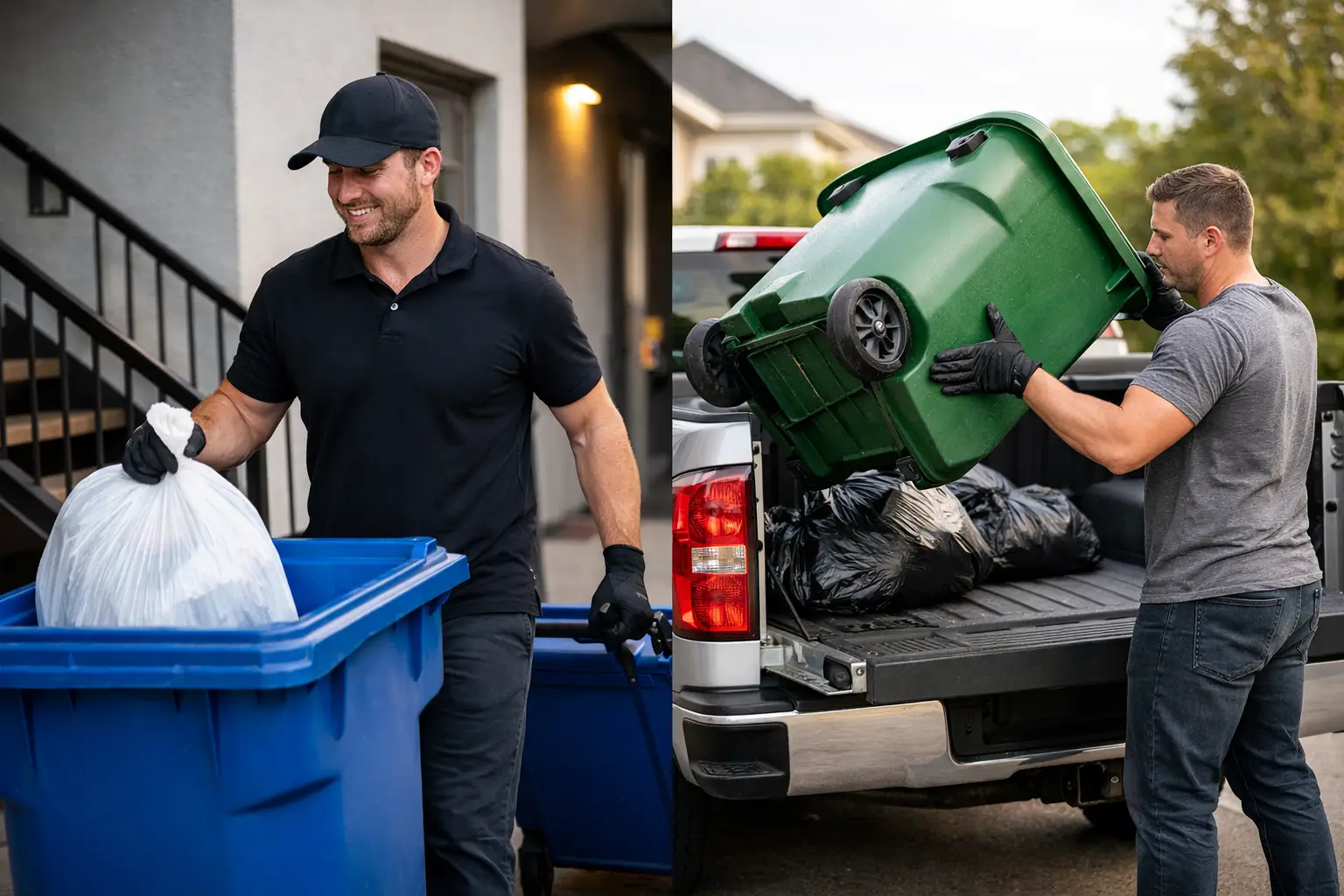
A full 95-gallon cart can be awkward on a flat, dry driveway. Add Florida heat, afternoon rain, gravel, a sloped yard, or a long walk to the curb, and the choice between trash valet versus self hauling becomes more than a minor weekly chore. It affects safety, sanitation, curb appeal, and whether pickup day runs smoothly when you are home or away.
For some households, self hauling remains a perfectly sensible routine. For others, especially older adults, seasonal residents, and vacation-rental managers, a recurring valet service removes a task that is easy to overlook until it becomes a problem. The right answer depends on your property, your schedule, and how much confidence you need on collection day.
Trash Valet Versus Self Hauling: The Real Difference
Self hauling means you roll your own bins to the curb before your collection window and bring them back after the truck has been through. The work sounds simple because it is familiar. But it requires good timing twice each pickup day, physical effort, and someone who is actually at the property.
Trash valet assigns those steps to a service team. Your bins are rolled out before collection, returned afterward, and, with the right provider, documented with photos. The benefit is not just avoiding the walk down the driveway. It is knowing the bins are where they need to be, even when you are traveling, working late, recovering from an injury, or coordinating a guest turnover.
The distinction matters most because waste collection is time-sensitive. A cart moved out too late may sit full for another several days. A cart left at the curb too long can look neglected, create an HOA concern, or become an obstacle around the property.
When Self Hauling Still Makes Sense
Self hauling can be a good fit for homeowners with short, level driveways, light trash loads, and a dependable routine. If someone is consistently home, physically comfortable handling the cart, and able to remember holiday schedule changes, there may be little reason to outsource it.
It also gives you complete control over placement. You can confirm the lid is closed, keep the cart clear of parked vehicles, and bring it in as soon as you see the truck pass. For a household that treats collection day as a fixed part of its weekly rhythm, that approach can work well.
The weak point is that the routine has no backup. A late meeting, a weekend trip that runs long, an illness, or a simple forgotten reminder can lead to a missed pickup. For a primary residence, that may be inconvenient. For a second home or rental property, it can become a larger presentation and sanitation issue quickly.
The Physical Side of Moving a Full Cart
A large garbage cart does not always move as easily as it looks. Wet yard debris, household waste, and recycling can add substantial weight. The challenge is not only pulling it forward. It is navigating cracks in a driveway, uneven pavers, soft grass, curbs, gates, and tight turns without straining your back, shoulders, or wrists.
This is one reason trash valet is valuable for homeowners aging in place. It replaces a recurring lifting, pulling, and balancing task with a predictable service. There is no need to step outside in a storm or rush home before a morning collection route.
Property managers see a similar issue from a different angle. A single employee or owner may be responsible for several homes, each with its own pickup day and bin location. Self hauling across multiple addresses turns into a calendar-management job. A valet route creates a more reliable operating routine.
Timing Is Where Convenience Becomes Accountability
A good valet service is built around clear timing, not vague promises. Curb Critter moves bins to the curb after 5 p.m. before scheduled collection and returns them after 3 p.m. on collection day. That schedule keeps the task off your plate while helping bins avoid sitting curbside longer than necessary.
Photo confirmation adds another layer of confidence. It is useful for a homeowner who is out of state, but it is especially practical for vacation-rental operators and property managers. Instead of wondering whether a bin was rolled out before a guest arrival or returned after collection, you have confirmation that the work was completed.
Self hauling can offer the same result when everything goes according to plan. Valet is designed for the weeks when it does not. The value is consistency, not the idea that homeowners cannot manage their own bins.
Dirty Bins Change the Comparison
Moving a cart is only part of trash management. The can itself collects residue, leaking bags, food waste, moisture, and bacteria. In Florida, heat speeds up odors and creates an inviting environment for flies, mold, and maggots. If the smell seems stronger than the trash you just put inside, that is not the trash - it is the can.
Self hauling does not automatically mean dirty bins, but cleaning them is another task homeowners often postpone. A quick garden-hose rinse rarely removes buildup, and washing waste into a driveway or storm drain is not a responsible solution. The job requires containment, proper pressure, hot water, sanitation, and a way to capture wastewater.
Pairing valet with regular bin cleaning addresses both parts of the problem. After the collection truck empties the container, the bin is ready to be cleaned without asking the homeowner to schedule a separate appointment or leave a cart available on a special day. High-pressure hot water, sanitizer, deodorizer, and on-site wastewater capture can remove the grime and odor-causing bacteria that a rinse leaves behind.
That sequence matters. Cleaning an empty bin right after collection is practical, efficient, and far less disruptive than trying to coordinate cleaning around a full cart.
Curb Appeal, HOAs, and Rental Readiness
A trash cart is not the centerpiece of anyone's property, but it can still make a strong impression. Bins left at the curb, overflowing after a missed collection, or stained and odorous near a garage can undermine the care put into the rest of the home.
For Sarasota and Manatee County homeowners, this can be particularly noticeable in communities with HOA rules and close-set homes. The same is true for a vacation rental between guest stays. A guest does not need to see a major issue for it to affect their perception. An overfilled cart, an unpleasant smell near the entry, or a bin blocking a driveway sends the message that the property is not being watched closely.
Valet service is not a substitute for proper guest instructions or adequate bin capacity. If a rental regularly produces more waste than its carts can hold, the owner may need an additional bin or a different waste plan. Still, regular rollout, return, and cleaning remove several common points of failure.
How to Choose the Better Fit for Your Home
Ask a few practical questions. Can you comfortably move a full cart in all weather? Will someone be home before pickup and available afterward? Does the property sit vacant for part of the year? Are you managing guest turnovers, HOA expectations, or multiple homes? Does the bin smell despite taking the trash out regularly?
If the answers point to a recurring burden, valet is usually more than a convenience purchase. It is a small property-maintenance system. The bins go out, come back, and stay cleaner without another item on your weekly checklist.
If self hauling still fits your household, keep the routine simple: set a reminder the evening before collection, avoid overfilling the cart, place it where local collection guidelines require, and plan regular professional cleaning when odor or buildup appears. The goal is not to make trash complicated. It is to prevent a predictable chore from creating an avoidable problem.
The best choice is the one that keeps your home hands-free, your bins under control, and your curb looking cared for whether you are inside, across town, or away for the season.