Vacation Rental Trash Management That Works
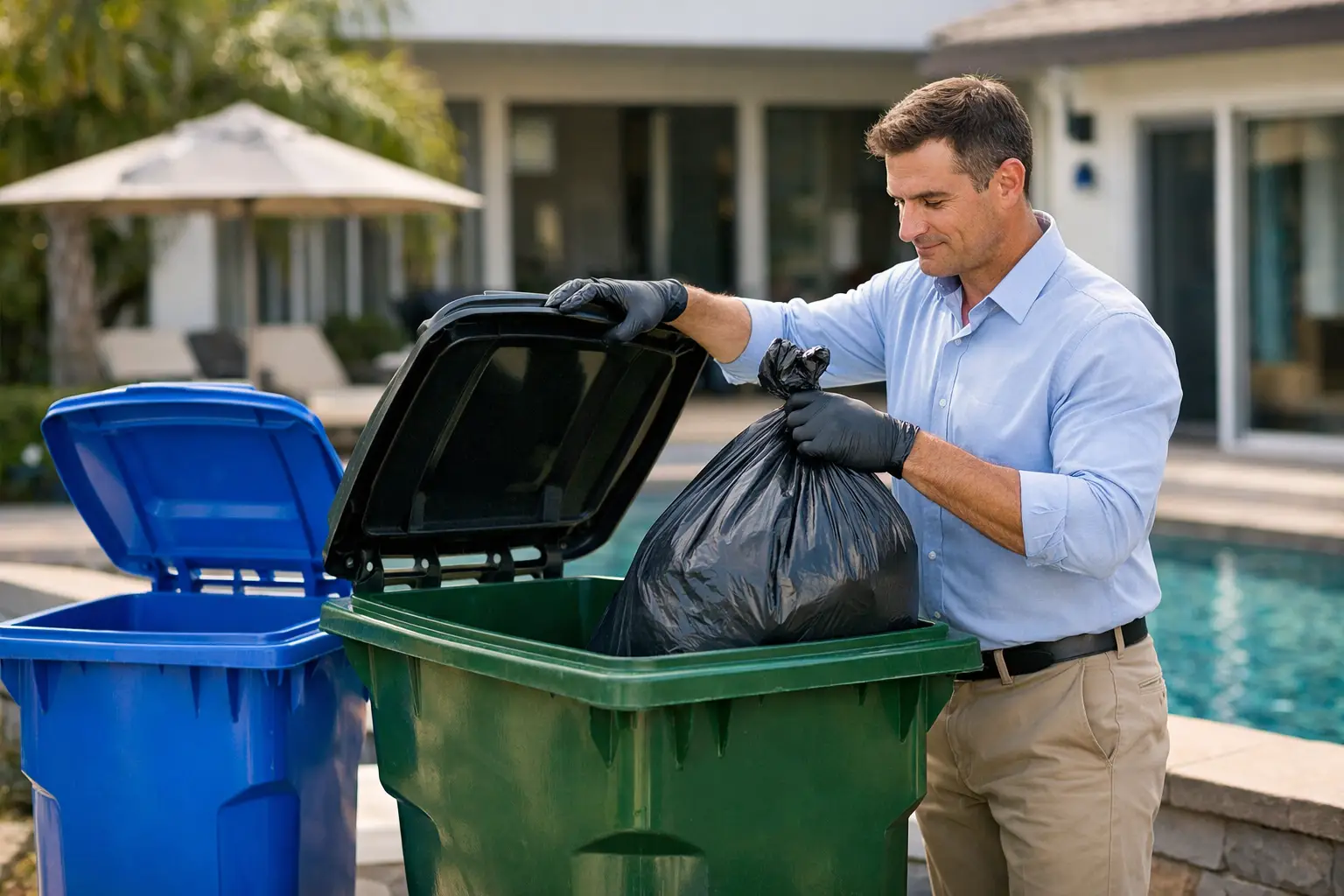
A beautiful vacation rental can lose its polished look fast when an overflowing trash cart is waiting at the curb, bags are left beside the bin, or a guest arrives to last week’s odor. Vacation rental trash management is not glamorous, but it directly affects guest reviews, neighborhood relationships, HOA compliance, and the condition of your property between turnovers.
For owners and managers, especially in high-turnover coastal markets, trash needs a routine that works even when you are not on-site. The goal is simple: every bin goes out on time, comes back promptly, stays sanitary, and never becomes the problem your guests, neighbors, or cleaners have to solve.
Why vacation rental trash management needs a real system
Trash is different at a vacation rental than it is at a primary residence. Guests may not know the collection schedule, local sorting rules, or where bins belong after pickup. They may generate more waste during a short stay than a household does in a typical week, particularly after beach days, holiday meals, and large group checkouts.
That creates pressure at exactly the wrong time: during a turnover. Your cleaning team is focused on linens, bathrooms, inventory, and check-in readiness. Asking them to haul a full 95-gallon cart across a long driveway, wait for collection, or deal with leaking bags adds work and can delay the next guest.
There is also a presentation issue. A cart left at the curb for days can make an unoccupied home look unattended. In communities with HOA rules, bins stored in view or overflowing at the side of the house can trigger complaints. On Anna Maria Island, Siesta Key, and throughout Sarasota and Bradenton, a well-kept exterior is part of the rental experience before guests ever open the door.
The four parts of a dependable trash routine
A workable system is less about reminders and more about clear ownership. Someone needs to be responsible for each stage, including what happens when a schedule changes or a bin is too full.
1. Know the collection schedule and local rules
Start with the exact collection days for each property, including holiday changes. Keep the schedule in your property management system and give it to cleaners, maintenance staff, and co-hosts. If guests are expected to roll bins out, include simple instructions in the welcome guide, but do not rely on that alone.
Local rules can vary by municipality and community. Some areas require carts to face a certain direction, sit a specified distance from mailboxes or vehicles, or be removed from the curb within a set time. Others have separate days for recycling, yard waste, or bulk pickup. A good routine accounts for the details rather than assuming every property works the same way.
2. Put carts out before the deadline
Missed pickup is where a minor chore turns into a weeklong problem. If your rental is occupied, guests may not take the cart out. If it is vacant, nobody is there to do it. If a turnover happens near collection day, the task can easily fall through the cracks.
For vacation rentals, putting bins out the evening before collection is usually the safest approach. It gives the hauler a clear path in the morning and keeps your team from scrambling at dawn. Curb Critter’s recurring valet service follows this practical rhythm, moving bins to the curb after 5 p.m. before scheduled collection and providing photo confirmation when the job is done.
That confirmation matters. It replaces the familiar question, “Did someone get the trash out?” with a clear record you can check from anywhere.
3. Bring bins back in quickly
A collected bin is not finished business. Empty carts left at the curb can block parking, create a sloppy first impression, and invite neighborhood complaints. They can also advertise that the property is vacant, which is not the signal most second-home owners or rental operators want to send.
Returning the carts promptly keeps the exterior tidy and keeps your routine consistent. The right timing depends on the local collection window and the layout of the property. A home with a steep drive, gravel path, or limited access may need more careful handling than a cart parked beside a flat garage.
With a valet route, bins can be returned after 3 p.m. on collection day, again with photo proof. That means the task is closed out, not merely started.
4. Clean the bins when they are empty
Collection removes the bags. It does not remove spills, residue, bacteria, mold, maggots, or the odor that lingers inside the cart. In Florida heat, a dirty bin can become unpleasant quickly, especially when guests toss seafood shells, takeout containers, diapers, or wet food waste into it.
Cleaning works best immediately after collection, when the container is empty. This is more efficient than scheduling a separate visit and avoids asking someone to work around full carts. Professional bin cleaning should use high-pressure hot water, sanitizer, and deodorizer, with wastewater captured on-site instead of washed into a storm drain.
For rental owners, monthly cleaning is often a sensible baseline. Properties with large groups, frequent turnover, or outdoor trash storage may need more attention during busy season. A quieter seasonal property may need less frequent cleaning, but it should not be ignored until the smell becomes noticeable from the driveway.
Plan for the moments that cause overflow
Most trash problems are predictable. Holiday weekends, family reunions, back-to-back bookings, and guest changeover days can all push a standard two-cart setup past its limit. The answer is not always another bin. It depends on the property’s collection schedule, maximum occupancy, guest behavior, and available storage space.
Start by looking at a few months of real volume. Are guests leaving bags beside the cart because the lid will not close? Does recycling fill first? Do cleaners remove large amounts of packaging after restocking? Those patterns tell you whether you need clearer guest instructions, more frequent service, an extra cart, or a plan for occasional overflow.
Keep the guest-facing message brief and practical. Tell guests where bins are located, which day they are collected, and that bagged trash belongs inside the carts with lids closed. If recycling rules are strict in your area, provide a separate, easy-to-read note. Long rule sheets rarely get read at checkout.
It also helps to give your cleaning team a defined escalation path. If a cart is full, leaking, damaged, or missing, they should know who to contact and what to photograph. Fast reporting prevents a small issue from becoming a curbside mess before the next arrival.
Choose accountability over guesswork
Owners often divide trash work among guests, cleaners, maintenance staff, and neighbors. That can work for one property with low occupancy, but shared responsibility often means no responsibility when schedules get busy. The more properties you manage, the more valuable a dedicated routine becomes.
A recurring valet service creates a consistent handoff: bins go out, collection happens, bins come back, and sanitation is handled on schedule. For owners who travel or live out of state, photo confirmation provides useful documentation without adding another app, call, or late-night reminder.
Flexible service matters, too. A rental portfolio may need recurring support at one property and a one-time trip for another when an owner is away. The best arrangement is the one that matches your actual turnover calendar rather than forcing every home into the same pattern.
A cleaner curb supports a better stay
Guests may never mention a properly handled trash cart in a five-star review. They will notice the opposite: the smell near the entry, the bags by the garage, the overflowing bin they are asked to fix, or the curb clutter outside a home that was supposed to feel cared for.
Treat trash service as part of your property standard, just like clean sheets, working lights, and a stocked kitchen. When bins are out, back, and spotless on schedule, your team has one less moving part to chase - and your guests get the clean arrival they expected.