What a Trash Butler Does for Busy Homeowners
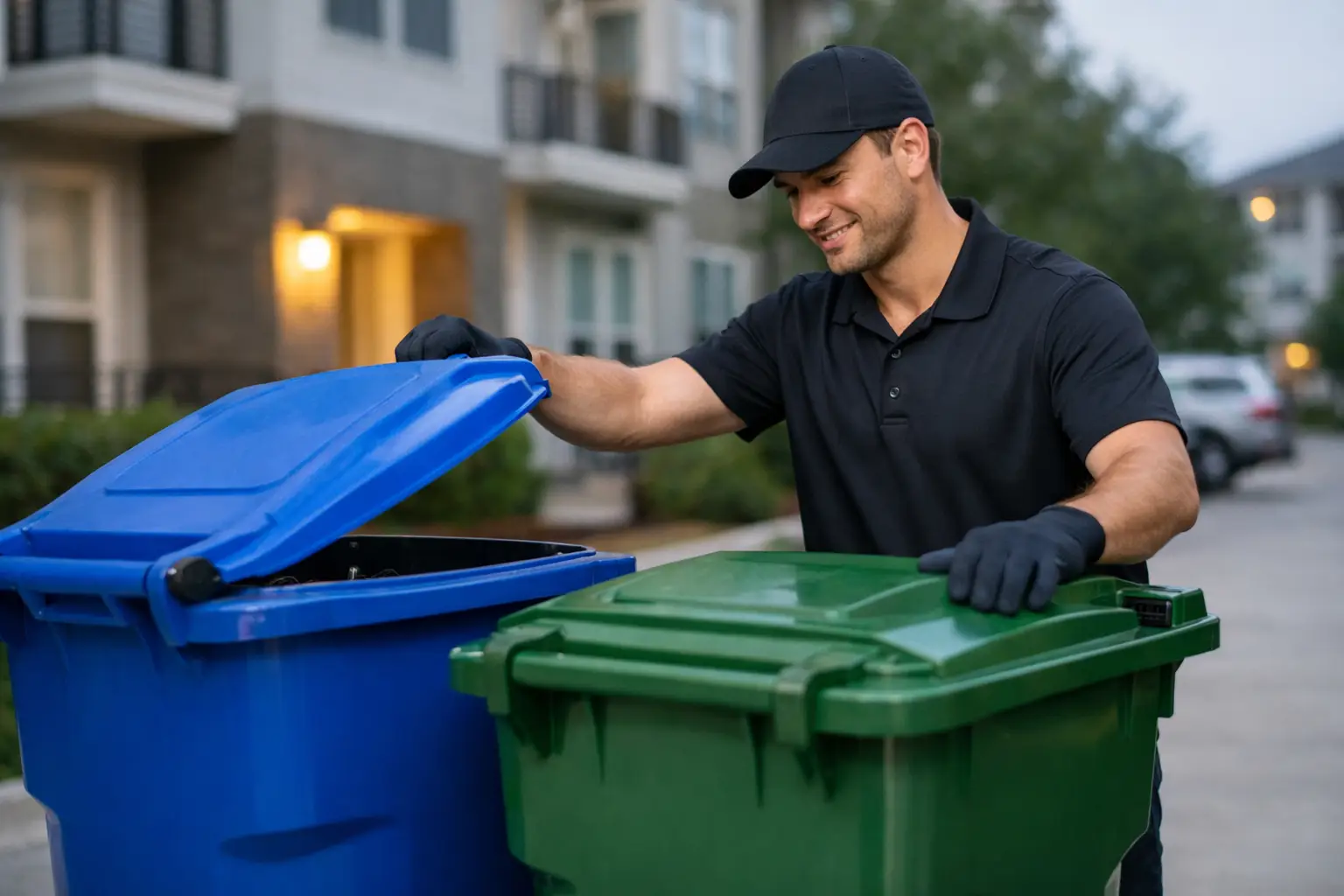
A full 95-gallon trash cart can turn an ordinary collection day into a chore people plan around. It is heavy, awkward on gravel or grass, and especially unpleasant to handle in Florida heat after it has sat full for several days. A trash butler takes that routine off the homeowner’s hands by making sure bins get to the curb, come back from the curb, and do not become one more thing to worry about.
For homeowners aging in place, seasonal residents, and rental-property managers, this is less about luxury than consistency. Trash still has to be handled whether you are recovering from an injury, catching an early flight, managing a guest turnover, or simply trying to avoid another trip down a long driveway. A dependable routine keeps collection day moving without requiring your attention.
What Is a Trash Butler Service?
“Trash butler” is a plainspoken way to describe residential trash-can valet. The service handles the physical work of moving curbside carts out before collection and returning them afterward. Rather than setting a reminder, checking the county schedule, and wrestling bins across the property, the homeowner has a recurring team take care of the task.
The details matter. A good service does not merely put bins at the curb at some point during the week. It follows the collection schedule, places carts out with enough time for pickup, and brings them back promptly so they are not left at the street all day or overnight. Photo confirmation adds another layer of confidence. You can see that the bins went out and that they returned, even when you are miles away.
For many households, the value is immediate: no lifting, dragging, pushing through rain, or walking down a dark driveway after dinner. For second-home owners and vacation-rental operators, the value is visibility. The property continues to look cared for while they are away.
Why Curb Day Can Create Bigger Problems
A missed pickup is rarely just a missed pickup. In Sarasota-area neighborhoods, an overfilled cart can quickly lead to loose bags, odors, pests, and an unattractive curb line. If the next collection day is several days away, a small oversight can become a frustrating cleanup job.
There is also a safety issue. Large wheeled carts are manageable on smooth, level pavement, but many properties have slopes, pavers, gravel, long driveways, or soft grass after a summer storm. Pulling a loaded cart across those surfaces can strain a shoulder, back, wrist, or knee. For an older adult or anyone with limited mobility, the task may not be practical at all.
Then there is the timing problem. Some collection routes arrive early. Putting bins out in the morning may work until it does not, particularly after a schedule change, a busy evening, or a holiday week. Leaving carts at the curb too long creates a different concern. Many HOAs and communities expect bins to be removed after service, and a cart sitting curbside can make an otherwise well-kept home look vacant or neglected.
A trash-can valet routine addresses both sides of the day: out before pickup and back in after pickup. That simple rhythm can protect curb appeal while removing a recurring physical burden.
How a Trash Butler Routine Works
The best setup is straightforward. Once a household’s collection days are established, the service repeats the same dependable sequence each week. At Curb Critter, carts are rolled to the curb after 5 p.m. before scheduled collection and returned after 3 p.m. on collection day. Customers receive photo confirmation at both stages.
That timing gives homeowners a practical margin before collection while keeping the cart from lingering at the street any longer than necessary. It also gives remote owners proof that a basic but essential property task was completed.
The service works best when carts are accessible and clearly assigned to the property. Gates should be unlocked when needed, vehicles should not block the route, and customers should let the service know about schedule changes or special circumstances. Those small details help a recurring route stay reliable.
A trash butler service does not replace municipal collection. It makes sure your household is ready for it. If a city truck skips a cart for reasons outside the valet team’s control, the service cannot force collection. But reliable placement, clear confirmation, and a consistent process reduce the chance that the missed pickup began with a forgotten bin in the garage.
It Is Especially Useful When Nobody Is Home
Snowbirds know the problem well. A property can be secure, landscaped, and monitored, yet a forgotten trash cart can signal that nobody is paying attention to the weekly routine. Regular bin handling helps the home look lived in and maintained while you are away.
For vacation rentals, the pressure is different. Guest turnovers create a steady flow of trash, and a full bin can become a guest complaint before the next arrival. A scheduled valet service helps managers avoid collection-day surprises, particularly when they oversee multiple homes or cannot personally visit every property.
One-time service can also make sense for travelers. If you are leaving town before collection or returning after it, arranging for the bins to be handled can prevent an unnecessary pileup. Recurring service is usually the better fit for households that want the chore gone for good, but flexibility matters when plans change.
Clean Bins Are the Other Half of the Job
Getting the cart back from the curb solves the hauling problem. It does not solve what is inside the cart after weeks of food residue, leaks, and Florida humidity. That is where professional bin cleaning becomes useful.
Odor often comes from bacteria and residue clinging to the bottom, lid, and inner walls of the cart. Mold can grow where moisture lingers. Maggots can appear quickly when organic waste and heat combine. Spraying a bin with a garden hose may rinse away visible debris, but it usually does not remove the buildup that causes the smell.
Professional cleaning is most effective immediately after collection, when the container is empty. The cart can be washed with high-pressure hot water, treated with sanitizer and deodorizer, and returned clean before new trash goes in. Wastewater capture matters too. Dirty runoff should not be sent down the driveway and into storm drains.
Bundling cleaning with valet service removes another appointment from the calendar. Instead of trying to remember when the bin needs attention, the cleaning happens as part of a predictable route. Curb Critter’s approach combines the two: bins are returned after collection and cleaned on site when they are empty.
Choosing the Right Level of Service
The right arrangement depends on the property and the people using it. A homeowner with two household carts may only need a simple recurring plan. A larger home, shared property, or vacation rental may need additional bins included in the route. If carts are frequently used for pet waste, diapers, seafood waste, or large family gatherings, monthly cleaning may provide more value than an occasional rinse.
Before signing up, ask practical questions. What time are bins placed out and returned? Is there proof of service? Are cleaning visits scheduled after collection? How are wastewater and sanitation handled? Is the plan flexible if you leave for the season, add a cart, or need help for a single trip?
Price matters, but reliability matters more than saving a few dollars on a service that misses collection windows. Look for clear billing, simple cancellation terms, and a process that matches how your household actually operates. Two bins included in a plan, with the option to add more, is often a sensible starting point for a typical residence.
The best household services are the ones you stop having to think about. When curb day arrives, your bins are out. After the truck comes through, they are back in and ready for the week. That is a small routine with a real payoff: less strain, fewer odors, a tidier property, and one less job waiting at the end of the driveway.