Curbside Convenience That Keeps Life Moving
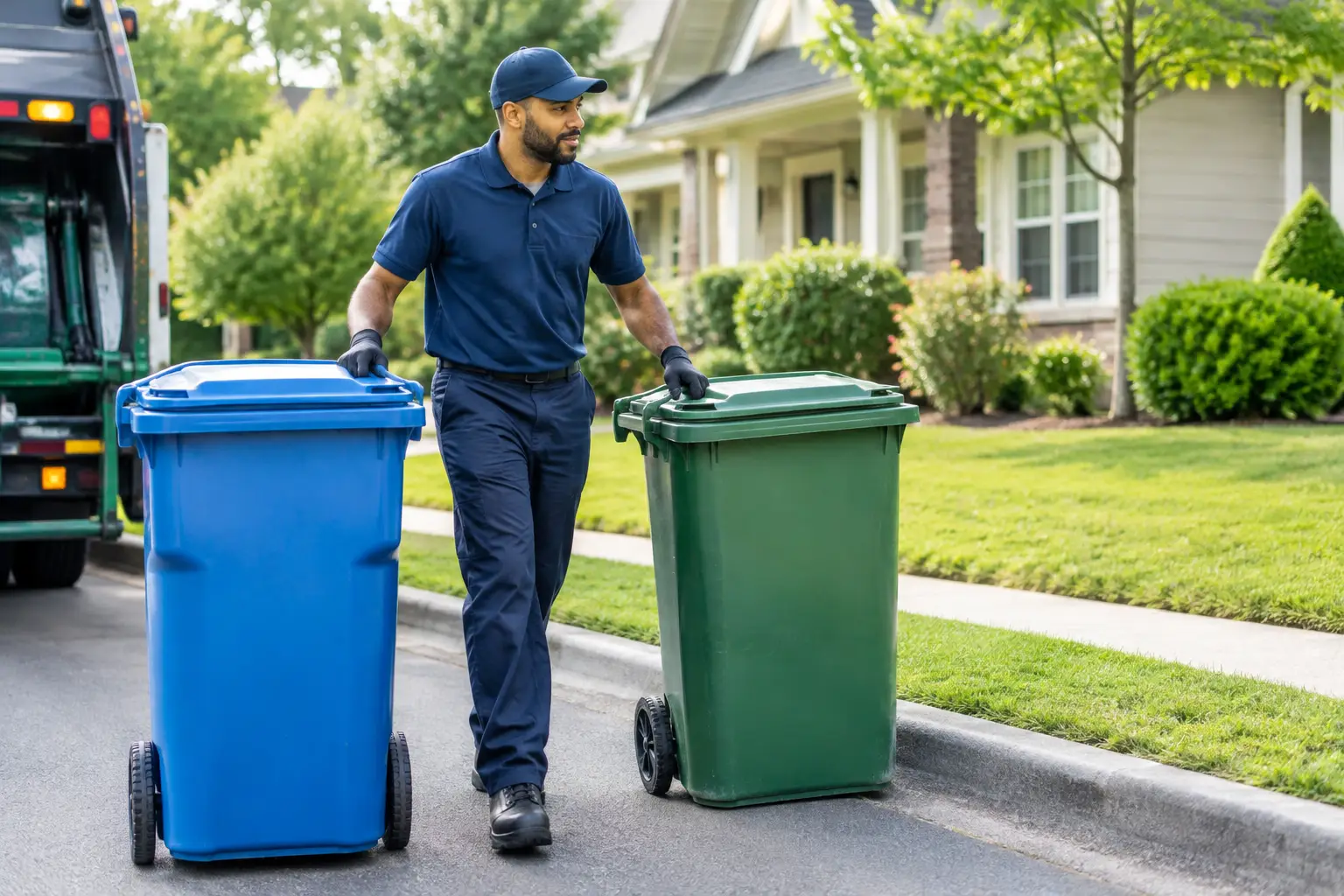
A full 95-gallon trash cart does not look like much until it is time to pull it across a long driveway in Florida heat, over grass, gravel, or a curb. Curbside convenience means that chore is handled before it becomes a strain, a missed collection, or one more thing to remember on an already busy day.
For homeowners, seasonal residents, and vacation-rental managers, trash day is not a small detail. Bins left out too long can affect curb appeal and HOA compliance. Bins left in too long can smell, attract pests, and create a problem for guests or neighbors. The best solution is not simply getting the cart to the curb. It is having a dependable routine that takes it out, brings it back, and keeps it clean.
What Curbside Convenience Actually Solves
Trash service follows a schedule, but life rarely does. A doctor appointment, a bad back, an early flight, a week away from home, or a guest turnover can all make collection day harder than it should be. When the cart does not reach the curb on time, it may sit full for another week. In warm, humid weather, that can get unpleasant fast.
A recurring curbside service removes the physical and mental work from the equation. The bin goes out after 5 p.m. before scheduled collection and returns after 3 p.m. on collection day. That timing matters. It keeps the container available as long as possible, gets it to the curb before the morning rush, and prevents it from sitting at the street overnight after pickup.
For older adults aging in place, this is about safety as much as convenience. Large carts can be awkward even on a flat driveway. Add rain, loose pavers, a sloped yard, or shoulder and knee pain, and the risk of a fall is real. No one should have to choose between physical discomfort and a week of overflowing trash.
For busy households, it is one fewer recurring task to track. You relax while the bins are handled on schedule.
Proof matters when you are not home
A service promise is helpful. Photo confirmation is better. Receiving proof when the bins are rolled out and returned gives homeowners and property managers a clear record that the task was completed.
That visibility is especially useful for snowbirds, second-home owners, and people managing a property from another state. A cart sitting at the curb for days can signal that a home is vacant. A missed pickup can lead to bags accumulating beside the bin. Photo confirmation replaces guesswork with a simple answer: it is done.
Curbside Convenience for Rental Properties
Vacation rentals have a different kind of trash-day pressure. Guests may not know local collection schedules, may put the wrong material in the wrong container, or may fill a bin faster than expected. During peak travel periods, a missed pickup can create an avoidable mess before the next arrival.
Property owners and managers need a routine that supports clean turnovers without asking a housekeeper, maintenance tech, or guest to wrestle a heavy cart down the drive. Regular bin handling helps keep the property presentable and reduces the chance of overflow near the street, garage, or pool area.
It also helps with consistency. A dependable route is easier to manage than sending last-minute texts to someone who may or may not be available. That does not mean every rental has identical needs. A home with one weekly pickup may need a straightforward recurring plan, while a high-turnover property may need extra bins or closer attention around holiday weeks. The point is to make trash handling part of the property routine, not a recurring emergency.
A Clean Bin Is Part of the Job
Moving the cart solves the collection-day task. Cleaning the cart solves what remains inside it.
That sour odor around the garage is often not the trash. It is the can. Food residue, leaking bags, moisture, bacteria, mold, and organic buildup can cling to the inside walls and lid long after the cart has been emptied. In Florida, heat speeds up the problem. Flies can find a dirty container quickly, and maggots are a frustrating result of a bin that needs more than a quick rinse.
A garden hose may wash away loose debris, but it usually does not remove odor-causing buildup. It can also send contaminated runoff toward a storm drain, where it does not belong. Proper bin cleaning calls for high-pressure hot water, sanitizer, deodorizer, and on-site wastewater capture.
The timing is just as important as the equipment. Cleaning immediately after collection, while the container is empty, avoids the inconvenience of a separate appointment. The cart is already out, already empty, and ready for a professional cleaning before it returns to its place beside the home. That is a practical detail, but it makes the service much easier to live with.
Clean enough to notice, responsible enough to trust
A cleaned bin should smell better and look better, but the process behind it matters too. Wastewater should be captured on-site rather than washed down the driveway or into stormwater systems. Homeowners should not have to trade a cleaner cart for an environmental concern.
Monthly cleaning is a sensible rhythm for many homes. It helps control buildup before it becomes stubborn, particularly for households with frequent cooking waste, pet waste, diapers, or rental turnover. Some properties may need more attention during hot summer months, while others can maintain a good result with a standard recurring schedule. The right frequency depends on how the bins are used, not on a one-size-fits-all rule.
The Value of a Route-Based Service
There is a difference between booking a one-off favor and having a service built around a recurring route. Route-based valet service creates predictable timing, a known process, and accountability week after week.
Curb Critter combines weekly trash-can valet with monthly bin cleaning, so the work happens as part of a regular service rhythm. Customers do not need to remember a separate cleaning appointment or make time to be home. Their bins are out, in, and spotless without adding another item to the household calendar.
That approach can also be more practical for properties with multiple carts. Two bins are included in a standard plan, with optional additional bins available when a household or rental needs them. Flexible recurring subscriptions with quarterly billing and month-to-month cancellation make sense for residents who want dependable help without feeling locked into a long-term commitment.
There are also times when recurring service is not the immediate need. Travelers may only need a one-time trip while they are away, whether they are leaving for a family visit, heading north for the season, or simply want the home to look cared for during a short absence. A single service can be useful. A recurring plan is usually the better fit when missed collection days are becoming a pattern.
Choosing Convenience Without Losing Control
Some homeowners worry that handing off a routine task means losing visibility. The right service should do the opposite. Clear timing, photo confirmation, and a consistent process let customers stay hands-free without being left in the dark.
Before choosing a curbside service, consider the details that affect your property: collection days, the distance from bin storage to the street, HOA expectations, the number of carts, and whether anyone at the home has mobility limitations. Rental owners should also consider guest volume and turnover days. Those details determine whether basic valet, valet with recurring cleaning, or an occasional trip makes the most sense.
The goal is not to make trash day feel complicated. It is to remove the parts that create stress, strain, odors, and unnecessary follow-up. When the bins are handled on time and returned clean, the driveway stays orderly, the property looks cared for, and one overlooked chore stops taking up space in your day.