Valet Versus DIY: What Trash Day Really Costs
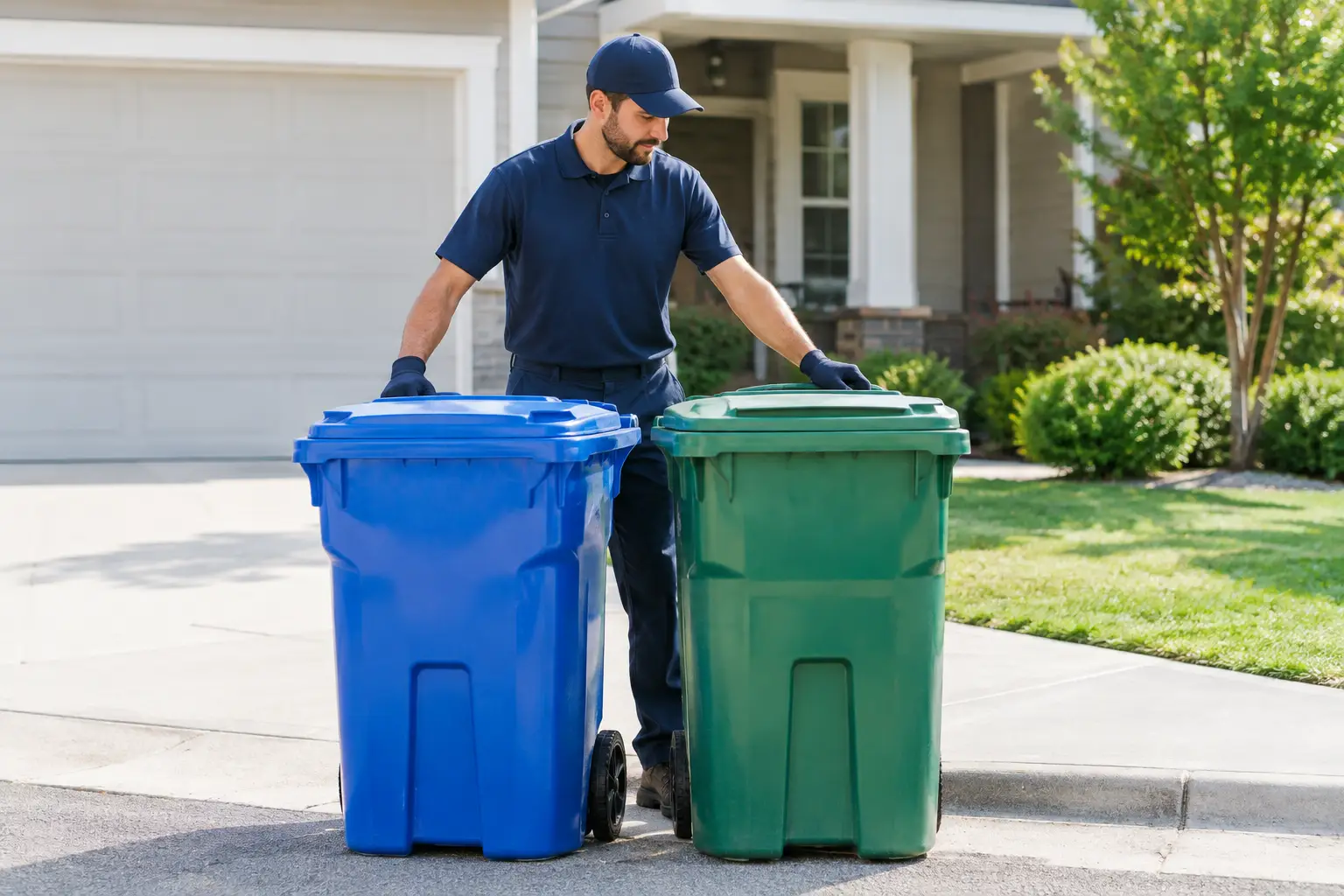
A full 95-gallon cart does not feel like a small household chore when it is parked at the end of a long driveway, sitting in summer heat, or waiting to be rolled across grass and gravel. The valet versus DIY decision is really about more than who takes the trash out. It is about physical effort, missed collection windows, curb appeal, and whether one more recurring responsibility belongs on your list.
For some households, rolling bins to the curb is no big deal. For others, it becomes the task that is easy to postpone, difficult to delegate, and impossible to ignore when collection day has passed. That difference matters for homeowners aging in place, seasonal residents, and vacation-rental operators who need a property to look cared for whether they are there or not.
Valet Versus DIY: Start With the Real Weekly Job
DIY trash handling sounds simple: fill the bin, roll it out, and bring it back. In practice, the job has several moving parts. Someone has to remember the collection schedule, check whether a holiday changes pickup, get the carts out before the truck arrives, and retrieve them before they become an all-day fixture at the curb.
Then there is the physical part. A large cart may be manageable on smooth pavement when it is half full. It is a different experience when it is packed after a family gathering, soaked by rain, or loaded with landscaping debris. Uneven pavers, steep driveways, loose gravel, and soft lawn edges can turn a routine pull into an awkward push-and-pull task.
Florida weather adds another layer. A bin that sits outdoors collects heat, moisture, grime, and odors quickly. The job can mean handling dirty wheels, lids, and handles in humid conditions, often at the least convenient time of day.
DIY works well when a resident is consistently home, physically comfortable moving heavy carts, and able to keep a firm collection-day routine. It can also be a reasonable choice for a small household with short, flat access to the curb. The question is not whether you can do it. The better question is whether you want to keep doing it every week.
The Costs DIY Does Not Put on a Receipt
The obvious cost of DIY is time. Even a quick trip to the curb takes planning because collection schedules do not wait for late dinners, travel days, guests, or a busy workweek. The less obvious cost is the mental reminder: Did the bins go out? Did the truck come? Did anyone bring them back in?
A missed pickup can create a week of inconvenience. Overflowing bags may need to stay in a garage, a side yard, or a rental property's outdoor area until the next collection date. For vacation rentals, that can collide with a guest arrival. For homeowners in HOA communities, bins left out too long can become a presentation issue or a violation concern.
There is also a safety calculation. Repetitive strain is not dramatic until it is. A wrist, shoulder, back, or balance issue can make a 95-gallon cart a risk rather than a chore. Older adults should not have to choose between asking a neighbor for help and wrestling a heavy bin down a driveway.
Finally, DIY bin cleaning tends to get delayed. Most people do not want to scrub a garbage cart after collection, and a garden hose does not solve the full problem. It can leave contaminated water running toward storm drains while grime, bacteria, mold, and odor remain inside the container.
What a Trash-Can Valet Service Changes
A valet service removes the timing and lifting burden from the homeowner or property manager. The routine should be clear, repeatable, and easy to verify: bins go out before collection and come back in after the truck has been through.
At Curb Critter, carts are rolled to the curb after 5 p.m. before scheduled collection and returned after 3 p.m. on collection day. Photo confirmation is provided at both stages. That detail matters when you are away from home, managing several properties, or simply tired of wondering whether the job got done.
The benefit is not just convenience. It is consistency. A bin is less likely to sit in front of the home overnight after pickup, block a driveway, or remain at the curb while guests arrive. For a snowbird, a recurring route helps the property maintain an occupied, orderly appearance. For a rental manager, it gives the trash routine a defined owner rather than leaving it to a cleaner, guest, or maintenance team with competing priorities.
Valet is not necessary for every home. If you enjoy handling the task and have no mobility, schedule, or travel concerns, DIY may remain the right fit. But a service becomes especially valuable when the cost of one missed pickup is higher than the cost of a routine solution.
Cleaning Is Where the Comparison Gets More Serious
Moving a bin solves one problem. Cleaning it solves another. Garbage carts are built to hold waste, not to stay sanitary on their own. Leaking bags, food residue, pet waste, rainwater, and Florida heat create a favorable environment for odor-causing bacteria, mold, insects, and maggots.
Many homeowners intend to clean their carts monthly but end up doing it only when the smell becomes hard to ignore. At that point, the bin may need more than a rinse. Cleaning is most effective immediately after collection, when the container is empty and the residue is easiest to address.
A professional process should use high-pressure hot water, sanitizer, and deodorizer, with wastewater captured on site rather than washed into a storm drain. That approach keeps the work contained while treating the dirt and odor inside the cart. It also avoids the unpleasant reality of doing a messy outdoor chore with a hose, brush, and nowhere appropriate for the runoff to go.
Bundling monthly cleaning with recurring valet makes practical sense because the service team is already visiting on collection day. There is no separate appointment to coordinate and no need to leave a full or partially full bin waiting for cleaning. The cart is emptied, cleaned, and returned ready for the next week.
Which Option Fits Your Household or Property?
DIY is a good match for residents who are home consistently, able to move their carts safely, and comfortable maintaining both the bins and the collection schedule. It gives you full control and carries no service fee, but it requires dependable follow-through every week.
Valet is often the better fit when routine has become a burden. It is particularly useful for people with mobility limitations, caregivers managing a loved one's home, households that travel frequently, and second-home owners who are away for part of the year. The same applies to vacation-rental operators who need bins handled between guest turnovers without relying on last-minute coordination.
Think about the condition of the property when no one is watching. If the cart is full, where does the extra trash go? If collection is missed, who deals with it? If the bin smells, who will clean it properly? Those questions reveal whether DIY is still a simple task or whether it has become an operational gap.
What Dependable Service Should Look Like
If you choose valet, look beyond a vague promise to "take care of it." The service should state when carts go out, when they return, how missed collections are handled, and how you will know the work was completed. Photo verification is especially useful for remote owners and managers because it replaces uncertainty with a record.
Pricing should also be easy to understand. A recurring plan that includes two bins covers the setup most households already have, while additional carts can be added when needed. Flexible month-to-month cancellation helps make the decision less rigid, and a one-time trip can be useful before travel or during an unusual schedule change.
Trash day is one of those small responsibilities that can quietly affect safety, sanitation, and how well a home is cared for. If DIY still fits your routine, keep it simple and stay ahead of the calendar. If it does not, letting a dependable team keep the bins out, in, and spotless can make the week feel a little lighter.