Verify Completed Service Visits Without Guesswork
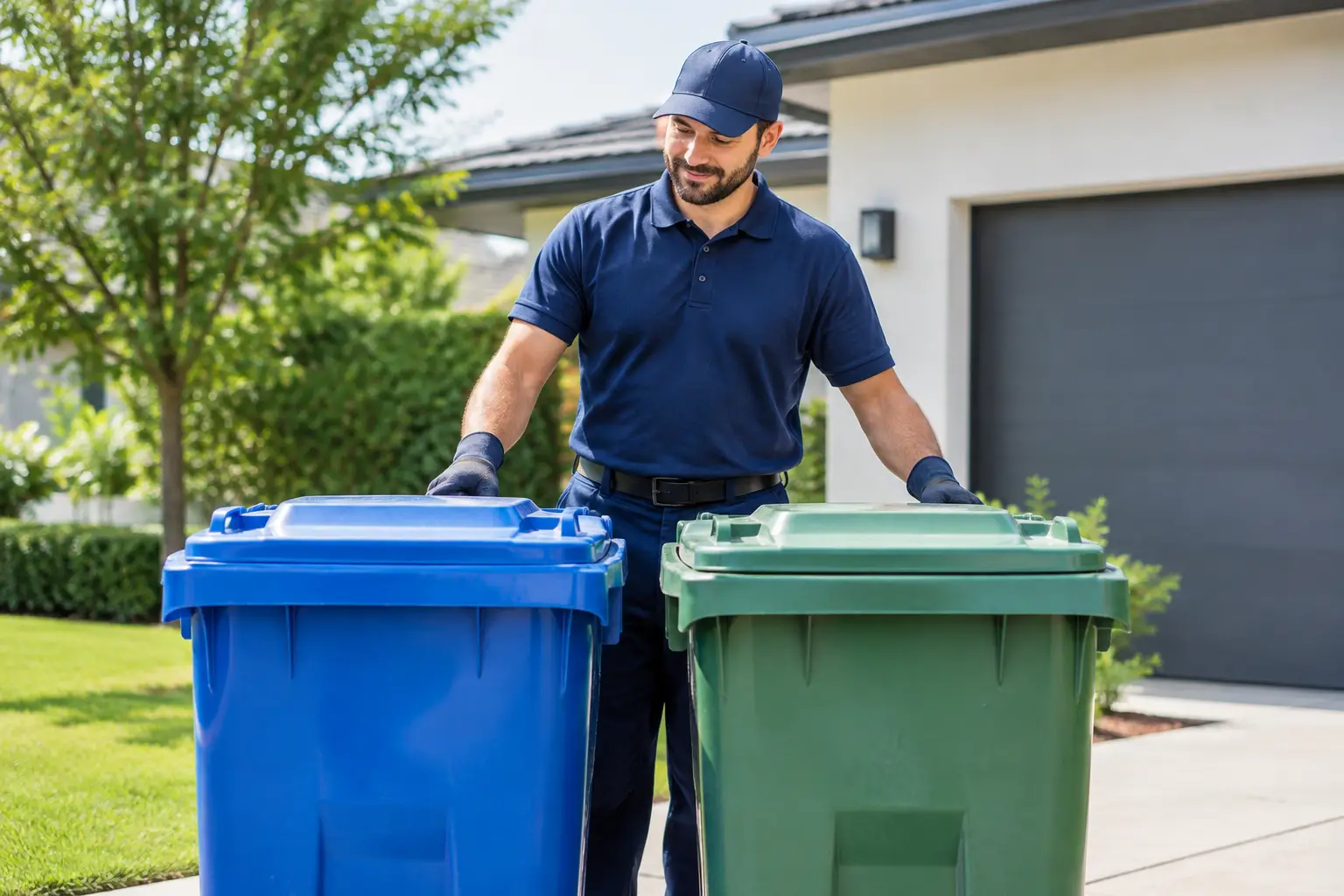
A trash cart left at the curb overnight, a bin that was supposed to be cleaned but still smells, or a missed return after collection can create more than a minor inconvenience. For homeowners, seasonal residents, and vacation-rental managers, the ability to verify completed service visits turns a recurring household task into something you do not have to wonder about.
The best proof is simple: clear confirmation that the work happened, when it happened, and what condition the bins were left in. That matters when you are away from Sarasota for the summer, managing a guest turnover on Anna Maria Island, or simply avoiding another walk down a long driveway in Florida heat.
Why Service Verification Matters
A recurring service is only convenient when it is dependable without requiring you to supervise it. Trash valet and bin cleaning happen outside, often while you are at work, traveling, or inside your home. Without a clear record, it is easy to find yourself checking the curb, calling a neighbor, or wondering whether a collection-day issue was your responsibility or the service provider's.
Verification protects your time, but it also helps protect your property presentation. A cart that remains at the curb too long can draw attention from an HOA, create a cluttered look in front of a rental home, or signal that a seasonal property is unoccupied. A dirty cart can hold onto odors, residue, mold, and pests even after the trash has been collected.
For property managers, confirmation creates a usable record. If an owner asks whether the bins were handled before guests arrived, there should be a direct answer rather than a guess. For older adults aging in place, it offers a different kind of confidence: no need to walk outside and inspect whether a heavy 95-gallon cart was moved safely.
How to Verify Completed Service Visits
Not all confirmation is equally useful. A generic message saying a visit was completed may be better than nothing, but it does not show what was done. The most reliable approach pairs a consistent service routine with visual proof and a clear timing standard.
Look for confirmation at both curb-day stages
Trash valet is a two-part job. The first stage is rolling the carts out before collection. The second is returning them after collection. A provider should confirm both stages separately, because one completed step does not guarantee the other.
At Curb Critter, bins are moved to the curb after 5 p.m. before scheduled collection and returned after 3 p.m. on collection day. Photo confirmation at both stages gives customers a quick way to see that their carts were Out, then In, without stepping outside or logging into a complicated system.
When reviewing a photo, look for enough context to recognize the location. You should be able to see the cart placement near the curb or back at its normal storage area. The image does not need to be fancy. It needs to answer the practical question: were the bins where they should be?
Check that the timing matches the purpose
A completed visit can still be unhelpful if it happens at the wrong time. Putting carts out too early may conflict with neighborhood rules. Returning them too late can leave a home looking neglected or make it difficult to pull into the driveway.
The same principle applies to cleaning. Garbage-bin cleaning works best immediately after collection, when the container is empty. Cleaning a full bin means crews must work around bagged trash, and it does little to address residue left behind after pickup. A post-collection cleaning visit is easier to verify when the photo shows an empty bin returned to its place, not a cart still sitting curbside waiting for pickup.
Timing can vary around holidays, weather delays, or a changed municipal collection schedule. A dependable provider should communicate when normal timing is affected rather than quietly treating an altered schedule as business as usual.
Confirm the condition, not just the presence, of the bin
A returned cart is proof of valet service, but it is not automatically proof of cleaning. If bin cleaning is included, the result should be visible in the condition of the container and reflected in the service record.
Professional cleaning should address the parts of the bin that create the biggest problems: stuck-on residue, odor-causing bacteria, mold, and pest-friendly grime. The process matters, too. High-pressure hot water, sanitizer, and deodorizer provide a more complete result than a quick rinse with a hose. On-site wastewater capture is also worth asking about, especially in Florida, where dirty runoff should not be sent down a driveway and into storm drains.
You may not see every trace of old staining disappear. Plastic absorbs wear over time, and bins used for yard waste or leaking bags can become permanently discolored. That is the trade-off between an honest cleaning standard and an unrealistic promise. The key question is whether the bin has been thoroughly washed, sanitized, and deodorized so it is clean in the ways that affect odor and hygiene.
Make proof easy to find later
The value of a service record grows over time. A single confirmation tells you the task was handled that day. A consistent history can help you spot a missed collection, document routine property care, or answer a question from an HOA or homeowner.
Keep confirmations where you can find them, particularly if you manage more than one home. The system does not need to be elaborate. A dedicated email folder, saved text thread, or property-management note can work well. What matters is that proof is connected to the property, date, and service performed.
For vacation rentals, this record is useful between turnovers. If a guest leaves extra trash behind, you can check whether the cart was set out on schedule and whether it was returned afterward. That makes it easier to decide whether the issue was timing, excess waste, a missed municipal pickup, or a need for an additional service visit.
What to Do When a Visit Needs a Follow-Up
Even a well-run recurring route can encounter exceptions. A blocked driveway, a car parked in front of the bins, a locked gate, an overflowing cart, or a city collection delay can change what is possible on a particular day. The difference is how clearly the issue is documented and communicated.
If a confirmation photo is missing or does not answer your question, start with the basics: check the scheduled collection day, look at the cart's current location, and review any service messages. Then contact the provider with the property address, service date, and a short description of what you see. Specific details help resolve the problem faster than a general report that the service "didn't happen."
For example, if the bin was returned but was not cleaned, mention whether trash remained inside after pickup. If the bin was not rolled out, note whether it was accessible at its usual location. If collection was missed, check whether the municipality changed its route due to a holiday or storm.
A good service team should treat these details as operational information, not as an inconvenience. Clear proof creates accountability on both sides: customers know what was completed, and the crew has the information needed to correct an exception promptly.
Build Verification Into the Routine
The most useful service verification is not something you have to request every week. It should be part of the routine, alongside reliable route timing and clear expectations. For recurring trash valet, that means proof of rollout and return. For cleaning, it means confirmation that the work was performed after collection while the bin was empty.
If you are comparing service options, ask one plain question: “How will I know the visit is complete?” The answer should be specific. Vague assurances are not the same as a photo, a timestamp, and a service process designed around the actual condition of your bins.
When proof is built into the service, you can stay hands-free without staying in the dark. You relax, and your bins are out, in, and ready for the next collection day.