Mobile Bin Washing Versus DIY for Florida Homes
A trash can can look fine from the driveway and still smell terrible the moment you lift the lid. In Florida, heat, humidity, food residue, rainwater, and weekly trash quickly create the right conditions for bacteria, mold, flies, and maggots. When comparing mobile bin washing versus DIY, the real question is not whether you can rinse a bin yourself. It is whether the result is clean enough, safe enough, and worth the time and physical effort.
For some households, a quick DIY wash is perfectly reasonable. For others, especially homeowners managing large carts, seasonal properties, or vacation rentals, professional service solves a job that keeps coming back. Here is how to make the right call for your home.
Mobile Bin Washing Versus DIY: What You Are Really Comparing
A basic hose-down and a professional bin cleaning service are not the same task. DIY cleaning usually means pulling the cart into the driveway, emptying remaining debris, spraying it with a garden hose, adding household cleaner, scrubbing, and waiting for it to dry. It can freshen the bin, particularly if you handle a spill right away.
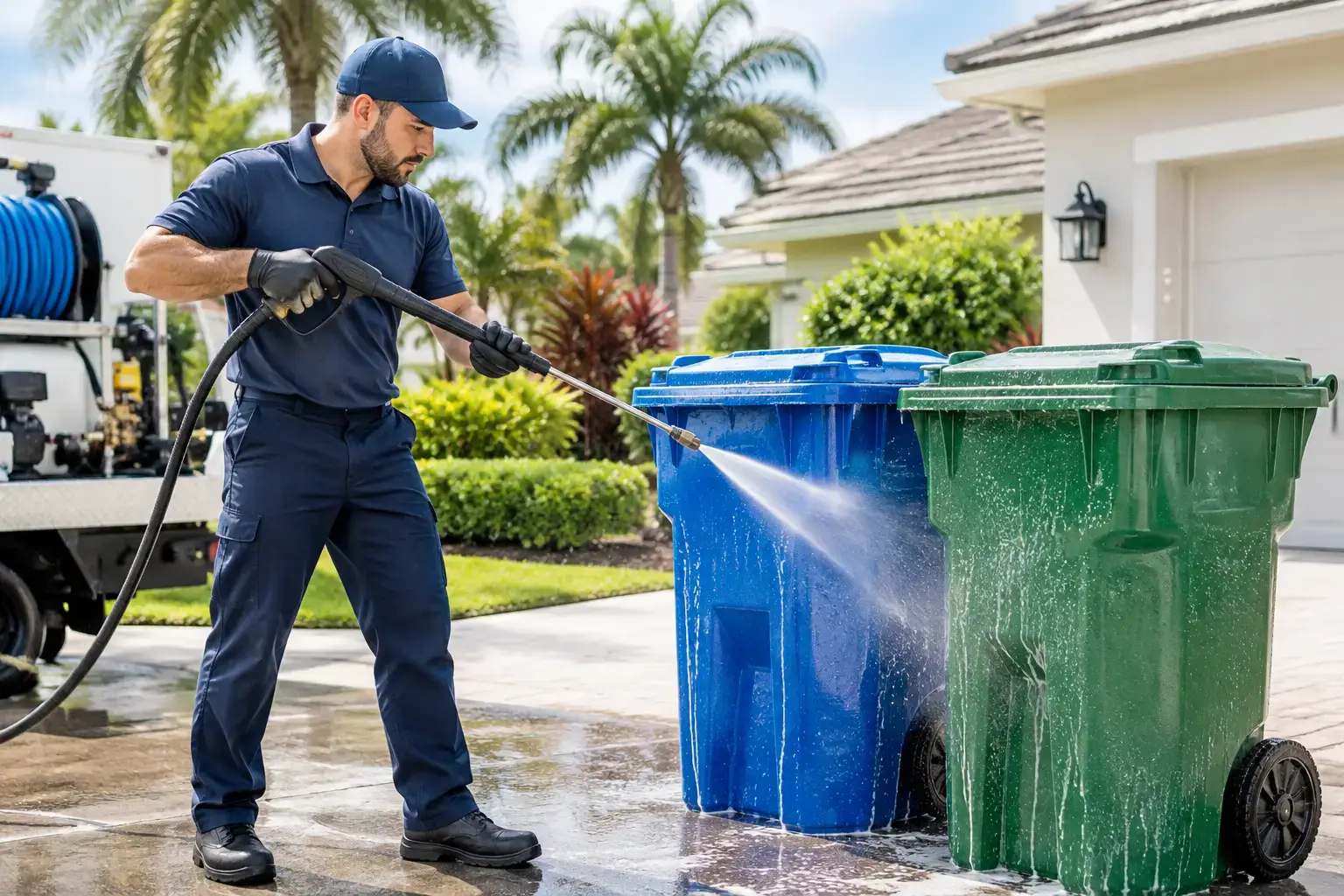
Mobile bin washing is designed to clean the container after collection, when it is empty. A service vehicle uses high-pressure hot water to remove stuck-on grime, then applies sanitizer and deodorizer to address odor-causing bacteria. The wash water is captured on site rather than sent flowing down the driveway and into a storm drain.
The difference comes down to more than appearance. One approach is a household chore with variable results. The other is a scheduled sanitation routine built around your collection day.
The Case for Cleaning Your Own Bins
DIY is the lower immediate-cost option. If you have a small bin, easy access to an outdoor hose, and no trouble bending, lifting, or scrubbing, you may be able to keep odors under control with regular attention. It also gives you flexibility. A leaking bag or a messy seafood dinner does not have to wait until the next scheduled cleaning.
For best results, DIY cleaning needs more than a quick rinse. Remove loose debris first, use a long-handled brush to reach the bottom and corners, apply an appropriate cleaning product, and allow the bin to dry fully with the lid open before adding new trash. Cleaning shortly after pickup is easier because there is no full bag in the way.
DIY makes the most sense when the bin is lightly soiled and the homeowner is comfortable doing the work. It can also be a useful in-between measure, even for households that use a recurring cleaning service. A small spill deserves attention before it has a week to bake in the Florida sun.
The Hidden Work Behind a DIY Wash
The task gets harder with a standard 95-gallon cart. Those containers are awkward when empty and even more difficult to position safely on wet pavement. Reaching the bottom can mean leaning into a dirty bin, and scrubbing the lid hinges, wheels, and rim requires more effort than most people expect.
Then there is the cleanup after the cleanup. Dirty water, food particles, cleaning chemicals, and residue have to go somewhere. Spraying that material across a driveway may make the bin look better while creating a mess on the surface below. If runoff reaches a storm drain, it can carry contaminants into local waterways.
A DIY clean also takes planning. You need time after collection, working equipment, enough hose length, cleaning supplies, and weather that cooperates. During summer storms, seasonal travel, or a busy rental turnover, bin washing is usually the chore that gets postponed.
Where Mobile Bin Washing Earns Its Keep
Professional mobile cleaning is especially useful when sanitation and consistency matter as much as convenience. High-pressure hot water reaches surfaces that are difficult to scrub by hand, including the lower walls and bottom of the cart. Sanitizer helps reduce the bacteria behind lingering odors, while deodorizer leaves the container more pleasant to use between collection days.
The timing matters too. Cleaning immediately after collection means the bin is empty, so the service can address the whole interior without asking you to move trash bags or schedule a separate appointment. A recurring route turns an irregular, unpleasant chore into a predictable part of property care.
For Curb Critter customers, bin cleaning can be paired with weekly valet service: carts are moved to the curb after 5 p.m. before pickup, returned after 3 p.m. on collection day, and documented with photo confirmation at both stages. The cleaning happens after collection, when the cart is ready for it. You stay hands-free.
Better Fit for Physical Limitations and Large Carts
Many homeowners do not avoid bin cleaning because they do not care about cleanliness. They avoid it because handling a large cart on a sloped driveway, grass, gravel, or wet pavement is uncomfortable or unsafe. That is a practical concern for older adults aging in place, people recovering from an injury, and anyone who does not want to wrestle a heavy container in Florida heat.
A mobile service removes the lifting, pulling, bending, and scrubbing from the equation. It also prevents the familiar curb-day problem of realizing too late that the bins need to go out. When trash handling and cleaning are managed on a routine, there is less chance of missed collection, an overflowing cart, or a bin sitting at the curb longer than neighborhood or HOA rules allow.
Stronger Support for Second Homes and Rentals
Snowbirds and second-home owners have a different challenge: the home still needs to look cared for when they are away. A dirty, overflowing, or forgotten bin sends the wrong message to neighbors and arriving guests. It can also attract pests at exactly the time nobody is there to deal with them.
Vacation-rental owners need reliable bin handling between guest turnovers. Guests may not tie bags tightly, sort waste carefully, or understand collection timing. One hot week of food waste can leave a container smelling bad enough to affect the next arrival. Scheduled cleaning and curb-day service give property managers a dependable process rather than another last-minute task for the turnover crew.
Cost Is Not Just the Price of the Cleaning
DIY may cost less in dollars each time you wash a bin, but it still has a cost in water, supplies, time, and effort. If you clean two carts thoroughly, the job can take a meaningful chunk out of a weekend morning. If the bins are heavily soiled, you may use more cleaner and water than expected without fully removing the smell.
Mobile washing costs more upfront because it includes specialized equipment, hot water, sanitation products, labor, and wastewater capture. The value is strongest for households that want a set routine, need help with the physical work, or place a high value on a clean property without another chore to manage.
It depends on your situation. A homeowner who enjoys outdoor chores and has one lightly used bin may be happy with DIY. A household with multiple carts, frequent odors, mobility concerns, travel plans, or rental guests will often find recurring service easier to justify.
How to Choose the Right Approach
Start with the condition of your bins. If odors return quickly after rinsing, visible residue is stuck to the bottom, or insects keep appearing around the lid and wheels, a deeper professional clean may be warranted. Also consider how often you realistically clean them. A plan that happens every month is usually more effective than a perfect DIY routine that only happens once or twice a year.
Next, consider the curb-day workload. If moving bins already feels like a burden, cleaning them yourself adds another physical task to a chore you may already dread. Combining valet and washing reduces the number of moving parts. Your carts are out, back in, and cleaned on a dependable schedule.
Finally, think about water management. A bin should not become cleaner at the expense of sending dirty wash water into the street. Professional wastewater capture is a meaningful advantage for homeowners who want a cleaner container and a more responsible process.
A clean bin will never be the most exciting part of home maintenance. But when it is handled regularly, you notice what disappears: the smell at the garage, the insects by the lid, the awkward driveway chore, and the worry about whether the carts made it to the curb. That is a small routine with a very practical payoff.